
Defining the Cislunar Domain
Imagine you are trying to merge onto a busy highway during the peak of rush hour. You need to know exactly when to enter the flow to avoid a collision with other vehicles. Space travel works in a similar way because the region between Earth and the Moon is becoming just as crowded. We call this area the cislunar domain, and it represents the vast, complex space where future satellite networks and lunar missions will operate. Understanding this zone is the first step toward building a safe and reliable highway system for space traffic.
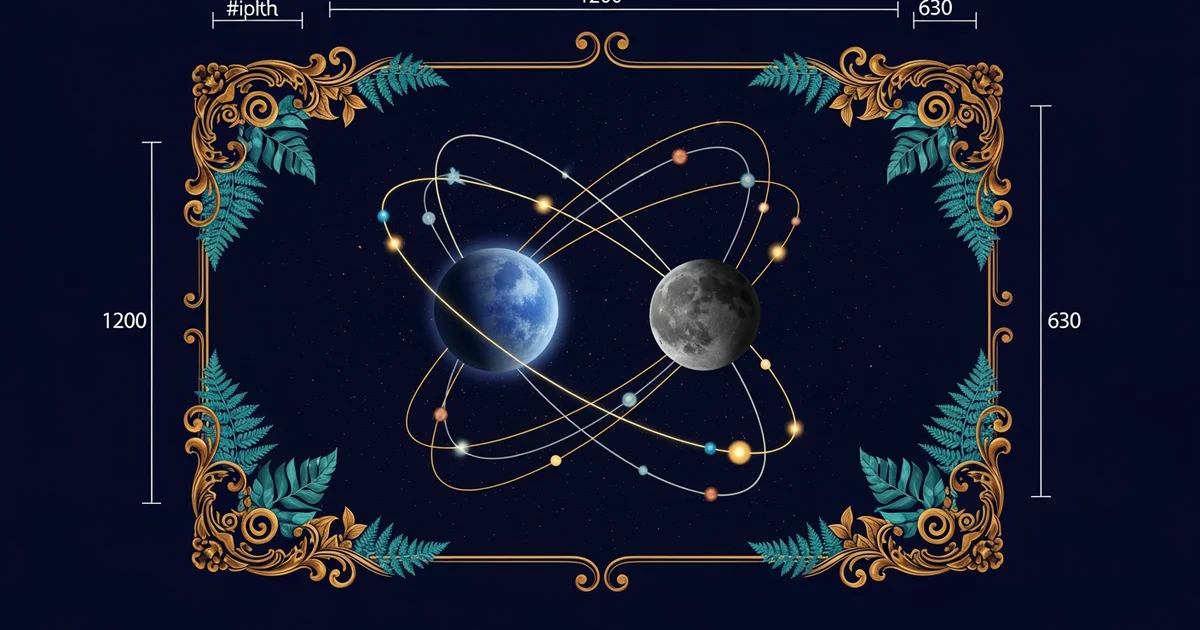
Defining the Boundaries of Space
When we talk about the cislunar domain, we are discussing the space that exists from Earth's atmosphere out to the Moon's orbit. This region is not empty because it is filled with gravitational forces and orbital paths that dictate how objects move. Think of this space like a massive, three-dimensional traffic circle that connects two major destinations. Just as a city planner must account for merging lanes and speed limits, space agencies must map out the specific zones where spacecraft travel. If we do not define these boundaries clearly, we risk serious accidents that could damage expensive equipment or block vital communication paths. Scientists often use specific measurements to track this area, such as the distance to the Moon, which is roughly m from the center of Earth.
Key term: Cislunar — the specific region of space extending from Earth's upper atmosphere out to the orbit of the Moon.
Managing this space requires us to look at the different segments of the journey. We divide these segments based on how gravity affects a spacecraft at various distances from our planet. Near the Earth, our planet's gravity is the dominant force that pulls objects toward the surface. As you travel further away, the gravitational pull of the Moon begins to play a larger role in your trajectory. This transition zone is where navigation becomes tricky because the two bodies are constantly pulling on a craft from different directions. Keeping track of these changing forces allows engineers to calculate fuel needs and travel times for missions heading to the lunar surface.
The Challenges of Orbital Traffic
Navigating this domain is difficult because objects in space do not stay in one fixed spot. Everything is in constant motion, orbiting at different speeds and angles depending on their distance from Earth. To manage this safely, we must categorize the types of paths that satellites and ships take through this region. We can group these orbital paths based on their distance and their purpose for modern space operations:
- Low Earth Orbit paths are used for short-range communication and observation satellites that circle the planet every ninety minutes.
- Medium Earth Orbit paths serve as the backbone for global navigation systems that require a wider view of the planet's surface.
- High Earth Orbit paths reach out toward the Moon and provide stable locations for deep space relay stations that monitor incoming traffic.
These categories help ground controllers decide which path is safest for a new mission to follow. By using these established zones, we can prevent spacecraft from crossing paths in ways that could lead to dangerous collisions or signal interference. This system of lanes acts much like the lanes on a road, ensuring that everyone knows where they should be while traveling through the busy cislunar environment. As we add more satellites and lunar landers to this mix, having a clear set of rules for these lanes becomes even more important for long-term success.
| Orbit Type | Distance from Earth | Primary Use Case |
|---|---|---|
| Low Earth | Up to m | Earth observation |
| Medium Earth | m | Navigation systems |
| High Earth | m | Deep space relay |
This table shows how we organize space based on altitude and function. By keeping these zones separate, we maintain order in a region that would otherwise be chaotic and difficult to navigate. This structured approach allows us to scale our operations as we send more missions into the vast expanse between our home planet and its closest neighbor.
Defining the physical and gravitational boundaries of the cislunar domain is essential for creating the traffic rules needed to support growing space exploration.
By the end of this path, you will understand the full spectrum of navigation, safety, and logistical strategies required to manage the busy transit routes between the Earth and the Moon.