
Hybrid Work Office Models
When a local tech firm moved to a hybrid model last year, they found their assigned desks sat empty three days a week while meeting rooms were always full. This wasted space represents a failure in Hybrid Work Office Models, which require a shift from static cubicles to dynamic, shared environments that adapt to changing daily attendance patterns. Just as a restaurant manages tables to maximize seating during a busy rush, a modern office must treat its floor space as a fluid asset rather than a fixed inventory of permanent locations. This is the application of space efficiency principles from earlier planning stages to the reality of modern work life.
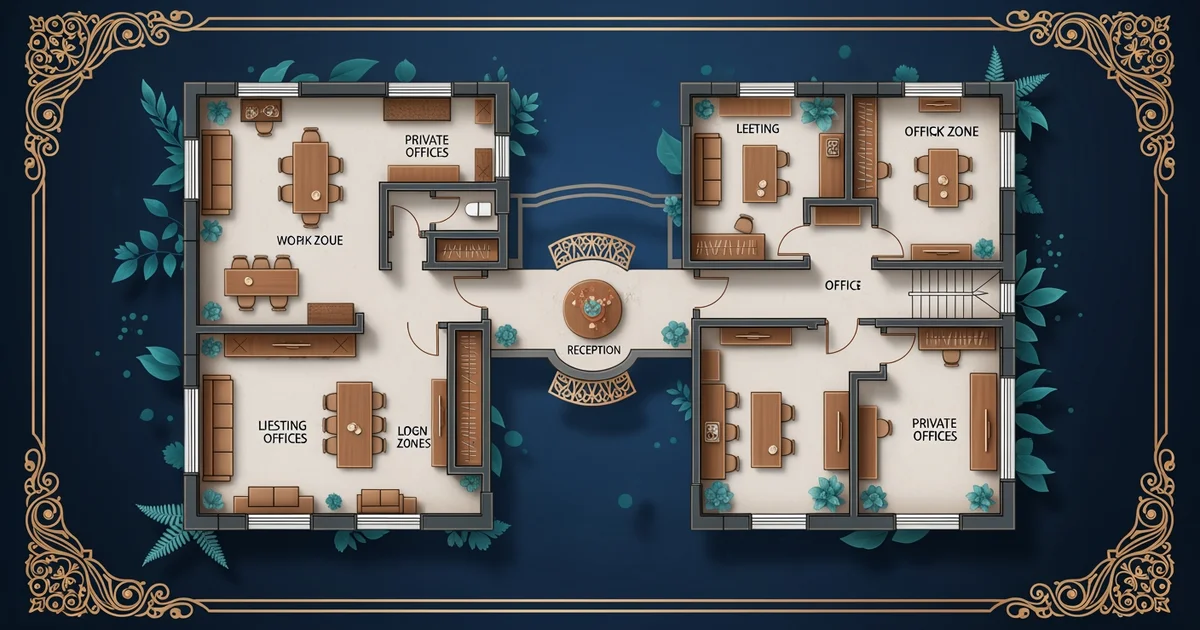
Optimizing Shared Workspace Environments
Transitioning to a hybrid model involves moving away from the traditional model of one desk per person. Instead, firms now use Hot Desking, which allows employees to choose any available workstation upon their arrival at the office each day. This approach reduces the total square footage needed for individual tasks while increasing the space available for collaborative zones. By implementing a booking system, companies ensure that employees have a guaranteed spot when they commute, which prevents the frustration of searching for an empty chair. This strategy transforms the office from a storage locker for personal items into a vibrant hub for team interaction.
Key term: Hot Desking — a flexible office strategy where employees do not have assigned desks and instead use shared workstations as needed.
To manage this transition effectively, office planners must categorize zones based on the type of work performed by the staff. Quiet zones are essential for deep focus tasks, while social zones encourage spontaneous collaboration and team bonding. The following table outlines how to balance these different needs within a single office floor plan:
| Zone Type | Primary Activity | Furniture Requirement | Noise Level |
|---|---|---|---|
| Focus Zone | Individual work | Ergonomic chairs | Low noise |
| Team Zone | Group projects | Large shared tables | Medium noise |
| Social Zone | Informal chats | Lounge seating | High noise |
Implementing Flexible Infrastructure
Successfully adapting physical offices for remote workers requires more than just removing cubicle walls. It demands a robust infrastructure that supports seamless transitions between home and office environments for every team member. You must provide modular furniture that teams can rearrange to suit the specific needs of a project or a large meeting. When furniture is fixed to the floor, it restricts the ability of a team to scale their workspace during peak attendance days. Using movable partitions or lightweight desks allows the environment to evolve alongside the changing requirements of the company.
Another critical factor is the integration of physical and digital tools within the workspace. Every shared desk must feature universal docking stations that connect to laptops regardless of the operating system used by the staff. This eliminates the technical friction that often occurs when employees arrive at a new desk and struggle to connect their devices to monitors or internet ports. By standardizing these physical connection points, you turn the office into a plug-and-play environment that respects the time of the worker. When the physical space is easy to navigate, employees are more likely to value their time spent in the office for collaborative work.
Finally, you must consider the psychological impact of losing a permanent desk. While hot desking saves money, it can also lead to a sense of detachment if employees feel like guests in their own workplace. To counter this, provide secure lockers for personal belongings so that staff can maintain a sense of ownership over their daily tools. Combining these storage solutions with a thoughtful, welcoming design helps bridge the gap between remote freedom and office belonging. This strategy ensures the office remains a destination that people want to visit rather than a place they are required to attend.
Effective hybrid office design treats physical space as a flexible resource that adapts to the specific collaborative and focus needs of the team.
But this model breaks down when the technology used to manage desk bookings fails to align with the actual daily attendance of the staff.