
Integrated Design Review
Imagine you are standing in a lobby waiting for an elevator that serves a building one hundred stories tall. You might wonder how the system manages to move thousands of people every single morning without causing a massive bottleneck at the ground floor. Designing this vertical transport requires a careful balance between raw mechanical power and smart digital coordination. Engineers must solve the puzzle of moving heavy cars quickly while keeping passengers comfortable during high speed travel. This process is known as an integrated design review where every component must work in perfect harmony with the building frame.
Balancing Physics and Architectural Flow
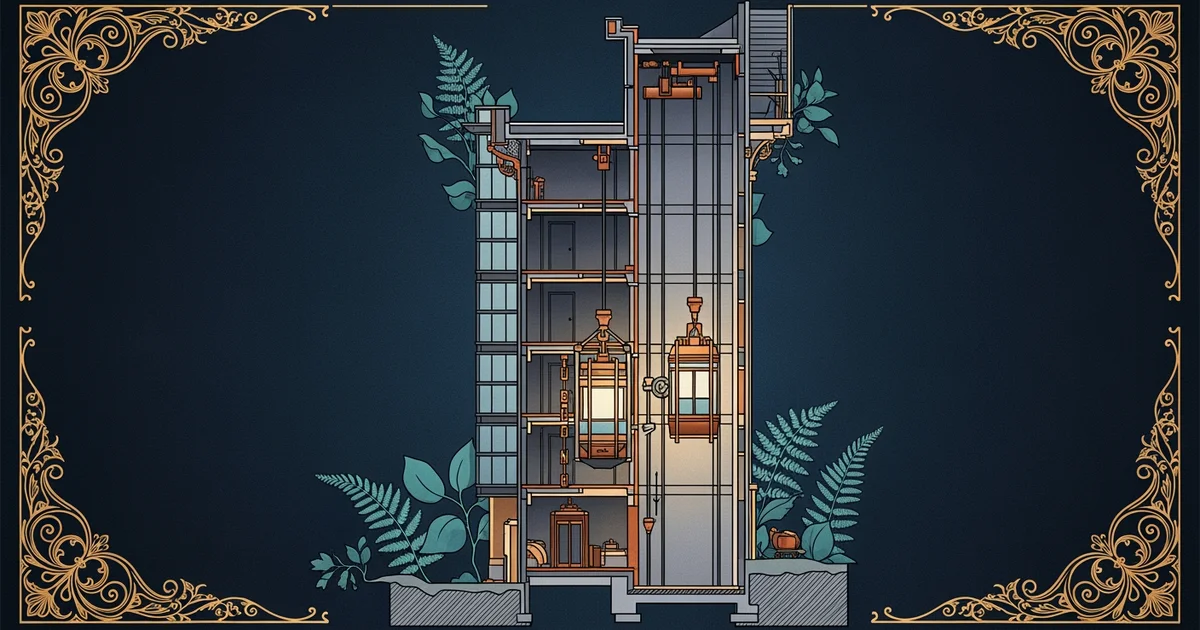
When architects design supertall buildings, they must consider the elevator shaft as a primary artery that dictates the entire flow of the structure. The core of the building acts like the trunk of a tree, supporting the weight while housing the vital systems that keep the tower alive. Engineers use a dispatching algorithm to manage the movement of cars, which is a software system that calculates the most efficient path for each elevator based on real time traffic patterns. If the algorithm fails to predict human movement, the entire building experiences a slowdown, much like a highway during a busy rush hour commute. To prevent this, designers must simulate thousands of scenarios to ensure the system handles peak demand without stalling.
Key term: Dispatching algorithm — the smart software system that directs elevator cars to specific floors based on real-time passenger demand and traffic flow.
To manage the massive forces involved, engineers rely on regenerative braking to recover energy during descent. This process captures the kinetic energy created when a heavy elevator car slows down, converting it back into electrical power for the building grid. This is similar to how a hybrid car charges its battery when the driver presses the brake pedal. By recycling this energy, the building reduces its overall power consumption while managing the heat generated by friction. This integration of physics and energy management is essential for making modern skyscrapers sustainable and functional for the people who work inside them.
Coordinating Systems for Efficiency
Effective elevator design requires a deep understanding of how different building systems interact under stress. The mechanical engineers must coordinate with structural teams to ensure the elevator shafts do not compromise the building strength during high winds. The following table highlights the key factors that engineers must balance to maintain system integrity:
| Factor | Impact on Design | Engineering Challenge |
|---|---|---|
| Building Height | Increases travel time | Maintaining high speed without causing ear pressure issues |
| Peak Traffic | Dictates car count | Balancing floor space with passenger throughput needs |
| Structural Sway | Affects cable tension | Designing guide rails that handle building movement safely |
These factors force engineers to make trade-offs between speed, comfort, and available floor space. If the elevator cars are too large, they occupy space that could be used for offices or apartments. If the cars move too fast, the rapid change in air pressure can become uncomfortable for the passengers inside. Engineers solve this by installing pressurized cabins and using advanced sensors to monitor the building sway, ensuring the ride remains smooth regardless of the weather conditions outside. This constant monitoring is what allows tall towers to function as vertical cities.
- Engineers analyze the peak traffic flow to determine the number of cars needed for the building population.
- Developers install smart sensors that detect building movement to adjust the guide rails in real time.
- The control system communicates with the power grid to optimize energy usage during the busiest hours of the day.
By layering these technologies, designers create a system that feels invisible to the user while performing complex calculations in the background. The interplay between the structural skeleton and the electronic brain of the elevator is the secret to building taller structures safely. As cities continue to grow upward, this integration of technology and architecture will become even more vital for the future of urban life.
Successful skyscraper design relies on the seamless integration of mechanical energy management and intelligent software to move people through vertical space efficiently.
Understanding how these systems work together is a fundamental skill for anyone interested in the future of modern architecture and engineering.