
Rope-Free Vertical Travel
Imagine a tall building where elevators move not just up and down, but also side to side. You would no longer wait in a single shaft for a cab to arrive while others remain stuck behind it. This vision relies on removing the heavy steel cables that have defined vertical transit for over a century. By shifting from traditional ropes to a new propulsion method, architects can design taller towers with much higher efficiency. This transition represents a major shift in how we think about moving through large urban spaces.
The Shift to Magnetic Levitation
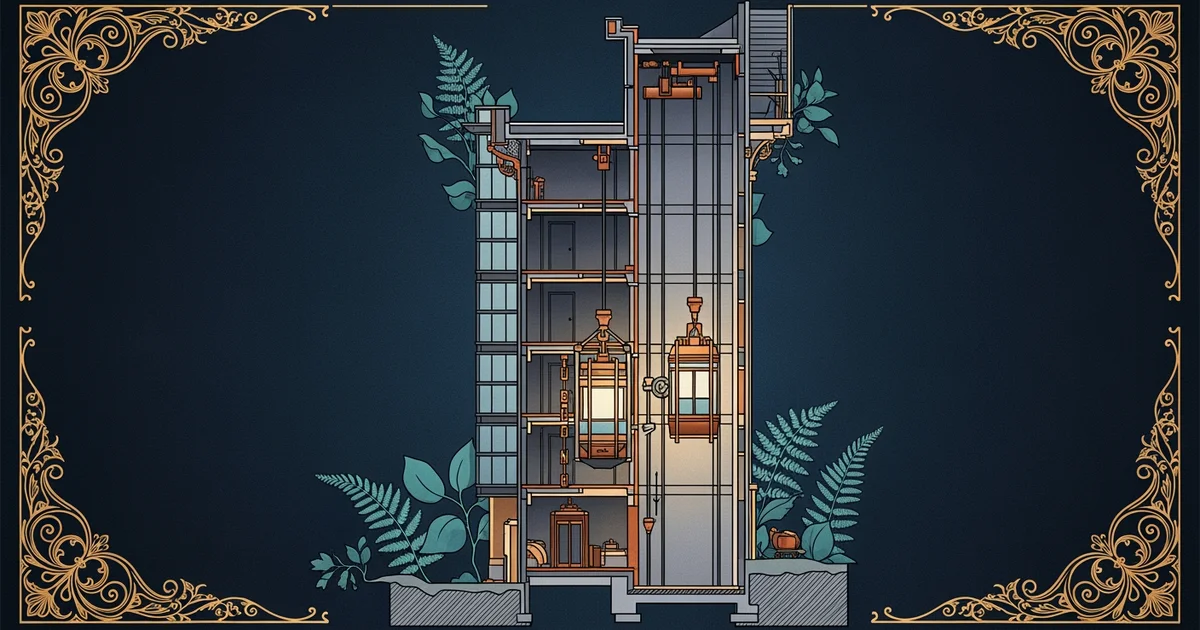
Modern engineering now uses magnetic levitation to replace the old rope and pulley systems. This technology creates a frictionless ride by using powerful electromagnetic fields to suspend the cabin in the shaft. Think of this like a high-speed train that floats above its tracks instead of rolling on steel wheels. Because the cabin does not touch the walls, it eliminates the vibration and noise common in older cable designs. This system allows multiple cabins to operate in one loop, which increases the total number of people moving at once. Engineers control these fields with precision to ensure the cabin stays perfectly centered within the elevator shaft at all times.
Key term: Magnetic levitation — a method of propulsion that uses electromagnetic forces to lift and move objects without physical contact.
When we remove the ropes, we also remove the weight limits that cables impose on tall buildings. A heavy steel cable can only support a certain amount of length before its own mass becomes a problem. Magnetic motors allow the cabins to draw power directly from the shaft walls as they travel upward. This means the building can grow much taller without needing a thicker or heavier support system for the elevator. These motors act as the engine for each individual cabin, giving them the freedom to move independently of other units in the same building.
Rethinking Vertical Transit Logic
Moving people efficiently requires a network that functions like a subway system rather than a single elevator. In a traditional setup, one cabin occupies one shaft, which creates a significant bottleneck during busy morning hours. By using a multi-directional drive system, engineers can move cabins horizontally to transition them into different shafts. This flexibility allows the system to bypass stalled cabins or redirect traffic to floors with the highest demand. The result is a continuous flow of passengers that adapts to the shifting needs of a massive skyscraper throughout the day.
| Feature | Traditional Cable | Magnetic Levitation |
|---|---|---|
| Movement | Vertical only | Vertical and horizontal |
| Capacity | Single cabin/shaft | Multiple cabins/loop |
| Friction | High (cables) | Zero (floating) |
| Height | Limited by mass | Virtually unlimited |
This table highlights why designers are moving toward magnetic systems for future construction projects. The ability to move both horizontally and vertically changes the geometry of how we build skyscrapers. Architects can now place elevator shafts in places that were previously impossible, such as along the outer edges of a building or even in curved patterns. This freedom allows for more creative floor plans that prioritize natural light and open office spaces. By decoupling the cabin from the shaft, we transform the elevator from a simple tool into a core part of the building's infrastructure.
Efficiency in these systems depends on how well the software manages the traffic flow of each cabin. The control system tracks every unit in real time to prevent collisions while maximizing the speed of travel. If one cabin stops for a passenger, the others can simply move around it using the horizontal tracks. This creates a dynamic environment where the building itself learns to anticipate passenger demand. As more buildings adopt this technology, the way we experience large cities will shift from vertical waiting to constant, smooth movement.
Magnetic levitation removes the physical constraints of ropes to allow for flexible, multi-directional travel within tall buildings.
But what does it look like in practice when these cabins begin to sway in the high-altitude winds?
Want this with sources you can check?
Premium Learning Paths for Architecture & Design are researched against open-access libraries — PubMed, arXiv, government databases, and more — with their distinctive claims cited to real sources and independently checked.
See what Premium includes