
Motor Drive Technology
Imagine you are waiting for an elevator in a busy office tower during the morning rush. You press the button and feel the cab begin its smooth ascent toward your floor without a single shudder. This seamless movement relies on complex systems hidden behind the walls that manage heavy loads with precision. Engineers must choose between two main drive systems to move people safely through these massive vertical structures. Understanding how these machines operate reveals the core logic behind modern skyscraper design and vertical transport efficiency.
Comparing Drive Mechanisms
Most elevators function using either a hydraulic system or a traction system to generate the necessary upward force. A hydraulic elevator operates like a giant syringe that pushes a piston upward to lift the car from below. This system uses an electric pump to force fluid into a cylinder, which creates the pressure needed to move the cab. Because the motor must push the entire weight of the car and passengers, these systems are limited to shorter buildings. They are reliable for low-rise designs but struggle to reach the extreme heights required for modern city skyscrapers.
Key term: Traction — the system of using steel ropes and a motorized pulley to pull an elevator car upward.
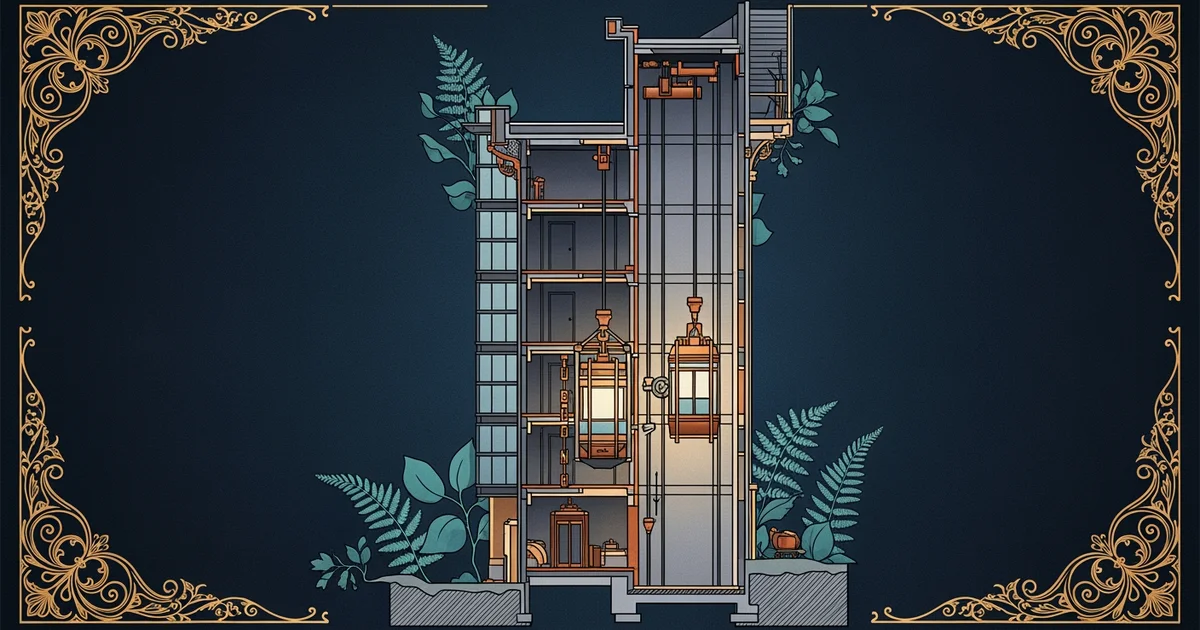
In contrast, a traction elevator uses a system of steel ropes draped over a motorized pulley to move the car. The motor sits at the top of the shaft and pulls the ropes to raise or lower the cabin weight. This design acts like a balance scale where a heavy counterweight hangs on the other side of the rope. When the motor turns the pulley, it only needs to overcome the difference in weight between the car and the counterweight. This mechanism allows the elevator to travel much faster and reach far greater heights than hydraulic systems ever could.
Operational Efficiency and Constraints
Choosing the right drive system involves balancing energy use, building height, and the total weight of the lift system. While hydraulic systems are simple and cost-effective for small buildings, they consume massive amounts of energy to lift heavy loads. Traction systems provide a much more efficient alternative because the counterweight does most of the heavy lifting for the motor. This energy-saving design is essential for skyscrapers where elevators must travel hundreds of feet every few minutes.
| Feature | Hydraulic Elevators | Traction Elevators |
|---|---|---|
| Power Source | Electric Pump | Motorized Pulley |
| Lifting Method | Pushing from below | Pulling from above |
| Height Limit | Low-rise buildings | Unlimited heights |
| Energy Use | High per trip | Low per trip |
Engineers often compare the counterweight in a traction system to a person helping you lift a heavy box. If you try to lift the box alone, you must exert all the force required to move the total weight upward. If a friend grabs the other side of the box, you only need to manage the remaining balance of the weight. The counterweight serves as that friend by constantly balancing the elevator car, which keeps energy demands low even when the building grows significantly taller.
These systems dictate how architects plan the internal structure and safety protocols of every new high-rise project. By utilizing traction motors, engineers can design buildings that reach toward the clouds while maintaining high safety standards for every passenger. Each drive type serves a specific purpose based on the scale and height of the destination building. Choosing the correct technology ensures that people can navigate these vertical environments with speed and total reliability.
Modern elevator technology relies on the mechanical advantage of counterweights to overcome the limitations of distance and energy consumption in tall buildings.
The next Station introduces rope-free vertical travel, which determines how magnetic propulsion works to move cabins without traditional cables.