
Urban Density Challenges
Imagine trying to fit sixty people into a tiny elevator built for only ten individuals. Everyone feels the pressure as the walls seem to close in while the airflow drops quickly. This scenario mirrors the reality of modern cities facing rapid growth and limited space for new housing. When too many people move into a small area, the city infrastructure struggles to keep up with the rising demand for basic services. Architects and urban planners must find clever ways to balance high populations with the need for comfortable living spaces. Understanding this tension is vital for grasping why our city landscapes look the way they do today.
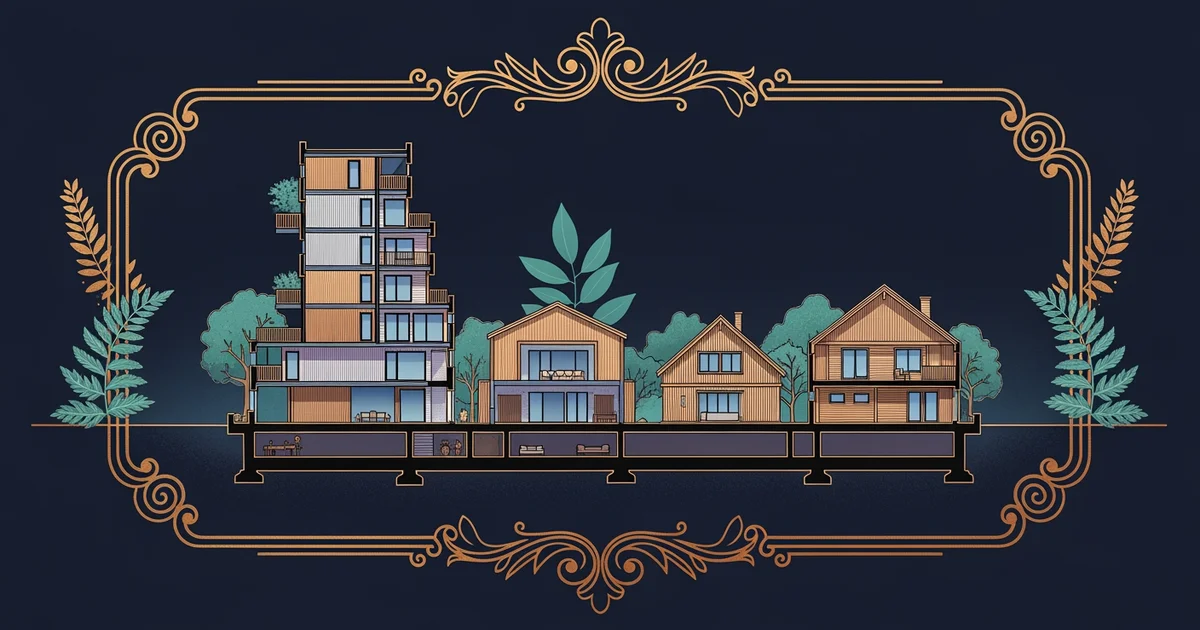
The Strain of Rapid Urbanization
As more people migrate to metropolitan areas, the pressure on existing land becomes an intense challenge for local governments. Rapid urbanization occurs when people move from rural areas to cities in search of better jobs or lifestyle options. This sudden influx creates a massive demand for housing that often outpaces the speed of new construction projects. When demand exceeds supply, property prices climb higher, making it difficult for average families to find affordable places to live. Cities must then decide between building outward into nature or building upward to accommodate everyone within the current city borders.
Key term: Urbanization — the process where a growing population moves to cities, which increases the demand for housing and infrastructure.
This growth creates a ripple effect throughout the entire city, impacting everything from transport systems to water supply lines. If a city grows too fast, the roads become jammed and the public transit systems reach their total capacity. Think of this like a sponge that can only hold a certain amount of water before it starts to leak. Once the capacity limit is reached, adding more people without improving the infrastructure leads to a decline in the overall quality of city life. Planners must carefully manage this density to ensure that residents remain safe, healthy, and happy in their homes.
Managing Density Through Design
To address these density issues, architects often turn to innovative designs that maximize the use of vertical space. Building upwards allows cities to house thousands of people on a small footprint of land that would otherwise hold only a few homes. This approach helps preserve green space while keeping residents close to their jobs and essential services like grocery stores. However, high-density living requires careful planning to ensure that sunlight and fresh air reach every floor of these large structures. Without these considerations, dense areas can quickly become uncomfortable places for people to reside.
Cities often use specific strategies to manage the influx of new residents while maintaining a functional environment:
- Mixed-use developments combine residential apartments with retail shops and office spaces to reduce the need for long daily commutes.
- Vertical gardens integrate plant life into the sides of buildings to improve air quality and provide natural cooling effects for residents.
- Adaptive reuse projects transform old warehouses or factories into modern housing units to save resources and reduce the need for new construction.
These strategies help cities grow in a way that respects the limitations of the available land and resources. By mixing different types of buildings, planners can create vibrant neighborhoods that feel less crowded despite the high number of people living there. When done correctly, high density becomes an asset that fosters community interaction and economic growth rather than a burden on the city.
| Strategy | Primary Benefit | Potential Challenge |
|---|---|---|
| Vertical Building | Saves land space | High construction costs |
| Mixed-use zoning | Reduces travel time | Noise and traffic levels |
| Adaptive reuse | Saves materials | Complex renovation work |
Each of these approaches carries its own set of trade-offs that planners must weigh against the needs of the local population. Choosing the right path requires a deep understanding of how people interact with their environment on a daily basis. As we look toward the future, the goal remains to build cities that are both efficient and welcoming for everyone who calls them home.
High urban density requires a delicate balance between maximizing space for residents and maintaining the essential infrastructure that keeps a city functioning smoothly.
The next Station introduces Sustainable Design Principles, which determine how cities can grow without exhausting their natural resources.