
Designing Your Illusions
Imagine you are staring at a static image that appears to vibrate or rotate before your very eyes. Your brain struggles to process the conflicting signals, creating a sense of movement where none exists in physical reality. This experience serves as the ultimate test of your understanding regarding how sensory input travels through the visual cortex. You now possess the tools to manipulate these pathways by designing your own original optical illusions. By applying what you have learned about light and shadow, you can purposefully lead the viewer into a state of cognitive confusion.
The Mechanics of Visual Deception
To construct an effective illusion, you must first master the art of contrast manipulation, which involves using light and dark values to fool the eye. When you place high-contrast borders next to each other, the brain often misinterprets the edges as depth or motion. Think of this process like managing a busy store where you intentionally place signs in confusing spots to lead customers on a specific path. By forcing the brain to make rapid guesses about spatial relationships, you create a gap between the physical object and the mental image. This gap is the core engine of every successful optical illusion.
Designing these experiences requires a careful balance of geometric precision and artistic intuition. You must consider how the viewer will scan the image, as the human eye rarely looks at a piece of art all at once. Instead, the eye darts between focal points, gathering data that the brain then stitches together into a coherent story. If you provide conflicting data points, the brain cannot complete the narrative, which leads to the sensation of an illusion. Use the following techniques to ensure your designs challenge the observer effectively:
- Geometric distortion uses lines that angle toward a vanishing point to trick the mind into perceiving depth where the surface remains flat.
- Colour adaptation relies on the way your retina adjusts to brightness to make two identical shades appear different based on their surroundings.
- Peripheral interference exploits the lower resolution of your side vision to hide details that become visible only when the viewer looks away.
Constructing Your Original Illusion
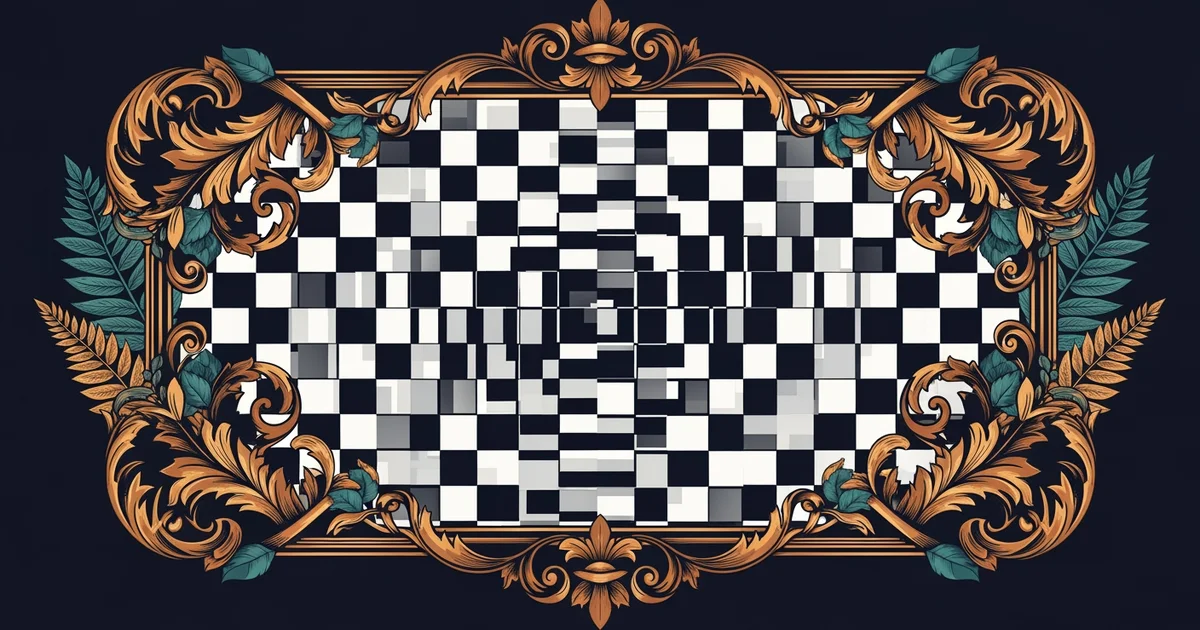
Once you grasp these fundamental principles, you can begin to layer them to build complex visual puzzles. You might start with a basic grid of squares, then alter the line thickness to create a sense of curvature or bulging. This process mimics the way architects use lines to make a small room feel larger than its actual dimensions. The goal is to provide just enough information to keep the viewer engaged, but not enough to let them solve the mystery instantly. If the illusion is too simple, the brain ignores it, but if it is too complex, the brain loses interest entirely.
Key term: Visual synthesis — the process by which the brain combines disparate sensory signals into a unified perception of the environment.
When you review your work, consider how the previous lessons on evolutionary advantages apply to your creation. Your design works because the brain prioritizes survival over accuracy, choosing to make quick assumptions rather than waiting for perfect data. By exploiting these evolutionary shortcuts, you are not just drawing an image, but actively participating in the creation of a human experience. This synthesis of art and biology allows you to see the world not as it is, but as your brain chooses to interpret it. The ultimate goal is to create a moment where the viewer questions their own reality.
Designing optical illusions involves deliberately providing conflicting sensory data to force the brain to reveal its own internal processing shortcuts.
Understanding how we perceive visual tricks confirms that reality is a construction of the brain rather than a direct reflection of the world.