
The Evolutionary Advantage
Imagine you are walking through a dense forest and see a shape that looks like a snake. Your heart races and you jump back, but the shape turns out to be just a curved tree branch on the ground. This reaction happens because your brain prioritizes speed over perfect accuracy to keep you safe from potential threats. Our visual system evolved to make rapid guesses about the world rather than waiting for every single detail to become clear. These quick judgments are what we often call optical illusions, but they are actually survival tools.
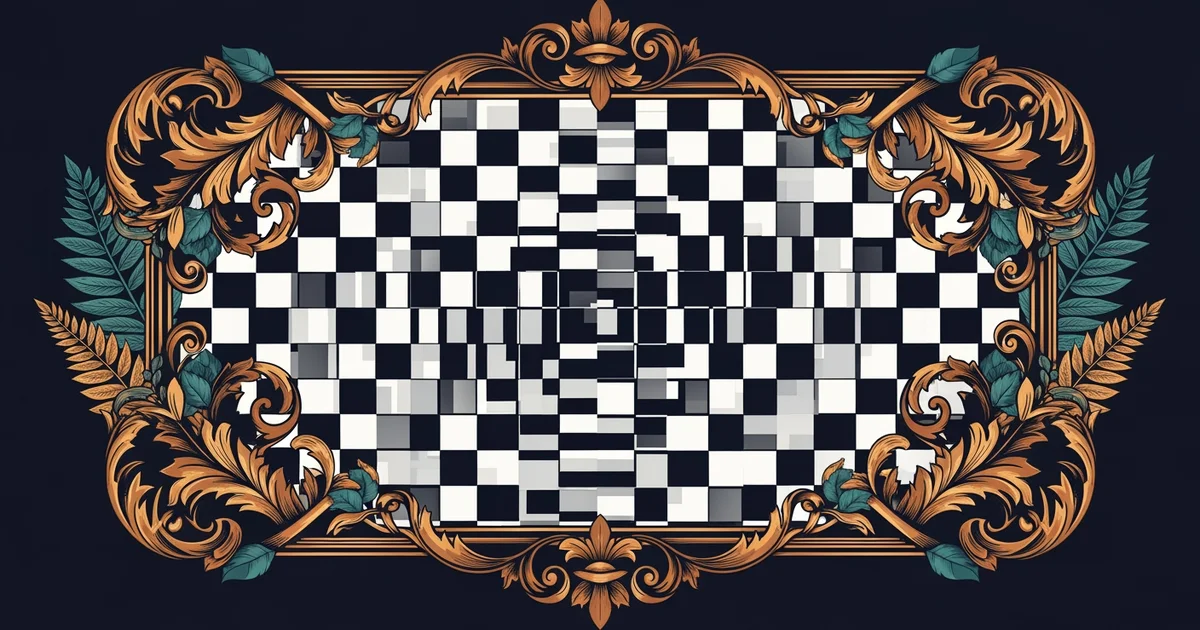
The Logic of Predictive Vision
Your brain constantly acts like a high-speed processor that predicts what might happen next in your environment. By using past experiences, it fills in missing information to create a coherent picture of your surroundings. This process is known as predictive vision, where the brain interprets sensory input based on probability instead of raw data. Think of it like a business investor who makes a quick trade based on market trends rather than waiting for the final quarterly report. If the investor waited for total certainty, they would lose money, just as a human might lose their life if they waited too long to identify a predator. This evolutionary shortcut explains why we see patterns where none exist, as the cost of a false alarm is much lower than the cost of missing a real danger.
Key term: Predictive vision — the brain's ability to anticipate sensory outcomes by filling in gaps with stored knowledge to ensure rapid reaction times.
This system interacts with the concepts we explored in previous stations, such as digital image manipulation and perspective. While digital tools can intentionally confuse our senses, the brain is already primed to be fooled by its own internal shortcuts. The tension arises because our modern world is full of artificial stimuli that do not follow the natural rules our ancestors faced. We are essentially using an ancient biological software to navigate a complex, modern environment that frequently exposes the flaws in our perception.
Survival Through Efficient Processing
To understand why these illusions persist, we must look at the energy demands of the human brain. Processing every single pixel of light that enters the eye would require an impossible amount of metabolic energy. Instead, the brain uses heuristics, or mental shortcuts, to simplify the visual data it receives throughout the day. These shortcuts allow us to function efficiently, even if they occasionally result in seeing things that are not physically present.
Consider the following ways our brain optimizes visual information for daily survival:
- Contrast enhancement allows the brain to sharpen the edges of objects so we can distinguish predators from background foliage quickly.
- Depth estimation relies on secondary cues like shadows to judge distance, which helps us navigate uneven terrain without needing perfect binocular vision.
- Motion extrapolation predicts the path of a moving object so we can catch food or dodge projectiles without tracking every single frame of movement.
These mechanisms demonstrate that the brain values utility over total accuracy in every situation. If we were to perceive the world with absolute, objective truth, our cognitive load would be far too high for survival. We accept these small errors in judgment as a trade-off for the ability to move through our environment with speed and confidence.
| Feature | Purpose | Evolutionary Benefit |
|---|---|---|
| Edge Detection | Defining boundaries | Identifying threats |
| Depth Cues | Judging distance | Navigating terrain |
| Motion Tracking | Predicting paths | Hunting and safety |
By comparing these features, we see that the brain functions more like a survival machine than a camera. It does not record the world; it constructs a useful model that helps us stay alive. This construction is a masterpiece of evolution that prioritizes our long-term existence over our short-term visual perfection. The next time you find yourself tricked by a simple drawing, remember that your brain is simply trying to keep you safe by making the best possible guess.
Optical illusions are the unintended side effects of a brain that prioritizes rapid survival predictions over perfect visual accuracy.
Now that we understand why our brains take these shortcuts, we can explore how to intentionally design illusions to manipulate human perception.