
The Anatomy of Light Capture
You point your camera at a bright scene, press the button, and a perfect memory appears. Have you ever considered how a simple box transforms raw light into a lasting digital image?
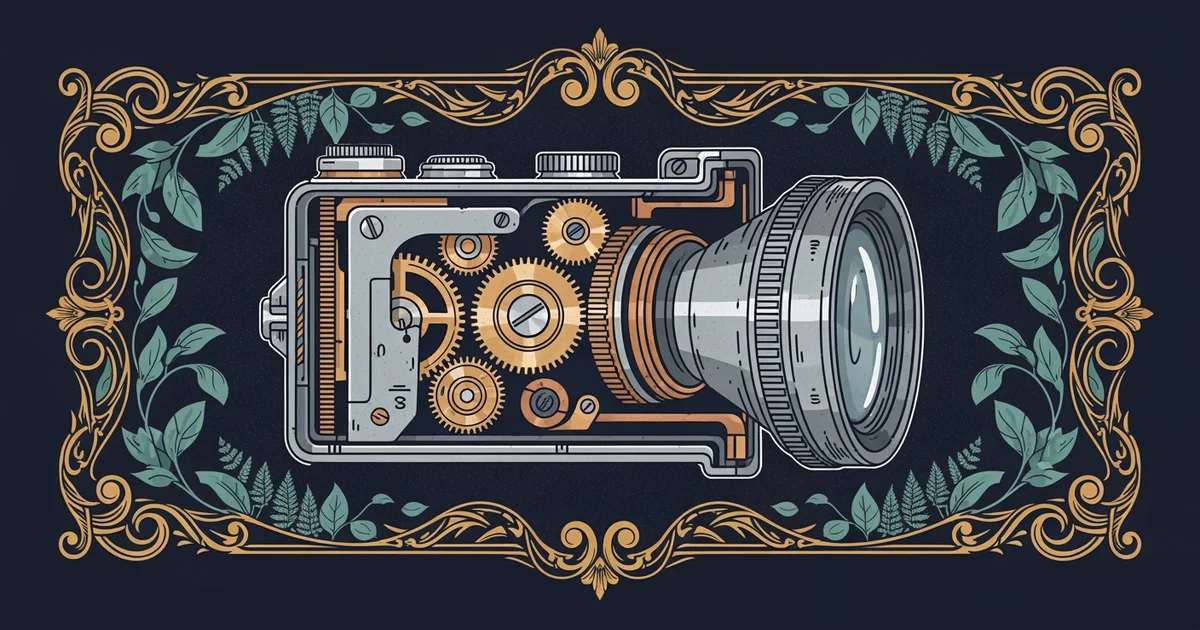
The Mechanical Eye of the Camera
Modern cameras function much like the human eye, capturing light through a series of precise mechanical parts. The journey begins at the front, where the aperture acts like the iris of your eye. It is a hole that expands or shrinks to control exactly how much light enters the device. When you are in a dark room, the aperture opens wide to collect every possible photon. If you stand in bright sunlight, the aperture closes down to prevent the sensor from being overwhelmed by too much light. Think of this process like managing a faucet; you adjust the flow of water to fill a glass without letting it spill over the sides. By controlling this flow, the camera ensures that the final image has the right brightness and detail.
Once the light passes through the aperture, it meets the shutter. The shutter functions as a mechanical gate that stays closed until you decide to take a photo. When you press the button, the gate opens for a set amount of time to let light hit the back of the camera. This duration is known as the shutter speed, and it dictates how long the sensor "sees" the scene. A fast shutter speed freezes a bird in mid-flight, while a slow speed creates a blurry trail of moving lights. Balancing these two components allows you to dictate the mood and clarity of your final photograph.
Internal Components and Image Recording
Behind the shutter sits the most important part of the camera, which is the digital sensor. This component acts as the film of the modern age, converting light energy into electrical signals. These signals are then processed by the camera's computer to create the image you see on the screen.
To understand how these parts work together, consider the following primary components:
- The lens focuses incoming light rays into a sharp point, ensuring that your subject appears crisp and clear rather than a blurry mess.
- The mirror reflects light upward into the viewfinder, allowing you to see exactly what the lens sees before you take the shot.
- The sensor captures the light information, turning photons into digital data that the camera can store as a permanent file.
Key term: Sensor — the electronic component that detects light and converts it into a digital image file.
When you combine these parts, the camera acts as a bridge between the physical world and digital memory. The lens gathers the light, the aperture limits the amount, the shutter times the exposure, and the sensor records the result. Mastering these parts is the first step toward moving from a simple "point and shoot" user to a deliberate creator of art. By learning how these mechanical pieces interact, you gain the power to manipulate light to suit your specific artistic vision. This path will provide you with the full technical foundation needed to master photography and control your visual storytelling.
Understanding the balance between light-gathering components allows photographers to capture images exactly as they intend.
The next step in our journey involves exploring the science of optics and how glass lenses manipulate light rays.