
The Torso Structure
Imagine you are trying to balance two heavy, irregular boxes on top of one another while walking across a slippery floor. If you fail to align the center of mass for each box, the entire structure will collapse before you reach your destination. Drawing the human torso requires this same logic of balance and structural alignment. You must treat the body not as a collection of soft shapes, but as two distinct, heavy volumes. Mastering this simple division is the primary secret to creating figures that look solid and believable on your paper.
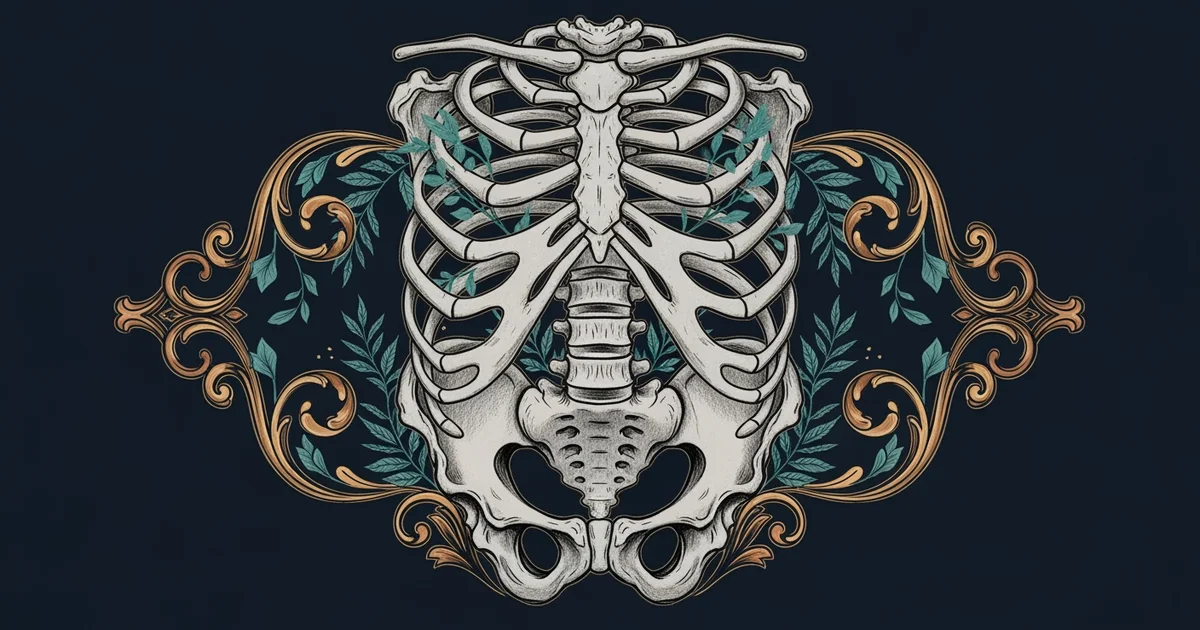
The Architecture of the Torso
When you begin to sketch the human form, you should visualize the torso as two main containers separated by a flexible middle. The upper container is the ribcage, which serves as the primary anchor for the chest and the shoulders. Below this structure sits the pelvis, which acts as the foundation for the legs and the lower spine. Think of these two shapes like the heavy, rigid hulls of two ships connected by a flexible rope. If you draw these as separate, independent blocks, you will find it much easier to tilt and rotate the body in dynamic ways. Most beginners make the mistake of drawing the torso as one long, soft tube, which causes the figure to look flat and lifeless. By forcing yourself to define these two masses, you create a clear sense of weight and gravity that defines the entire character.
Applying the Mass Analogy
To understand how these masses function, consider the analogy of a professional mover handling heavy furniture. A mover knows that lifting a couch requires keeping the center of gravity stable, or the entire piece will tip over during the move. Similarly, the ribcage and the pelvis must maintain a relationship that keeps the figure standing upright. If the ribcage leans heavily to the left, the pelvis often shifts to the right to maintain that delicate balance. This is known as the principle of counter-balance, and it is the key to making your drawings look like they exist in the real world. You should practice drawing these two volumes as simple, geometric shapes first, before you add any muscle or skin detail. This ensures that the foundation is solid before you worry about the surface features.
| Feature | Ribcage | Pelvis |
|---|---|---|
| Primary Role | Protects organs | Supports weight |
| Shape Type | Inverted egg | Bowl or basin |
| Mobility | High rotation | Lower stability |
When you look at this table, you can see how the different roles dictate the shape of each mass. The ribcage must be flexible to allow for breathing, while the pelvis must be rigid to support the entire upper body weight.
Developing Your Structural Skills
- Start by drawing a simple, rounded egg shape to represent the ribcage volume.
- Sketch a bowl shape below it to represent the solid mass of the pelvis.
- Connect these two masses with a curved line to suggest the flexible spine.
- Ensure the two shapes are never perfectly aligned, as this creates a stiff look.
- Adjust the tilt of each mass to show the character's current movement or action.
By following these steps, you build a foundation that supports any pose you want to draw. If you find your figures looking stiff, check the angle of your ribcage against the angle of your pelvis. Often, a slight change in the tilt of these two masses will immediately fix the problem and make the drawing feel more natural. You are learning to see the body as an engineer sees a building, where every piece has a clear purpose and a specific location. This structural approach allows you to build complex figures from simple, manageable parts that never overwhelm your process.
Understanding the torso as two distinct, balanced volumes allows you to construct realistic figures that possess gravity and movement.
The next Station introduces the upper limbs, which rely on these torso volumes to determine how the arms and shoulders function.