
Defining Global Economic Progress
Imagine you are standing in a busy marketplace where some stalls have piles of gold while others sit empty. You might wonder why one merchant thrives while his neighbor struggles to sell even the simplest goods. This gap in success is not just about luck or individual effort but reflects larger systems of national prosperity. Understanding these patterns helps us see how countries grow and why some nations fall behind in the race for stability. We must look beyond mere money to understand the true health of a society.
Measuring the Wealth of Nations
Economists often start by looking at the total value of goods and services produced within a country. This measure is known as Gross Domestic Product, or GDP for short, which acts like a scoreboard for national output. Think of a country like a large household managing its budget and resources to keep everyone fed and housed. If the household produces more value every year, it generally has more resources to build roads, schools, and hospitals for its citizens. However, a high GDP does not always mean every person lives a comfortable or healthy life.
Key term: Gross Domestic Product — the total monetary value of all finished goods and services produced within a country's borders in a specific period.
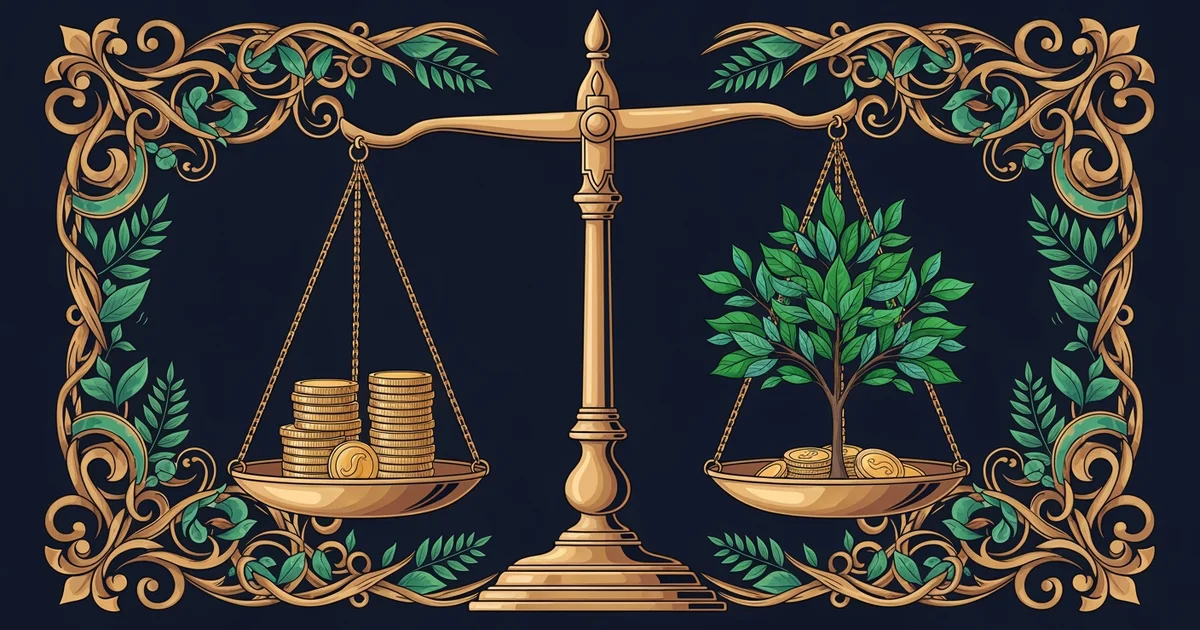
While GDP tracks the size of the economy, it ignores how that wealth is shared among the people. A country might have a massive economy but keep all that wealth in the hands of a very small group. This inequality creates a situation where the average person sees no improvement in their daily life despite national growth. Therefore, we need to balance raw economic data with other metrics that reflect the actual living standards of the population. This helps us see if progress is truly reaching the people who need it most.
Beyond Simple Numbers
To get a better picture, we look at how individual people fare using metrics like average income levels. Purchasing Power Parity is a useful tool that adjusts for the different costs of living across various countries. It helps us compare what a person can actually buy with their money in their own local market. Without this adjustment, we might wrongly assume that a person in a cheap country is poorer than someone in an expensive city. Comparing these values allows us to see how far a paycheck goes in different parts of the world.
| Metric | Purpose | Limitation |
|---|---|---|
| GDP | Measures total production | Ignores wealth distribution |
| PPP | Adjusts for local costs | Does not measure happiness |
| Life Expectancy | Tracks basic health | Sensitive to local disease |
We also track social indicators such as literacy rates and access to clean water to judge development. These factors provide a clearer view of whether a nation is building a foundation for long-term human success. A country that invests in its citizens through education and health often sees more stable growth over time. These social foundations are just as important as the factories or banks that drive the economy. Development is not just about building things but about building the capacity of people to live better lives.
True economic progress occurs when a nation raises the quality of life for its people rather than just increasing its total financial output.
By the end of this path, you will understand the complex historical and social forces that create the divide between thriving nations and those struggling to provide for their citizens.