
Photonic Quantum Gates
When a traffic controller manages busy intersections, they must decide which vehicles move forward to prevent dangerous collisions. Photonic quantum computing relies on a similar logic to direct light particles through complex circuits without losing their fragile information. This is the core challenge of managing quantum states within a processor. Engineers must build structures that force photons to interact with one another on demand. Without these interactions, photons would simply pass through each other like ghosts in a crowded room. We call these essential decision-making components photonic quantum gates.
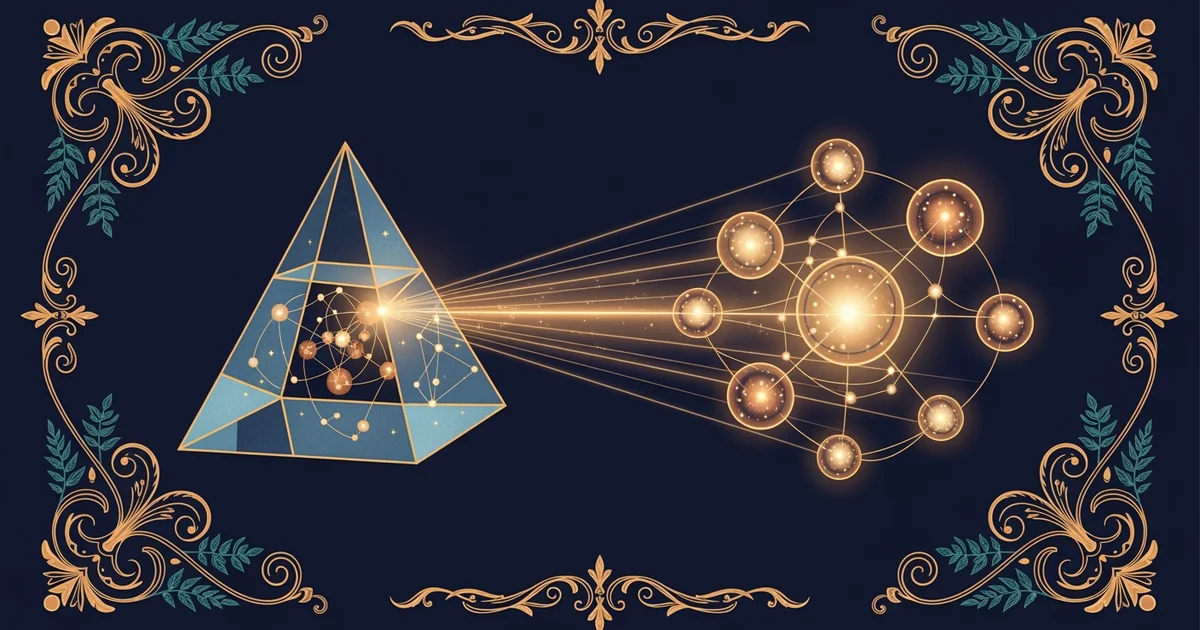
Designing the Photonic Logic Gate
To build a functional gate, we use the principles of interference to alter the state of light. A standard gate works by taking two input photons and checking their specific quantum properties. If the first photon has a certain state, the gate acts to flip the state of the second photon. This is the controlled-NOT gate, which serves as the fundamental building block for all complex quantum operations. By using mirrors and beam splitters, we can force photons to travel along paths that cause them to overlap and interfere. This interference creates the logical change needed for computing.
Key term: Controlled-NOT gate — a logic component that flips the state of a target bit based on the state of a control bit.
Think of this process like a high-speed toll booth on a busy highway that only opens for specific vehicles. If a car with a special pass arrives, the gate arm lifts to let it through while stopping others. In our photonic model, the control photon acts as the pass that determines if the target photon changes its path. This mechanism is far more efficient than classical electrical switches because photons do not generate heat. Heat is the primary enemy of computing speed and stability in modern silicon chips. By avoiding heat, we allow the system to operate at much higher frequencies.
Managing Quantum Interactions
Maintaining the delicate balance of light requires extreme precision in every physical component of the circuit. We must ensure that each photon remains in its assigned path throughout the entire logic operation. If a single photon drifts slightly off course, the entire calculation results in an error. This is why we use waveguides to trap light and guide it through the internal chip architecture. These waveguides act like fiber optic cables shrunk down to the size of a single microscopic chip. They keep the light focused so that interactions occur only where the gate structure requires them.
To organize these interactions, we rely on three specific physical requirements for effective gate operation:
- Phase stability allows the light waves to align perfectly so they interfere in a predictable manner.
- Optical loss reduction ensures that photons are not absorbed or scattered by imperfections in the chip material.
- High-speed switching enables the system to change states rapidly enough to perform millions of operations per second.
When these three requirements are met, the gate can process information with near-perfect reliability. This is an improvement over older designs that often lost too many photons during the switching process. We have refined these methods to ensure that the light stays coherent for longer durations. This coherence is vital for maintaining the complex quantum states needed for advanced calculations. As we scale these gates, we can link them together to form larger circuits. These circuits eventually become the backbone of a full-scale photonic computer. Each gate adds a layer of complexity that brings us closer to machines that outperform current supercomputers. We are now moving beyond basic prototypes toward more robust systems that can handle real-world data processing tasks.
Photonic quantum gates use light interference to manipulate information states without generating heat or losing signal integrity.
But this model breaks down when we attempt to fix the inevitable errors that occur during long-distance transmission.