
Traditional versus Quantum Logic
Imagine you are trying to find a specific book in a library that is completely dark. If you search like a traditional computer, you must check every single shelf one by one until you find the right item. This slow, step-by-step process defines how current machines solve problems by toggling tiny switches between two fixed positions. These switches represent the basic units of information we call binary bits. A bit is always either a zero or a one, much like a light switch that is either fully off or fully on. This rigid system works well for simple math, but it struggles when the number of possible solutions grows too large for the machine to process quickly.
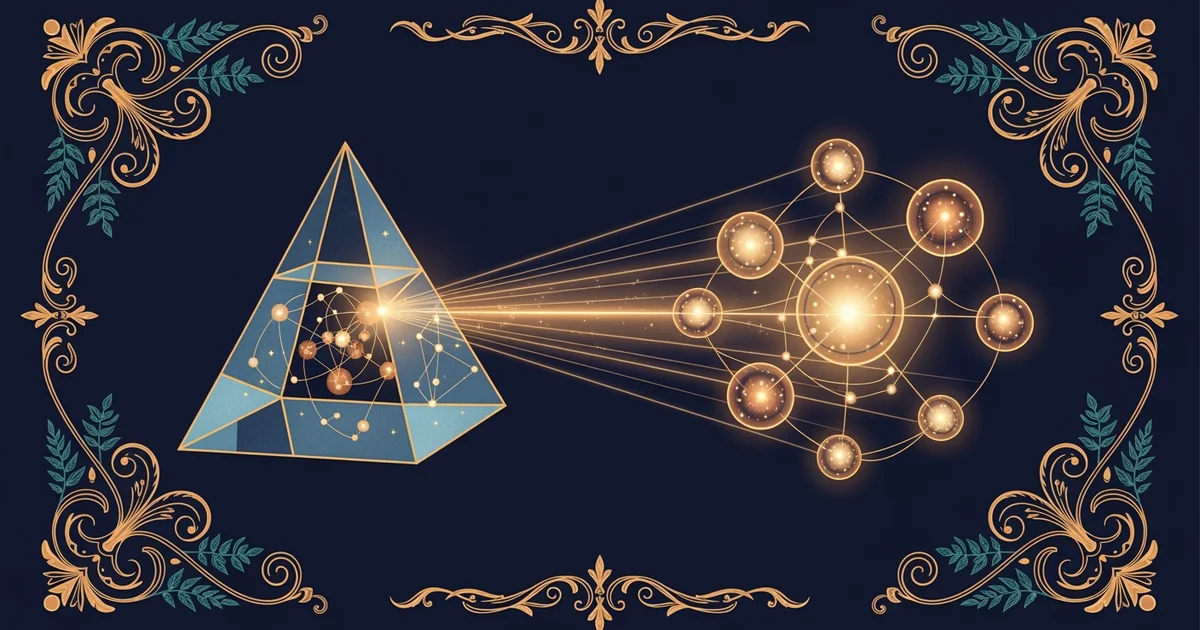
The Limitations of Classical Logic
Traditional computers rely on classical logic gates to process data through long sequences of binary operations. These gates function like traffic controllers that decide whether a signal passes through based on specific input rules. If you have two bits, a gate might output a one only if both inputs are also set to one. While this method is reliable, it is also quite limited because it forces the machine to choose a single path at every junction. If you need to search a massive database, the computer must test every path individually, which wastes time and energy. This linear approach creates a bottleneck that prevents machines from solving complex puzzles that involve millions of variables happening at the same time.
Key term: Classical logic gates — the physical components in a computer that perform basic boolean operations on binary bits to process data.
To understand why this is a problem, consider the analogy of a person navigating a maze by walking down every single hallway. If the maze has a thousand dead ends, the person must walk down every single one to find the exit. This is exactly how a classical processor handles complex data sets by exhausting every possibility. The machine does not know which path is correct until it reaches the end of each trail. As the maze grows larger, the time required to find the exit increases exponentially. This reality forces us to look for a different way to process information that does not require checking every single dead end manually.
Moving Toward Quantum States
Quantum computing changes the rules by using the strange properties of light and matter to represent information. Instead of being stuck as a zero or a one, a quantum bit can exist in a state of quantum superposition. This means the bit acts as if it is both zero and one at the same time until we measure it. Imagine a spinning coin that is not heads or tails but a blur of both states simultaneously. By using these blurred states, a quantum computer can explore many different paths within a maze all at once. This ability allows the machine to find the correct answer much faster than a classical computer could ever dream of doing.
| Feature | Classical Bit | Quantum Bit |
|---|---|---|
| State | Zero or One | Zero and One |
| Operation | Sequential | Parallel |
| Scaling | Exponentially slow | Exponentially fast |
| Logic | Boolean gates | Quantum gates |
When we compare these two systems, the difference in power becomes very clear for difficult tasks. The table above shows that while classical bits are limited to one state, quantum bits handle multiple possibilities in a single moment. This shift is not just a small improvement but a fundamental change in how we calculate results. We are moving from a world of rigid, binary choices to a fluid world of probability. By harnessing this fluid nature, we can build machines that solve problems in seconds that would take current supercomputers millions of years to complete.
This transition requires us to rethink our entire approach to logic and computation. We must stop thinking about bits as static switches and start seeing them as dynamic waves of potential. This perspective shift is the first step toward mastering the power of quantum mechanics in our modern world. As we continue this path, we will learn how to build the physical circuits that make these strange quantum behaviors useful for real-world tasks. The goal is to create a bridge between the physical world of light and the abstract world of mathematics to unlock new levels of speed.
Quantum logic allows a machine to evaluate multiple possibilities simultaneously rather than checking every option one by one.
Next, we will explore how we physically build the circuits needed to control these delicate quantum states.