
The Nature of Light and Photons
Imagine trying to send a secret message across a crowded room using only a single flickering candle. If you could control every tiny pulse of light, you could transmit massive amounts of data instantly. This is the core promise of modern physics, where we stop treating light as a simple glow and start using it as a precise tool. Scientists now manipulate individual particles of light to carry complex information across vast distances without losing any signal quality. This approach changes how we think about building the next generation of super-fast computers for the future.
The Fundamental Nature of Light
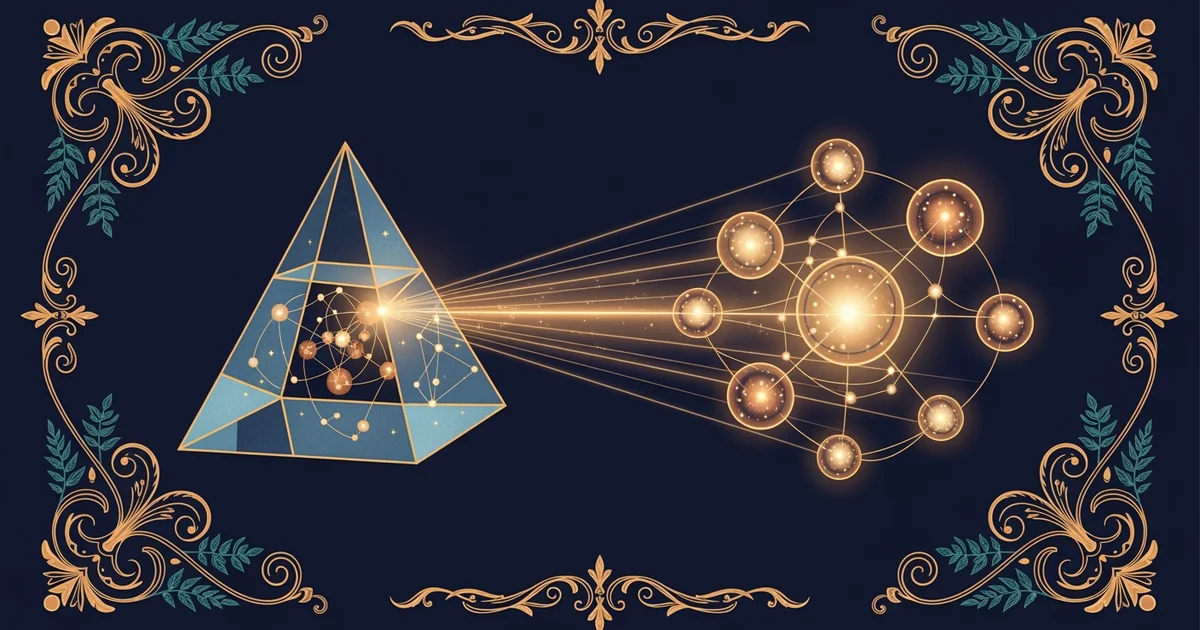
Light behaves in ways that seem contradictory when we observe it at the smallest possible scales. It acts like a wave that ripples through space, yet it also functions like a discrete packet of energy. We call these tiny packets photons, which serve as the primary units of light in our physical universe. Unlike electrons that move slowly through metal wires, these particles travel at the highest speed allowed by nature. Because they have no mass, they do not suffer from the same friction or heat issues that plague current silicon chips. This makes them perfect candidates for moving data inside a computer without wasting energy as heat.
Key term: Photon — the smallest discrete packet of electromagnetic energy that acts as the fundamental building block of light.
Thinking about this requires a shift in perspective, so consider the analogy of a busy highway system. Current computers use electrons like thousands of cars stuck in heavy traffic on a narrow city road. Every car generates heat and friction, which slows down the entire system and wastes fuel. In contrast, using photons is like switching to a high-speed rail system that moves passengers through a vacuum tube. The passengers arrive at their destination instantly because they face no traffic and experience zero resistance along the way.
Harnessing Light for Computing
We must understand how to control these particles to build machines that process information differently than today. Traditional computers rely on binary logic, where switches are either on or off to represent data bits. By using light, we can encode information in the properties of the photon rather than simple states. This allows for parallel processing power that far exceeds the limits of standard electrical circuits found in laptops. Researchers use specific materials to guide these particles along paths, ensuring they reach their target with perfect timing.
| Property | Traditional Electron | Modern Photon |
|---|---|---|
| Speed | Relatively slow | Light speed |
| Heat | High energy loss | Near zero loss |
| Mass | Has mass | Zero mass |
To manage this data, we focus on three main physical traits that photons possess during transit:
- Polarization allows us to set the orientation of the light wave, which provides a reliable way to encode binary information into the particle.
- Frequency determines the specific color of the light, enabling us to send multiple signals simultaneously through the same physical space without interference.
- Phase measures the timing of the wave cycles, providing a way to perform complex calculations by overlapping different light signals together.
These properties ensure that we can pack more information into a single beam than any copper wire. As we master the art of directing these particles, we move closer to creating machines that solve problems in seconds. These calculations would take current supercomputers thousands of years to finish, changing how we analyze the world around us. By the end of this learning path, you will understand how to design systems that leverage these quantum behaviors to redefine the speed of modern computing.
The unique ability of light particles to travel without resistance allows us to transmit and process information at speeds impossible for traditional electronic hardware.
We now move to explore how these light properties enable a shift from traditional logic to quantum computing.