
Structural Integrity Analysis
Imagine you are sitting on a wooden chair that suddenly creaks under your weight. This common sound serves as a warning that the furniture might fail to support you. Every object in your home must handle forces that push or pull on its physical frame. When you understand how these forces travel through materials, you can predict if a shelf will hold your books or snap. Structural integrity relies on the way parts connect to distribute weight across a stable base. If the design lacks balance, even strong materials will eventually buckle under the stress of gravity.
The Mechanics of Load Distribution
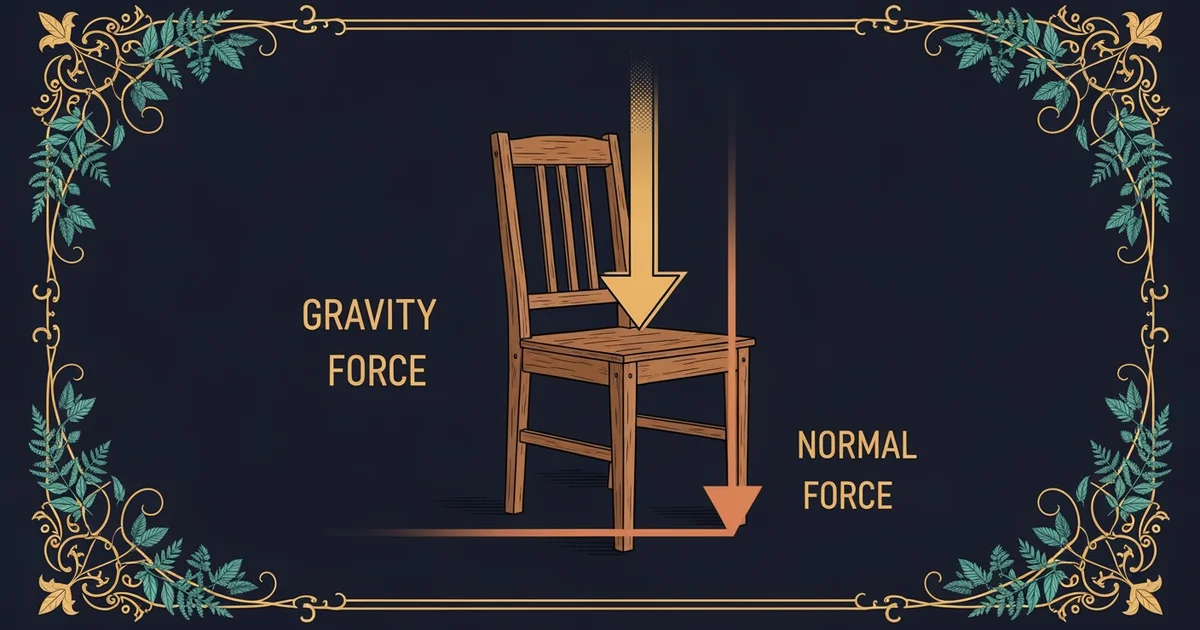
When an object bears weight, it experiences stress which is the internal force acting on its structure. This force must travel through the legs or frame until it reaches the floor surface. If the load is not centered, one part of the structure carries more weight than others. You can view this process like a family budget where money represents the total weight of the load. If one person spends the entire budget, the rest of the family suffers from a lack of funds. Similarly, if one chair leg takes all the pressure, it will likely bend or break before the others. Engineers design furniture to spread this load evenly across all available supports to prevent localized failure.
Key term: Structural Integrity — the ability of an object to withstand its intended load without breaking or deforming.
To ensure stability, designers use specific shapes that manage forces effectively. A vertical column is excellent at resisting compression, which is a force that pushes inward on an object. Horizontal beams, however, face tension and bending forces that want to snap them in half. To combat this, builders often add diagonal braces to create triangles. Triangles are the strongest shape because they distribute force along their sides rather than allowing corners to flex. By adding these supports, you turn a wobbly frame into a rigid structure that resists movement under heavy loads.
Materials and Failure Analysis
Different materials respond to these forces in unique ways based on their internal composition. A metal rod might bend before it breaks, but wood often snaps suddenly when pushed past its limit. We measure these reactions by looking at how much an object can stretch or compress before failing. The following table compares how common furniture materials handle typical household forces:
| Material | Best Use Case | Primary Weakness | Force Resistance |
|---|---|---|---|
| Hardwood | Support Frames | Splitting grains | High compression |
| Steel | Joint Brackets | Metal fatigue | High tension |
| Plastic | Light Shelving | Heat warping | Low rigidity |
When assessing the safety of your own furniture, you should look for signs of wear at the joints. Joints are the points where two pieces of wood or metal meet and connect. These areas often experience the most movement and stress over time. If a screw feels loose or a joint has a gap, the structure can no longer distribute weight correctly. This imbalance shifts the entire load onto the remaining fasteners, which increases the chance of a sudden collapse. Regularly tightening these connections ensures that the load travels safely through the frame rather than stressing a single point.
Finally, consider how the base of your furniture interacts with the floor surface. A wide base provides more stability because it creates a larger area for the weight to disperse. If you place a heavy item on a narrow stand, the center of gravity might shift outside the base. Once the center of gravity moves past the edge of the support, the object will tip over. Keeping the weight low and the base wide prevents this type of instability. By applying these simple physics principles, you can keep your home environment safe and functional for years to come.
Structural integrity depends on distributing weight evenly through rigid shapes and secure joints to prevent failure.
But what does it look like in practice when we observe how light travels through those same structural gaps?