
Newtonian Motion at Home
Pushing a heavy bookshelf across your living room floor requires more effort than moving a light chair. You likely feel the resistance of the floor pushing back as you try to slide it. This daily struggle highlights the fundamental rules of motion that govern every object inside your home.
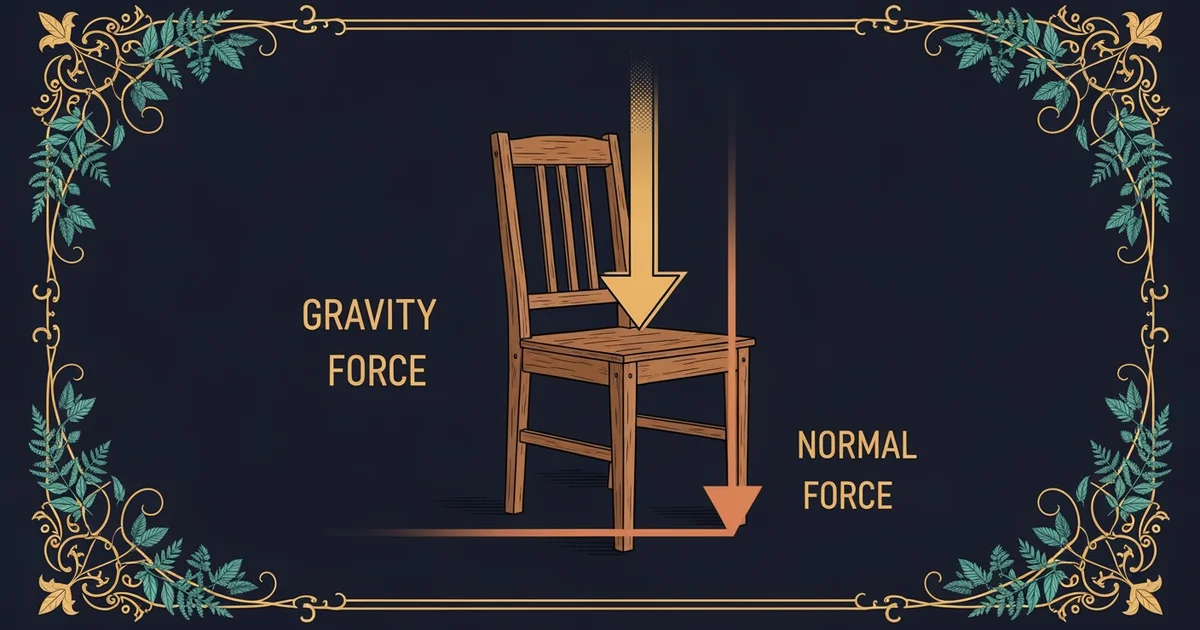
The Principles of Inertia and Force
When you attempt to move stationary furniture, you are fighting against the natural tendency of matter to stay put. This property is known as inertia, which describes the resistance of any object to a change in its motion. If you apply a small amount of force, the object remains still because the static friction between the floor and the furniture cancels out your effort. You must apply a force greater than this friction to initiate any movement across the room. Once the object begins to slide, you only need to overcome the sliding friction to maintain a steady speed. This relationship is defined by the famous equation , where force equals mass multiplied by acceleration. Your home is a giant laboratory where these invisible laws dictate how easily you can rearrange your living space.
Key term: Inertia — the inherent resistance of a physical object to any change in its current state of motion.
Think of moving heavy furniture like trying to start a car that has a dead battery. The car is the heavy object, and your push represents the force you apply to change its state. If you are alone, your force might be too small to overcome the car's massive inertia. If you find a friend to help, you increase the total force applied to the vehicle. Once the car begins to roll, it becomes much easier to keep it moving forward. Just like the car, your heavy bookshelf requires a significant initial burst of energy to overcome its mass. Once it is in motion, you can maintain that movement with much less effort than you used to start it.
Applying Motion to Household Objects
Understanding how mass affects movement helps you predict how different items will react to your actions. A light object with small mass requires very little force to accelerate across your floor. Conversely, a massive object requires a much larger force to achieve the same change in speed. You can see these differences clearly when you compare various household items moving on different surfaces. The following table summarizes how mass and surface texture impact the amount of force needed to move common items:
| Object | Mass | Surface Type | Required Force |
|---|---|---|---|
| Plastic chair | Low | Carpet | Moderate |
| Wooden desk | High | Hardwood | High |
| Small lamp | Very low | Tile | Very low |
| Heavy sofa | Very high | Rug | Extremely high |
When you look at these interactions, you must consider the role of friction as a constant companion. Friction acts in the opposite direction of your intended motion to slow things down. If you push a box across a smooth tile floor, the friction is lower than if you push it across a thick carpet. Understanding these variables allows you to move items efficiently without wasting your own energy.
Consider these three factors that determine how your furniture moves across your home:
- The total mass of the object determines how much force is necessary to overcome its natural inertia.
- The texture of the floor surface changes the amount of friction that opposes your forward movement.
- The amount of acceleration you want to achieve dictates how much extra force you must apply.
By mastering these concepts, you can predict exactly how much work is required to clean or reorganize. You are applying physics every time you slide a chair to the table. Every movement you make is a test of these laws in action within your own living room.
Moving household objects requires balancing the force you apply against the object's mass and the friction of the floor surface.
The next Station introduces pressure and fluid dynamics, which determines how water flows through your home plumbing.