
The Nature of Atomic Bonds
Imagine you are holding a solid steel paperclip that resists bending despite your strongest efforts to pull it apart. This simple object stays together because of invisible forces pulling on its tiny building blocks from every possible direction. You might think the atoms are touching, but they are actually held together by the delicate balance of electric charges. These forces create the rigid shapes you see in the world around you every single day.
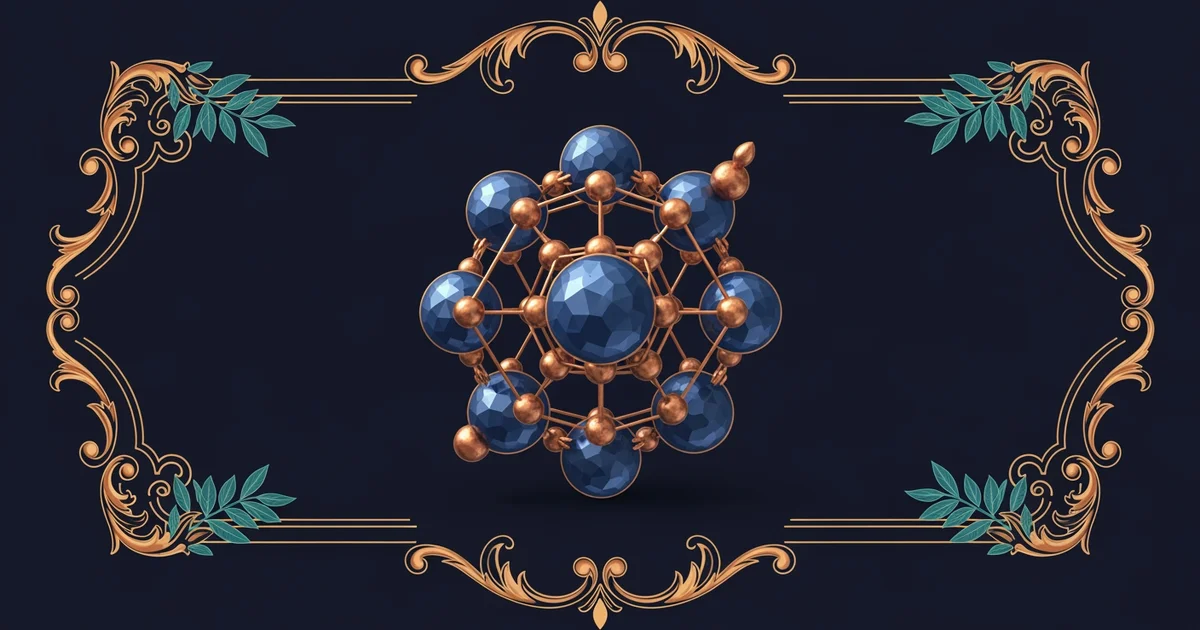
The Role of Electromagnetic Attraction
At the heart of every solid material, atoms interact through powerful electromagnetic forces that act like invisible glue. Each atom contains a positive center called a nucleus surrounded by a cloud of negative electrons. When two atoms get close, the positive nucleus of one atom attracts the negative electrons of its neighbor. This attraction creates a stable bond that locks the atoms into a fixed position relative to one another. If these forces did not exist, all matter would drift apart into a loose cloud of particles. You can think of this process like two magnets clicking together when they get close enough to feel the pull. The strength of this attraction determines if the material remains a hard solid or turns into a liquid.
Key term: Atomic bond — the lasting attraction between atoms that enables the formation of chemical substances and solid structures.
Different materials form bonds based on how their electrons behave when they meet other nearby atoms. Some atoms share their electrons like partners splitting a bill to cover the cost of a meal. Other atoms donate electrons to their neighbors to achieve a more stable state of balance. The way these electrons move or stay put defines the physical traits of the final substance. These interactions are not random events because they follow strict rules based on the charge of each particle. The resulting structure determines if a material will be flexible like rubber or brittle like glass.
Properties of Common Materials
We can categorize how these bonds create different physical properties by looking at how they hold atoms in place. The strength and flexibility of a material depend entirely on the nature of the bond between its specific building blocks. A metal, for example, allows electrons to move freely between atoms, which explains why they conduct electricity so well. In contrast, other materials lock their electrons tightly in place, creating insulators that prevent energy from flowing through them. The table below compares how these internal bond types lead to the different traits we observe in our daily lives.
| Bond Type | Electron Behavior | Material Property | Example Material |
|---|---|---|---|
| Metallic | Shared among all | High conductivity | Copper wire |
| Covalent | Shared by pairs | Strong and rigid | Diamond crystal |
| Ionic | Transferred fully | Brittle structure | Table salt |
These bond types dictate the behavior of everything from the screen on your phone to the chair where you sit. Because the atoms are trapped in these specific patterns, they cannot move past each other easily without breaking the bond. This explains why a solid object keeps its shape even when you apply force to its surface. The atoms simply vibrate in their spots rather than flowing away like water in a river. Understanding these connections helps us build stronger materials for the future of modern technology.
The physical properties of every solid object emerge from the specific ways electromagnetic forces bind atoms together in fixed patterns.
Next, we will explore how these atomic arrangements change when matter transitions between solid, liquid, and gas states.