
Defining Scenography
Imagine you are walking into a room that is completely empty and painted white. You feel a sense of confusion because the space tells you nothing about where you are or what might happen next. Now, picture that same room filled with a warm lamp, a worn leather chair, and a single window showing a rainy street. Suddenly, you understand the mood and the story of the space without a single word being spoken. This is the power of scenography in the world of theater. It turns a hollow physical space into a meaningful world.
The Language of Visual Space
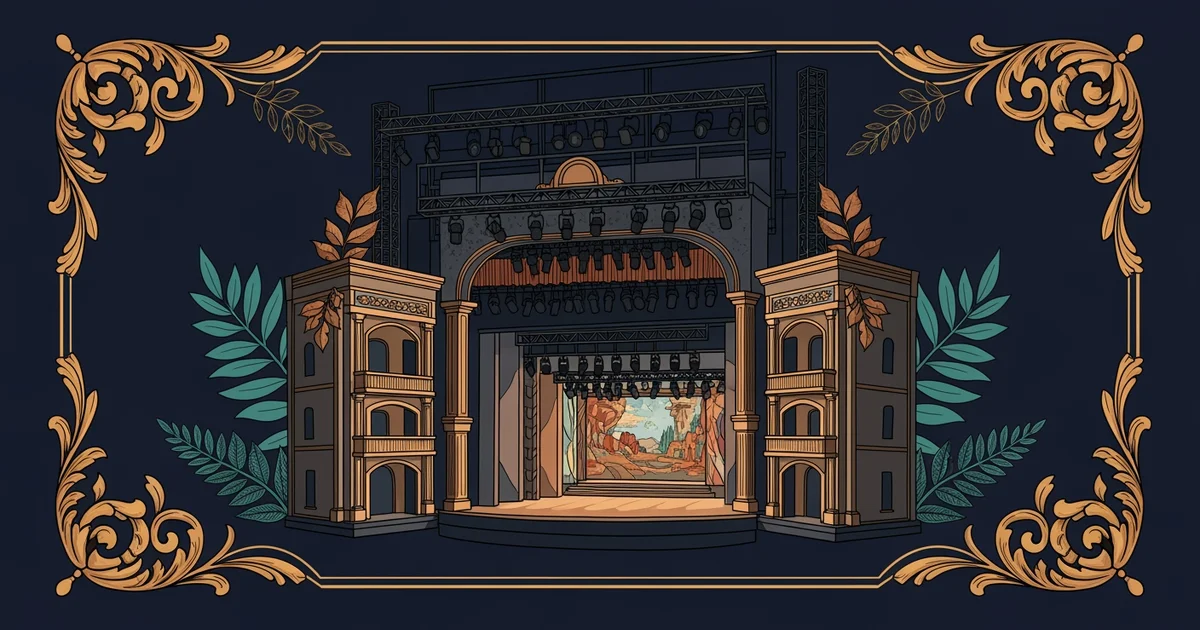
When we talk about theater, we often focus on the actors and the lines they speak. However, the stage itself acts as a silent character that influences how we perceive the entire story. Scenography is the art of designing this environment to support the script and the director's vision. Think of it like the difference between reading a recipe on a piece of paper and actually tasting the finished meal. The recipe is just information, but the kitchen and the ingredients create the actual experience for your senses. By using light, color, and physical structures, designers build a bridge between the written words and the audience's imagination.
Every element on the stage serves a specific purpose in telling the audience who, where, and when. A designer must consider how the physical layout affects the movement of the actors during the performance. If a stage is cluttered with too many objects, the actors might struggle to move naturally during intense scenes. If the stage is too empty, the audience might feel disconnected from the emotional stakes of the story. Designers balance these needs by selecting materials that reflect the tone of the play. A gritty drama might use rusted metal and rough textures, while a light comedy might rely on bright colors and clean, simple lines.
Creating Meaning Through Design
Beyond just looking nice, the visual elements must work together to create a cohesive world for the viewers. Designers use several core tools to transform the stage into a living environment:
- Spatial composition refers to how objects are arranged within the stage area to guide the focus of the audience toward important actions.
- Atmospheric lighting uses shadows and color temperatures to change the mood of a scene instantly without moving a single piece of furniture.
- Material texture provides subtle clues about the environment, such as whether a wall is made of cold stone or soft fabric, which changes how we feel about the setting.
These choices are not random decisions made in a vacuum, but are carefully crafted to serve the needs of the script. If the script calls for a lonely setting, the designer might place a single, small chair in the center of a massive, dark stage. This choice makes the actor look small and isolated to the audience. By controlling the relationship between the actor and the space, the designer helps the audience feel the emotions written in the script. This process of visual storytelling ensures that the physical world of the play feels authentic and intentional.
| Design Tool | Primary Function | Audience Impact |
|---|---|---|
| Lighting | Sets the mood | Creates emotional response |
| Furniture | Defines the space | Shows social status and era |
| Architecture | Controls movement | Influences pacing and energy |
Every object on stage must justify its presence by contributing to the overall story being told. If a prop does not help the audience understand the characters or the situation, it becomes a distraction. Designers often remove unnecessary items to ensure that every visual detail carries weight and meaning. This careful editing process keeps the audience focused on the most important parts of the performance. By the end of this path, you will understand how to view a stage as a complete, living system of design.
Scenography transforms a script into a physical world by using visual elements to shape the audience's emotional connection to the story.
The next step in our journey explores how the physical stage has evolved through history to support these artistic choices.