
Thrust Stage Dynamics
Imagine sitting in a theater where the stage wraps around your chair like a giant hug. You feel the heat from the lights and hear the actors breathing just inches away from you. This is the unique reality of a thrust stage, where the performance space pushes out into the center of the audience. Unlike traditional designs that keep actors behind a frame, this layout forces a direct connection between the performers and the viewers. It creates a shared energy that feels like a conversation rather than a broadcast. You are no longer just watching a show; you are inside the story itself.
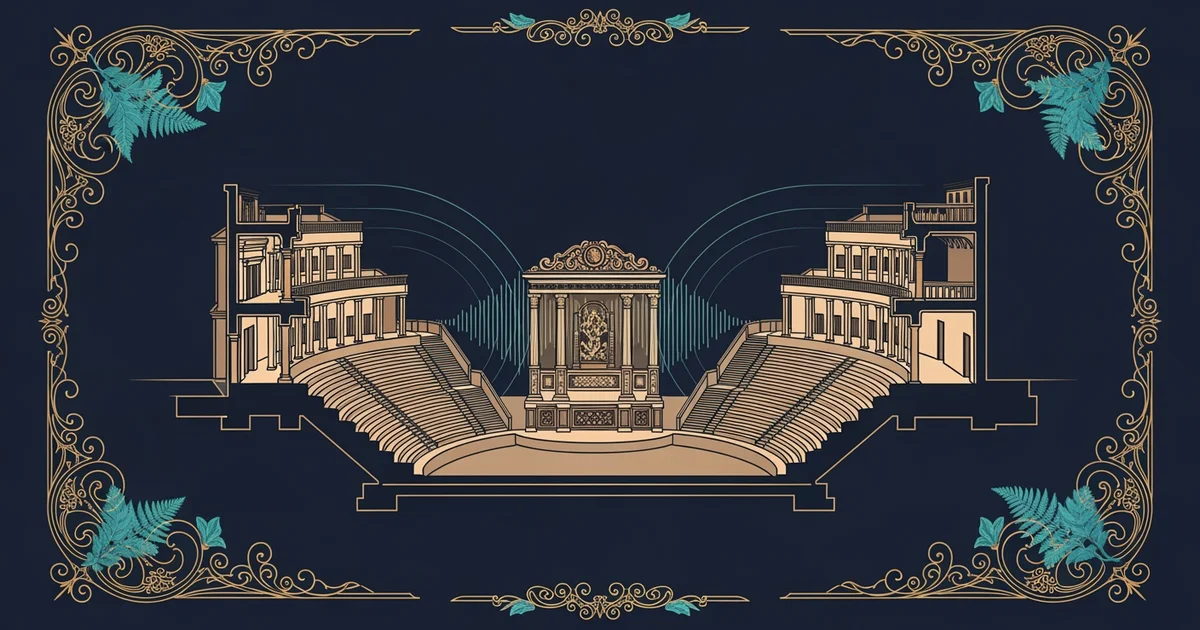
Understanding the Thrust Stage Design
When architects design a thrust stage, they prioritize proximity above almost everything else. The stage platform extends into the seating area so that spectators sit on three different sides of the action. This creates a spatial experience that feels much more intimate than the standard layout most people know. Think of it like a professional sports arena where the fans surround the court on all sides. Because the audience is so close, the actors cannot hide behind elaborate painted scenery or complex backdrops. They must rely on their movement and voice to command the space, as every angle reveals a different perspective to the viewer. This design forces the director to think about sightlines constantly, ensuring that no part of the audience feels ignored during the performance.
Key term: Sightlines — the imaginary lines that define what a specific member of the audience can see from their seat.
Comparing Stage Layouts
To see why this matters, we can look at the differences between the thrust model and the common proscenium style. A proscenium stage uses a frame that acts like a picture window, keeping the audience firmly in front of the action. This creates a clear boundary between the real world and the world of the play. In contrast, the thrust stage removes that barrier by placing the audience in the same physical zone as the actors. This shift changes the entire nature of the performance, as the actors must perform in the round to keep everyone engaged. The table below highlights how these two common stage types differ in their basic approach to the audience.
| Feature | Proscenium Stage | Thrust Stage |
|---|---|---|
| Audience Position | Front only | Three sides |
| Scenery Usage | High usage | Minimal usage |
| Visual Focus | Single direction | Multiple angles |
| Intimacy Level | Distant | High proximity |
The Impact of Audience Immersion
When we analyze how the thrust stage affects the viewer, we see that it relies heavily on the concept of shared space. Because the audience surrounds the performers, the energy flows in a circle rather than a straight line. This makes the performance feel more like a live event where anything could happen at any moment. It is much harder to look at your phone or drift off when an actor is standing only two feet away from your seat. The stage forces you to remain present, as your gaze is part of the performance dynamic. This immersion is the primary goal of the thrust design, as it turns a static play into a living, breathing experience for everyone in the room.
Managing Movement and Space
Because the stage is exposed on three sides, the movement of the actors becomes the most important tool for storytelling. They must constantly rotate their bodies so that different sections of the crowd can see their faces and expressions. If an actor stands still for too long, they might accidentally turn their back to a large portion of the room. This requires a high level of physical awareness from the performers, as they must balance their performance for multiple groups at once. It turns the act of walking across the stage into a complex dance that keeps the story moving forward. This constant motion creates a dynamic visual rhythm that keeps the audience fully engaged from start to finish.
The physical extension of a performance space into the audience creates a shared environment that forces deeper emotional engagement through proximity and constant movement.
The next Station introduces black box flexibility, which determines how modern spaces adapt to different performance needs.