
Historical Roots of Dystopia
Imagine a city where every citizen must follow a strict schedule dictated by a central clock. If you arrive one minute late to your assigned task, the system automatically marks your account for a penalty. This scenario feels like a modern invention, but the roots of such control stretch back through centuries of human history. Writers often look at real events to craft these chilling visions of the future. By observing how power shifts and how societies collapse, they create stories that feel deeply personal and frighteningly real.
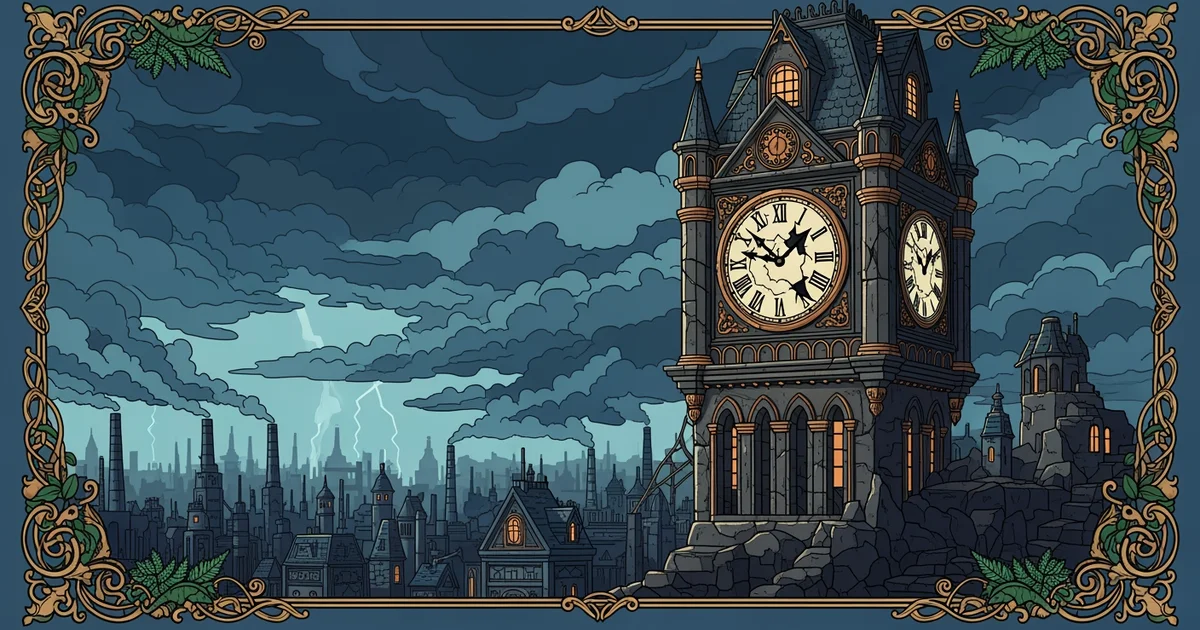
The Evolution of Social Control
Societal dystopia serves as a dark mirror reflecting the anxieties of a specific time period. When authors witness rapid industrial growth or total war, they often fear the loss of individual choice. These stories function much like an insurance policy for society, highlighting potential risks before they become our reality. Just as a bank tests its security systems to prevent theft, writers stress-test our current values through extreme scenarios. They ask what happens when the structures we trust become the very things that limit our human potential.
Historical instability provides the primary fuel for these narratives of decline and forced conformity. When people feel their freedom is slipping away, they look for ways to articulate that quiet dread. This process turns abstract political fears into concrete stories about characters trapped in rigid systems. By placing ordinary people in impossible situations, writers show the fragility of our daily lives. They demonstrate that the path to a controlled society is often paved with good intentions or promises of safety.
Key term: Dystopia — a fictional society characterized by great suffering or injustice, typically one that is totalitarian or post-apocalyptic.
Historical Influences on Modern Themes
Major events throughout the twentieth century heavily influenced the way authors approach the concept of state surveillance. Many writers observed the rise of regimes that demanded total loyalty from every single citizen. These historical shifts changed how people viewed their relationship with government leaders and public institutions. The following table highlights how different historical triggers often lead to recurring themes in dystopian literature.
| Historical Trigger | Dystopian Theme | Core Impact on Society |
|---|---|---|
| Industrialization | Loss of nature | Humans become machine-like |
| Totalitarianism | State surveillance | Privacy disappears entirely |
| Economic collapse | Resource scarcity | Competition replaces community |
These themes reflect genuine concerns about how technology and power reshape our basic human interactions. When we see these patterns in stories, we are actually seeing a reflection of historical lessons learned the hard way. Authors do not just invent these problems out of thin air to entertain their readers. They pull from the evidence of the past to warn us about the dangers waiting in our future.
Understanding these roots helps us see that these stories are not just about imaginary worlds. They are about the tension between our desire for order and our need for personal liberty. Every rule a government creates has a cost, and dystopian fiction forces us to calculate that price. By examining the past, we become better equipped to recognize when our own society might be drifting toward these extremes. We learn to value the freedoms that are so easily taken for granted in a stable, functioning world.
Dystopian fiction uses historical patterns of power and social collapse to explore the fragile balance between public safety and individual freedom.
Next, we will explore how the concept of a perfect society creates the foundation for its own dark opposite.