
Defining the Dystopian Genre
Imagine waking up in a city where every single movement you make is tracked by hidden cameras. You feel the constant gaze of an unseen authority that dictates your job, your home, and even your daily food rations. This experience is the heart of a genre that explores the dark side of human progress and social control. Dystopian stories serve as a warning by taking our current societal trends and pushing them to their most extreme, frightening conclusions.
The Anatomy of Oppressive Systems
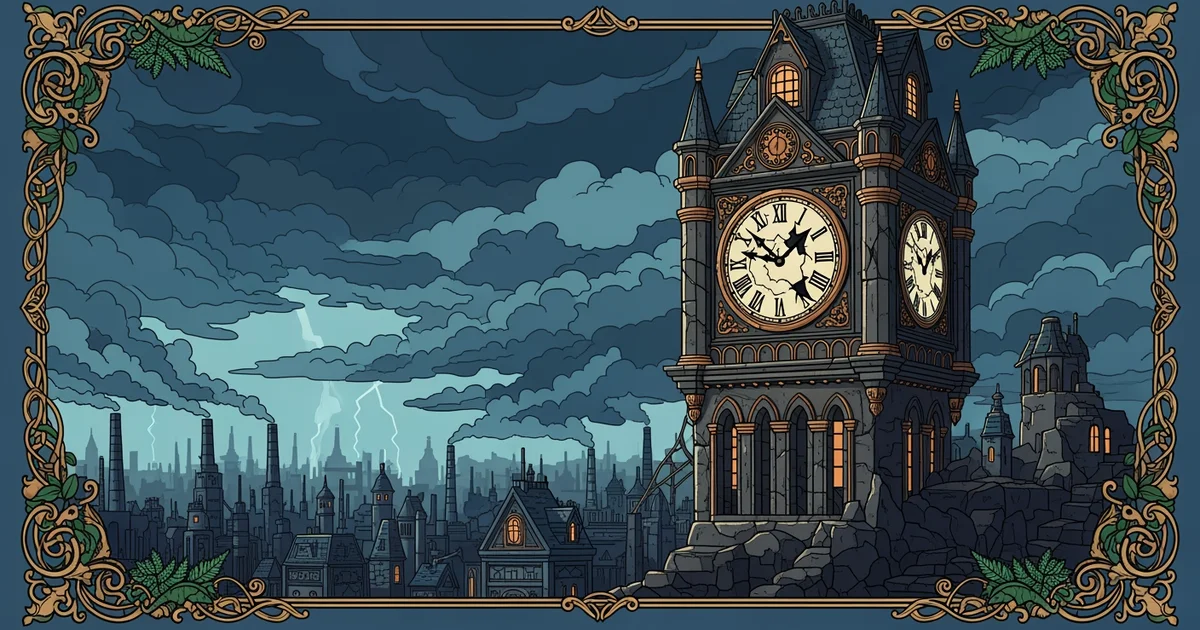
At the core of every story in this genre lies a dystopia, which acts as a society defined by extreme misery or fear. These worlds often look like our own at first glance, but they possess a hidden, rotten foundation that keeps the citizens trapped. Think of it like a shiny new car that runs perfectly on the outside but has a broken engine that will soon fail. The citizens in these stories often believe they live in a perfect society, even as their basic rights are stripped away by the ruling power. This contrast between the appearance of order and the reality of suffering is what makes these narratives so impactful for readers.
Key term: Dystopia — an imagined society that is characterized by oppressive control and the illusion of a perfect existence.
These stories rely on specific elements to create a sense of tension and unease for the audience. The ruling power might be a government, a massive corporation, or even a technological system that has gained too much influence. By examining these structures, we can see how the authors reflect our own worries about the loss of personal freedom. The struggle of the main character is not just about survival, but about waking up to the truth of their reality. When a character begins to question the status quo, the entire weight of the oppressive system turns against them to maintain control.
Core Characteristics of Dystopian Worlds
To identify these narratives, we can look at the common traits that appear across most examples. While every story is unique, they generally share a set of features that signal a move away from a healthy, functioning society. These traits help us understand the specific fears the author is trying to highlight through their world-building.
| Characteristic | Description | Purpose in Narrative |
|---|---|---|
| Social Control | Strict rules limit personal choice | Shows the loss of individual agency |
| Propaganda | Information is controlled by leaders | Highlights the distortion of the truth |
| Dehumanization | People are treated like mere objects | Emphasizes the cruelty of the system |
Beyond these structural traits, these stories often focus on how technology or power can be misused to harm the public. We see how surveillance, environmental decay, or rigid class divisions can turn a community into a prison. The following elements are common threads found within these dark, imagined landscapes:
- The restriction of independent thought prevents citizens from challenging the unfair rules imposed by their leaders.
- The constant threat of punishment ensures that most people remain too afraid to speak out against injustice.
- The reliance on advanced technology allows the ruling power to monitor every action taken by the population.
These narrative tools allow authors to hold a mirror up to our world. By showing us a future where power has gone unchecked, they encourage us to think critically about our own choices. We learn to spot the warning signs of inequality and the dangers of giving up our privacy for the sake of temporary comfort. This genre does not just provide entertainment; it acts as a cultural alarm system that reminds us to value our freedom. By the end of this path, you will understand how these stories function as a vital critique of the modern world.
Dystopian fiction serves as a cautionary lens that magnifies our contemporary anxieties about power and technology to expose the fragility of human freedom.
This foundation now prepares us to explore how these dark visions were born from the historical events of the past.