
AI and Natural Language
When a customer asks a digital assistant to play a specific song, the machine must parse human intent from raw sound waves. This task requires the system to map messy, spoken input onto structured data points that represent musical titles and artists. This process mirrors the cognitive linguistic models we studied in Station 12, where human minds categorize sensory input into meaningful conceptual frames. Modern AI systems rely on these same principles to bridge the gap between biological speech patterns and rigid computer code. By turning sound into symbols, machines attempt to replicate the way our brains organize the chaotic flow of daily communication.
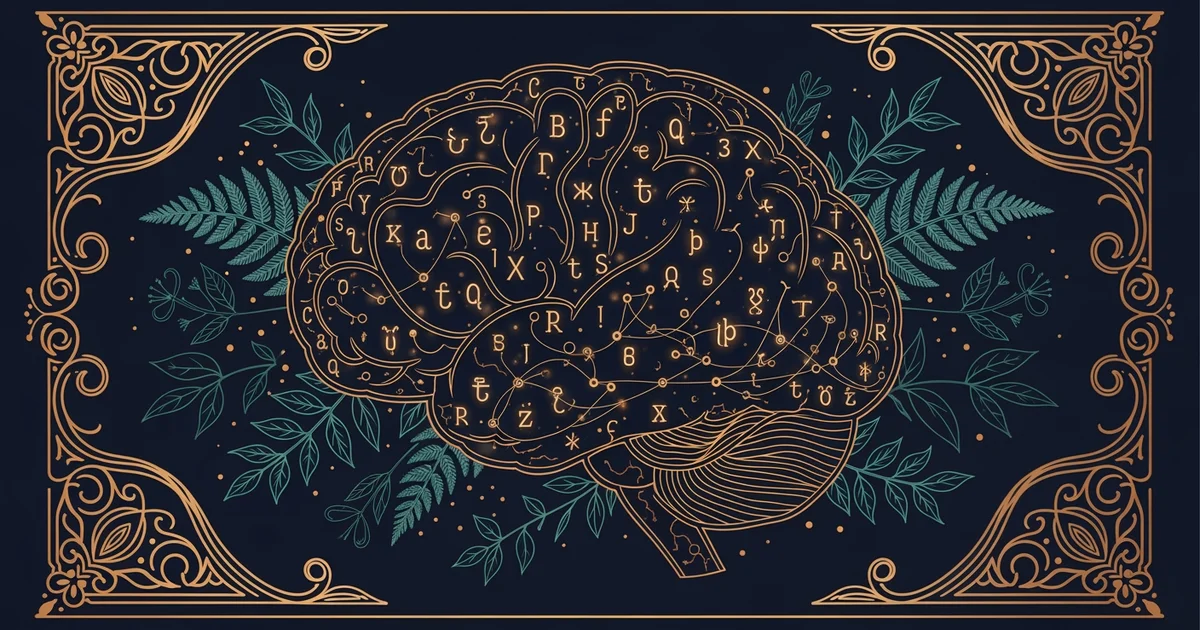
Mapping Speech to Meaning
Machines process human language by breaking down sentences into smaller, manageable units called tokens. These tokens act as the building blocks for identifying the underlying structure of a user's request. This is similar to how a bank teller processes a check by scanning the amount, the signature, and the account number to verify the transaction. In this analogy, the bank teller represents the Natural Language Processing system that must decide which parts of the input are vital for completion. Without this ability to filter noise from signal, the machine would fail to understand the difference between a command and a conversational filler. The system essentially builds a map of the intent by identifying the core action and the specific objects involved in that request.
Key term: Natural Language Processing — the branch of technology that enables machines to read, understand, and interpret human language in a way that mimics biological cognitive processes.
Once the machine identifies the tokens, it uses complex math to predict the most likely meaning behind the string of words. This stage involves comparing the input against massive databases of previously analyzed linguistic patterns. The system evaluates the probability that a certain word follows another, which helps it narrow down the user's actual goal. This is not true understanding, but rather a sophisticated form of statistical pattern matching that mimics human intuition. If the input is ambiguous, the system may ask for clarification, much like a person might ask for more detail when a friend gives vague instructions. The goal remains to create a reliable bridge between the user's intent and the machine's limited set of possible responses.
Cognitive Models and Machine Logic
Modern AI models utilize specific frameworks to organize knowledge, much like the human brain uses schema to categorize the world. These models allow machines to understand that a 'phone' and a 'mobile' are the same object, even if the words sound completely different. By grouping these terms into a shared conceptual space, the machine can handle variations in speech without needing a separate rule for every possible synonym. This efficiency is critical for maintaining a smooth user experience in fast-paced environments. The following table illustrates how different types of input are categorized by the system to ensure correct processing:
| Input Type | Machine Category | Processing Goal | Example |
|---|---|---|---|
| Intent | Verb/Action | Determine task | Play music |
| Entity | Noun/Object | Locate target | Jazz playlist |
| Modifier | Adjective/Time | Refine output | At high volume |
This categorization process allows the system to build a logical structure from disjointed vocal input. When a user says 'Play jazz loud,' the system maps 'play' to the action, 'jazz' to the entity, and 'loud' to the modifier. This structured output ensures the machine can execute the command accurately every single time. By relying on these cognitive-inspired frameworks, developers create systems that feel more intuitive and natural to the average person.
Artificial intelligence achieves language comprehension by converting human speech into structured statistical patterns that mirror how biological minds organize concepts.
But this model breaks down when machines encounter the deep nuances of human irony or cultural context that rely on shared life experiences.