
Conceptual Metaphor Theory
When you describe an argument as a battle that you might win or lose, you are using more than just descriptive language. You are actually revealing how your brain organizes complex social interactions through the lens of physical conflict.
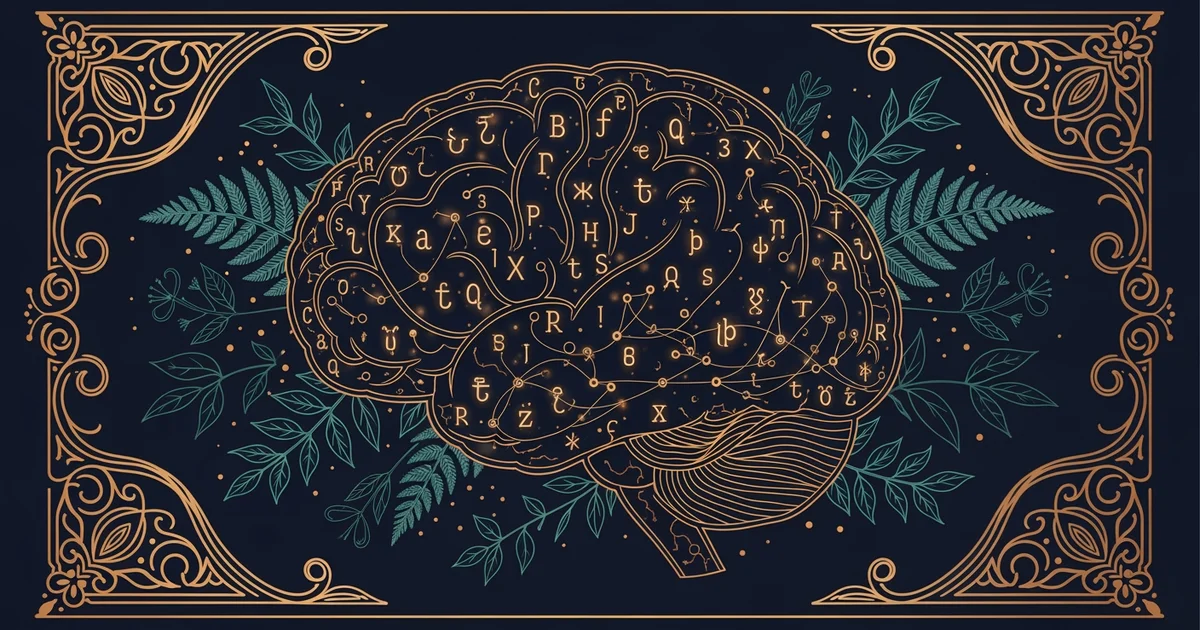
The Architecture of Abstract Thought
Because abstract concepts are often difficult to grasp, our minds rely on Conceptual Metaphor Theory to bridge the gap between physical experience and mental understanding. This theory suggests that we do not just use metaphors for poetic flair or creative writing in our daily speech. Instead, we use them as fundamental cognitive tools to structure our entire perception of reality. Think about the way we talk about time as if it were a limited physical resource that we can spend, save, or waste. By treating time like money, we create a mental framework that helps us manage our schedules and value our personal output. This process occurs automatically without us ever needing to consciously analyze the underlying logic of our own word choices.
Key term: Conceptual Metaphor Theory — the cognitive framework where humans understand abstract concepts by mapping them onto familiar physical experiences.
When we map one idea onto another, we essentially borrow the structure of a familiar physical domain to explain a more complex, invisible internal state. Consider the common experience of feeling sad; we rarely say we are merely low in spirit. Instead, we say that we are feeling down, which maps the abstract emotion of sadness onto the physical direction of downward movement. This happens because our bodies exist in a world governed by gravity, making the connection between physical location and emotional state feel natural and intuitive. By using these spatial mappings, we make our internal lives tangible and communicable to others who share our physical environment.
The Logic of Everyday Mapping
Building on this idea, we can see how these metaphors shape our decisions just as much as they shape our casual conversations. If you view a career as a journey, you will naturally look for milestones, paths, and obstacles rather than focusing on static states or simple destinations. This metaphorical structure influences how you plan your future and how you interpret your personal progress over many years. When we encounter a metaphor, we are not just hearing a figure of speech but are witnessing the brain organizing information into coherent, usable patterns.
To better understand how these mappings function, consider the following common examples of how we structure our lives through daily metaphor:
- Ideas are objects: We often express this by saying we capture thoughts, pack ideas into words, or drop a topic that we no longer wish to pursue.
- Love is a physical force: We describe relationships by saying we are drawn to someone, we fall into love, or we feel a magnetic pull toward a partner.
- Arguments are buildings: We talk about constructing a strong case, providing a foundation for our claims, or watching a weak argument collapse under pressure.
These patterns demonstrate that our language is not arbitrary; it is deeply rooted in our physical interactions with the world around us. Just as a map simplifies a vast landscape into readable lines and shapes, these metaphors simplify our complex mental landscape into manageable categories. We rely on these mappings to navigate social situations, solve problems, and communicate our deepest feelings without needing to explain every detail from scratch. If we did not have these shortcuts, we would struggle to describe even the most basic human experiences to one another. Our brains are essentially wired to find these physical parallels to ensure that we can share our internal realities efficiently.
Human communication functions by mapping abstract concepts onto physical experiences to make complex thoughts easier to process and share.
The next Station introduces Frame Semantics, which determines how specific words activate these complex mental networks.