
Mental Spaces Overview
Imagine you are watching a movie where a character recalls a childhood memory while sitting in a busy cafe. Your mind effortlessly separates the cafe setting from the memory of the childhood home, keeping both distinct yet linked in your consciousness. This mental ability allows us to track different storylines, hypothetical scenarios, and real-world events without losing our place in the conversation. We do this by creating Mental Spaces, which are small, conceptual packets of information that we build on the fly to organize our thoughts. By partitioning information into these distinct cognitive zones, we manage complex ideas without confusing the past, present, or imaginary worlds.
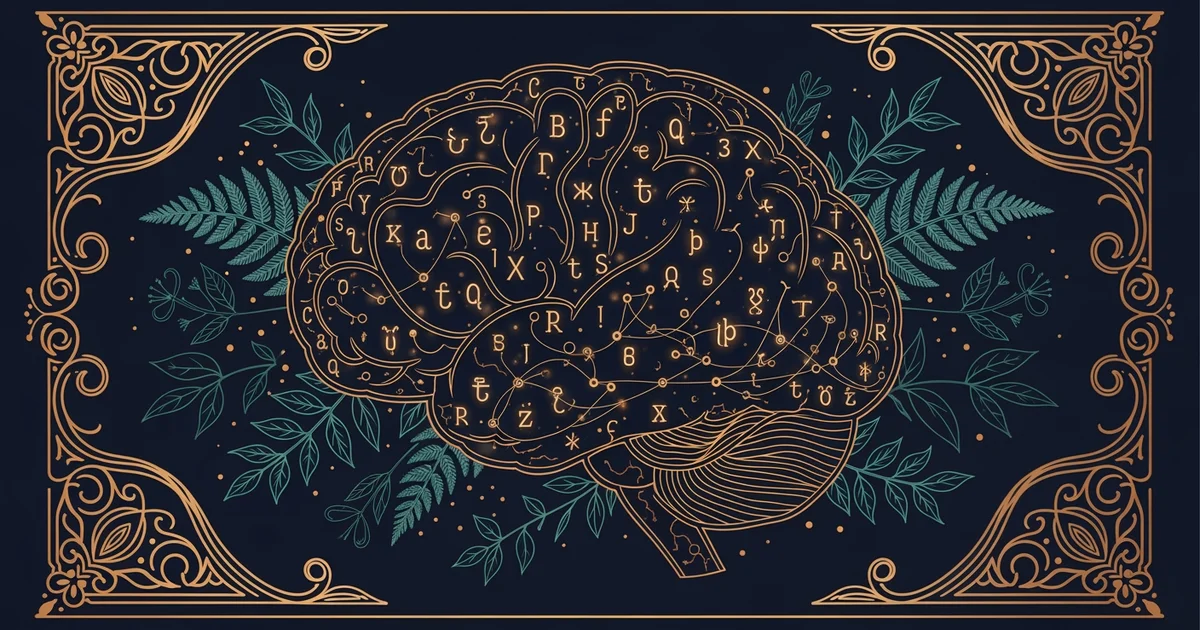
Understanding Cognitive Partitioning
When we engage in conversation, we do not process all data in one giant, messy heap. Instead, we divide the incoming information into specific domains that hold their own logic and participants. Think of these spaces like separate bank accounts for your thoughts. You might have one account for facts about your current project and another account for the creative ideas you hope to finish later. Keeping these accounts separate prevents the confusion that would happen if you mixed up your savings with your daily spending money. This cognitive strategy allows us to maintain clarity while discussing multiple layers of reality at the same time.
Key term: Mental Spaces — the small, temporary conceptual structures that we construct in our minds to organize and process information during discourse.
We build these structures as we speak, adding new details or modifying existing ones based on the context of the interaction. If you tell a friend a story about a dream, you open a mental space for the dream world that operates under different rules than the real world. Your friend knows that the events in the dream space do not necessarily affect the actual, physical reality of the room where you sit. This separation is crucial for communication because it allows us to discuss possibilities, lies, or fiction without misleading others about the truth of the present moment.
Mapping Concepts Through Discourse
To map these spaces effectively, we must recognize how linguistic cues signal the transition from one mental zone to another. Certain phrases act like doorways, inviting the listener to shift their focus into a new conceptual domain. When you say, "In my dream," you are explicitly signaling that the following information belongs in a separate space. Understanding these markers helps us track who is doing what, where they are located, and how the rules of that specific space apply to the current situation. We constantly update these maps as the conversation flows, ensuring our internal model matches the reality being described.
We can organize the different types of mental spaces based on their primary function during our daily communication:
- Base spaces contain the facts of our immediate, shared reality that everyone in the conversation accepts as true.
- Hypothetical spaces allow us to explore "what if" scenarios without committing to them as actual, proven events.
- Counterfactual spaces hold information about things that did not happen, such as reflecting on past mistakes or missed chances.
- Fictional spaces house the characters and settings of stories that exist entirely within the imagination of the speaker.
By categorizing information this way, we avoid the mental clutter that comes from treating every piece of data as if it were a universal truth. We can hold conflicting ideas in different spaces simultaneously, which is why we can enjoy a movie about a dragon while knowing that dragons do not exist in the real world. This flexibility is the hallmark of human intelligence, allowing us to navigate complex social worlds with ease and precision. Mastering the ability to track these spaces is essential for anyone who wants to communicate clearly and understand the deeper layers of human language.
Mental spaces are the cognitive filing systems that allow us to organize information into distinct, manageable zones to avoid confusion between reality and imagination.
The next Station introduces Metaphorical Blending Mechanics, which determines how these mental spaces interact to create new meanings.