
Tool Performance Testing
Imagine you are holding a sharp stone blade against a thick hide of leather. You need to cut through the material quickly to finish your work before the sun sets. If the blade dulls after only three strokes, you lose precious time and energy during your daily tasks. Testing how well a tool performs helps us understand the choices made by people living in the distant past. When we recreate these tools, we gain insight into the physical demands and the efficiency of ancient survival. We measure these outcomes to see if a design was truly practical or merely a decorative craft.
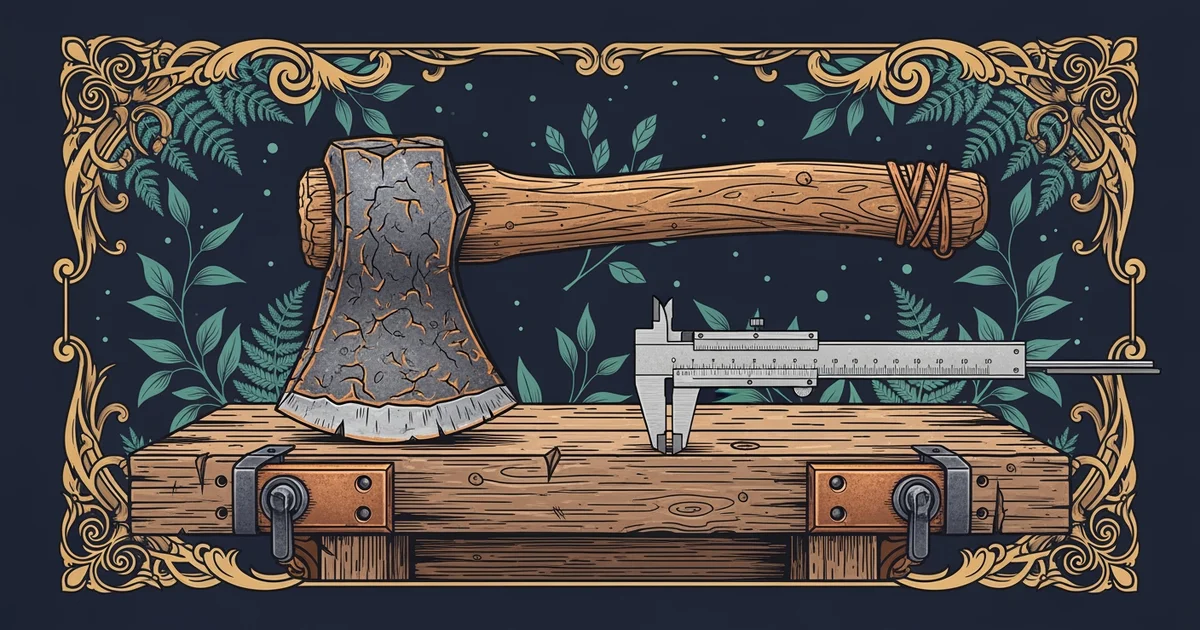
Quantifying Tool Efficiency
When researchers test ancient tools, they focus on performance metrics to determine how well an object functions under pressure. These metrics include the force required to cut, the durability of the edge, and the time spent on maintenance. Just as a modern chef compares a high-quality steel knife to a cheap plastic one, archaeologists compare stone flakes to metal blades. A stone tool might be incredibly sharp at the start, but it often loses its edge much faster than a metal counterpart. This rapid wear requires the user to constantly sharpen or replace the tool, which creates a specific rhythm of labor for the worker.
Key term: Performance metrics — the standardized measurements used to evaluate how effectively a tool completes a specific task under controlled conditions.
To ensure our data is reliable, we must use consistent methods during every single trial we conduct. We record the number of cuts made before the edge fails and the total weight of the material removed. By keeping these variables steady, we can compare different stone types like obsidian, flint, or chert with great accuracy. This process is similar to testing the fuel efficiency of a car on a track. We want to know how much work we get out of the tool before it requires a pit stop for repairs. The data we collect helps us map out the daily routines of ancient people in a way that static artifacts never could.
Comparing Materials and Durability
Because different materials react to stress in unique ways, we must categorize them based on their physical properties. Stone tools rely on a razor-sharp edge created by fracture, while metal tools rely on the strength and flexibility of the alloy. We use a standardized testing sequence to see how these materials handle repetitive tasks over time.
We observe the following indicators when comparing stone blades and metal knives:
- The fracture pattern of stone creates a microscopic serration that slices through soft tissue with very little initial downward pressure.
- Metal blades maintain a stable edge for longer periods because the material is malleable rather than brittle under intense heat or force.
- Maintenance cycles for stone tools are frequent and intensive because the user must strike new flakes to restore the cutting surface.
- Metal tools allow for more complex shapes that provide better leverage, which reduces the total amount of physical exertion for the user.
| Material | Edge Durability | Sharpening Method | Primary Limitation |
|---|---|---|---|
| Obsidian | Very Low | Pressure Flaking | Highly Fragile |
| Flint | Moderate | Percussion Flaking | Brittle Fracture |
| Bronze | High | Grinding/Forging | Requires Smelting |
When we look at this table, we see that the choice of material was not just about availability but about the specific needs of the job. A hunter might prefer the extreme sharpness of obsidian for skinning, while a carpenter might choose the durability of bronze for carving wood. Understanding these trade-offs allows us to reconstruct the decision-making process of ancient societies. We are not just looking at old rocks; we are looking at the professional toolkits of our ancestors. Every cut made during our testing phase brings us closer to understanding the lived reality of those who came before us.
Testing tool performance bridges the gap between static archaeological findings and the dynamic physical realities of ancient human survival.
But what does the internal structure of these tools reveal when they are subjected to extreme force and pressure?
Want this with sources you can check?
Premium Learning Paths for History & Archaeology are researched against open-access libraries — PubMed, arXiv, government databases, and more — with their distinctive claims cited to real sources and independently checked.
See what Premium includes