
Defining Experimental Archaeology
Imagine you are holding an ancient stone tool found in a dusty field. You wonder how a person made this object without any modern metal tools. You might try to shape a rock yourself to see if your hands can replicate the work of ancestors. This simple act of trying to recreate the past is exactly what we call experimental archaeology. It turns the study of history into a hands-on activity that tests how people lived long ago.
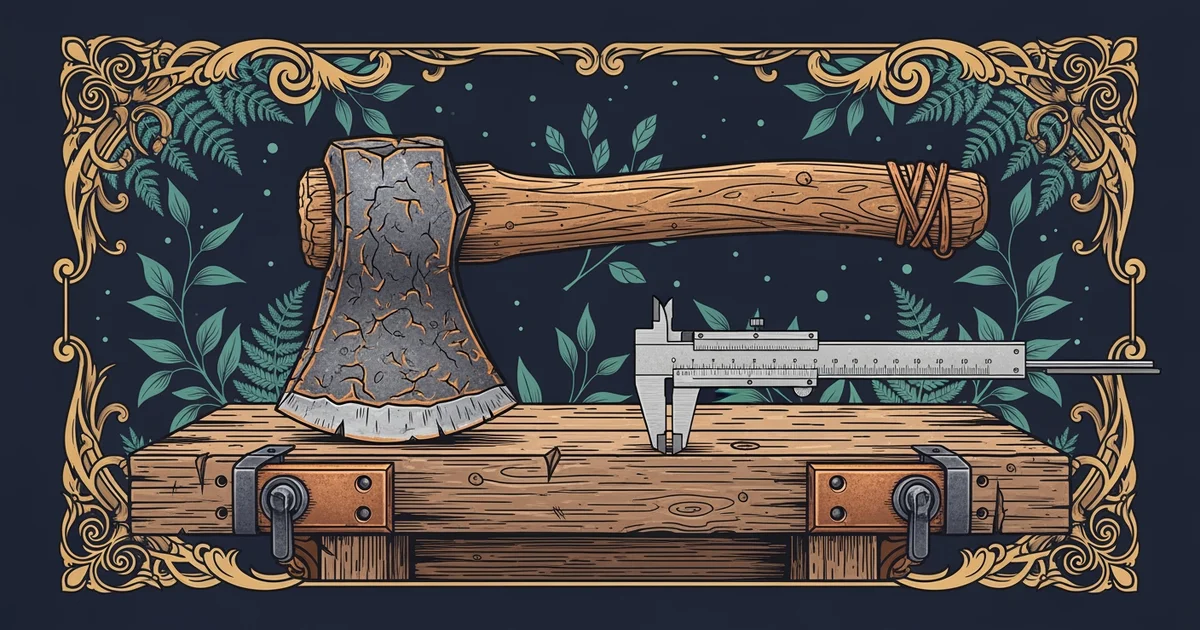
The Logic of Recreating Ancient Life
Experimental archaeology works by taking a theory about the past and testing it through physical action. If you think a specific stone tool was used to cut wood, you must build a replica and try to cut wood with it. This process helps us see if our ideas about ancient technology actually make sense in the real world. Think of this like testing a recipe in your own kitchen to see if the instructions are clear enough to make a meal. If the tool breaks immediately, you know your theory about how it was made is likely incorrect or incomplete.
Key term: Experimental archaeology — a field of study that uses practical experiments to test theories about how ancient people lived and created tools.
By physically performing these tasks, we learn things that books alone cannot teach us about history. You might discover that a tool requires a specific angle to work or that it wears down faster than expected. This hands-on method provides evidence that helps confirm or disprove guesses made by historians who only look at static objects. It is a vital way to bridge the gap between a silent artifact and the living person who once held it in their own hands.
Why Testing Theories Matters
Historians often face a mystery when they find an object that has no clear purpose or method of creation. They must guess how the item functioned based on its shape, weight, and the context of where it was buried. Experimental archaeology removes the guesswork by forcing the researcher to confront the physical limits of the materials involved. This is similar to how a business owner tests a new product design before selling it to customers to ensure it works as intended. Without this testing, we might assume ancient people possessed skills or tools they never actually had.
To understand the process, consider these three core goals of the practice:
- Replicating ancient manufacturing methods allows researchers to understand the time and physical effort required to produce essential survival tools.
- Testing the durability of reconstructed items helps determine if the original artifacts could withstand the daily stresses of ancient life.
- Evaluating the efficiency of different tools reveals why certain designs were chosen over others for specific tasks like hunting or building.
| Feature | Traditional Study | Experimental Study |
|---|---|---|
| Focus | Static artifacts | Active processes |
| Evidence | Written records | Physical results |
| Goal | Descriptive facts | Functional proof |
This comparison shows why active testing is necessary for a complete understanding of history. While traditional study describes what we found, experimental study explains how it actually functioned. By combining both approaches, we get a much clearer picture of human development across thousands of years. This path will take you through the tools, methods, and scientific rigor needed to turn history into a living, testable subject.
Experimental archaeology proves the past by using physical replication to test if our theories about ancient life are actually possible.
By learning how to test history with your own hands, you will gain the skills to evaluate evidence and understand the ingenuity of early human civilizations.