
Grid Balancing Mechanics
Imagine you are running a busy restaurant kitchen where orders arrive at random times. You must keep the stove hot enough to cook meals instantly without wasting gas while the kitchen stays empty. Balancing the electrical grid works exactly like this kitchen scenario because energy supply must match demand every single second. If the power flow becomes too high or too low, the entire system risks a dangerous failure or a blackout. Engineers use complex software to predict these patterns and keep the grid stable for everyone.
Managing Real-Time Power Loads
When electricity demand shifts throughout the day, the grid operators must adjust the power generation to match those specific needs. This process requires Grid Balancing to ensure that the frequency of the electrical current remains steady at all times. If millions of people turn on their lights at once, the system experiences a sudden surge in demand that creates a strain on the infrastructure. The software monitors these fluctuations by collecting data from smart meters and industrial sensors across the entire region. This data allows computers to send signals to power plants to increase or decrease their output automatically.
Key term: Grid Balancing — the continuous process of adjusting electrical supply to match fluctuating consumer demand in real time.
Engineers often compare this task to managing a massive water pipe system that feeds an entire city. If too much water flows into the pipes without an outlet, the pressure builds until the pipes burst under the strain. If too little water flows, the taps run dry and leave the residents without any resources. The grid operates on this same principle of pressure, where voltage represents the force and current represents the volume of energy moving through the wires.
Integrating Variable Energy Sources
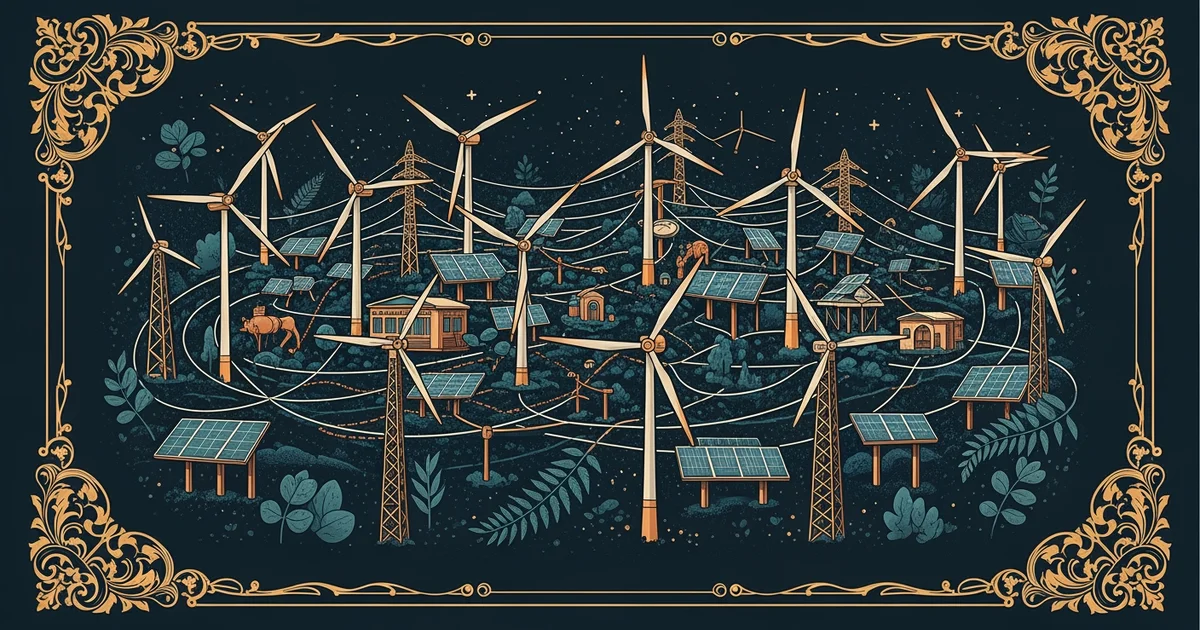
Adding renewable energy sources like wind and solar creates new challenges for grid operators because these sources are not always predictable. A sudden cloud cover can reduce solar power output, while a calm day might stop wind turbines from spinning entirely. These fluctuations require the grid to have backup power ready to deploy at a moment's notice to prevent any service gaps. The system relies on a combination of different energy assets to maintain balance while moving away from traditional fossil fuels.
To manage these variables, the grid uses a hierarchy of resources to maintain stability during peak and off-peak hours:
- Baseload power plants provide a steady and reliable stream of energy that runs constantly to meet the minimum needs of the population throughout the day.
- Peaker plants act as rapid responders that fire up quickly when demand spikes occur during extreme weather or high usage periods to prevent outages.
- Demand response programs pay consumers to reduce their energy usage during critical times, which lowers the total load on the grid without requiring extra generation.
These three categories allow engineers to build a flexible system that can handle the unpredictable nature of weather-dependent energy. By using these tools, the grid stays functional even when the sun goes down or the wind stops blowing across the local fields.
Automating the Balancing Act
Modern infrastructure relies on automated software to perform these adjustments faster than any human operator could ever manage manually. These systems analyze historical usage patterns to predict when people will likely use more electricity in the future. By combining these predictions with live weather reports, the software creates a roadmap for energy production that stays one step ahead of the actual demand. This automation ensures the grid remains resilient against sudden changes in weather or unexpected equipment failures.
| Energy Asset | Primary Role | Response Speed | Typical Use Case |
|---|---|---|---|
| Nuclear | Baseload | Very Slow | Constant minimum load |
| Natural Gas | Peaker | Fast | Daily peak demand |
| Battery Array | Stabilizer | Instant | Sudden frequency drops |
This table illustrates how different assets work together to keep the grid running smoothly across various timeframes. While nuclear power provides the foundation, gas plants and batteries handle the rapid changes that keep the system within safe operating limits. This layered approach is the only way to maintain a reliable power supply while integrating clean energy into the existing framework.
Effective grid management relies on the precise coordination of diverse energy sources to maintain stable pressure against unpredictable human demand.
But what does it look like in practice when we need to store excess energy for later use?
Want this with sources you can check?
Premium Learning Paths for Engineering & Robotics are researched against open-access libraries — PubMed, arXiv, government databases, and more — with their distinctive claims cited to real sources and independently checked.
See what Premium includes