
Renewable Source Types
Imagine you are trying to fill a bucket with water while the faucet is only dripping. You would need many faucets working together to fill that bucket quickly enough for your needs. Building a global power grid works in a similar way because we must combine many different energy sources to meet our high demand.
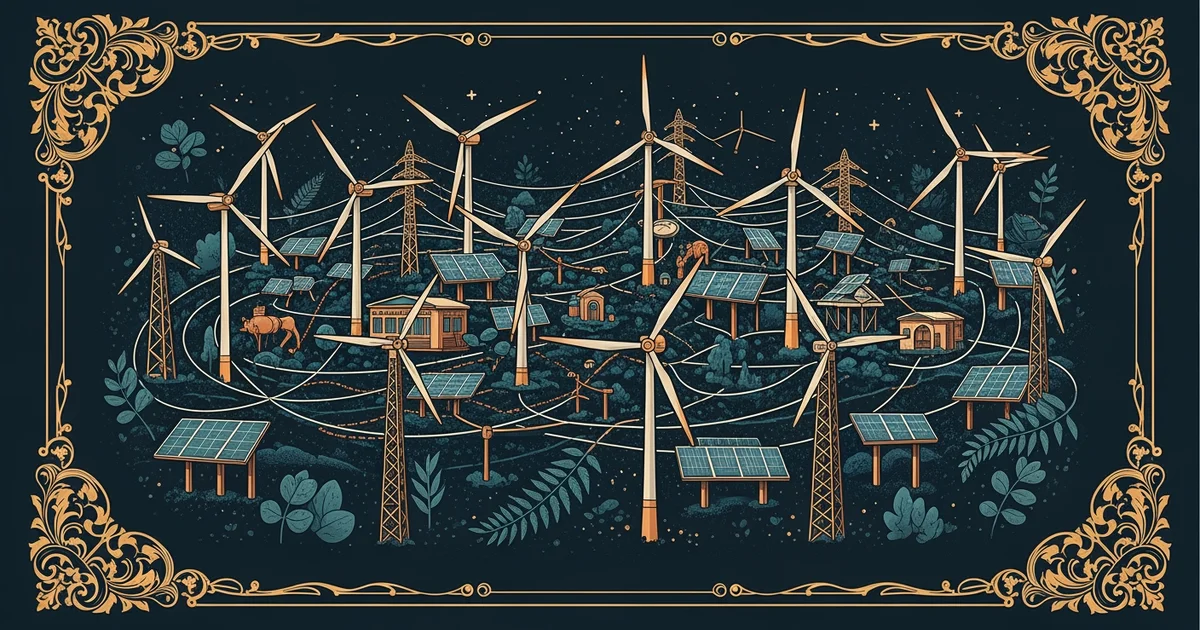
Understanding Renewable Energy Sources
Renewable energy comes from natural processes that replenish themselves at a rate equal to or faster than consumption. These sources are essential because they do not run out like fossil fuels do over time. We categorize these sources based on how they capture energy from the environment to create usable electricity. Solar energy captures light from the sun, while wind energy captures the kinetic movement of air currents. Both methods transform natural movement into electrical power that travels through our existing grid infrastructure. By diversifying our energy portfolio, we ensure that the grid remains stable even when one specific source is unavailable.
Key term: Renewable energy — power derived from natural resources that replenish constantly, such as sunlight, wind, rain, tides, and geothermal heat.
Solar energy relies on photovoltaic cells to convert sunlight directly into electricity through a chemical reaction. These panels act like a sponge for light, soaking up photons and releasing electrons to create a steady flow of current. The efficiency of this process depends on the intensity of the light and the angle of the panels. Because the sun does not shine at night, solar power requires integration with other systems to maintain constant supply. This is similar to how a business manages cash flow by saving money during peak sales to cover expenses during slower months.
Comparing Capture Methods
Wind energy uses large turbines to capture the kinetic energy of moving air masses. As the wind blows, it pushes against the blades of the turbine, causing them to rotate around a central shaft. This mechanical rotation drives a generator that converts the physical motion into electrical energy for the grid. Unlike solar panels, wind turbines can operate during the day or night as long as the wind speed is sufficient for rotation. Engineers must carefully place these turbines in areas with consistent wind patterns to maximize the total power output of the facility.
We can compare these two primary renewable technologies based on their operational requirements and generation characteristics:
| Feature | Solar Energy | Wind Energy |
|---|---|---|
| Primary Input | Sunlight photons | Kinetic air movement |
| Operation Time | Daylight hours only | Any time with wind |
| Scalability | High for rooftops | High for large farms |
| Maintenance | Low moving parts | High moving parts |
These differences highlight why a balanced grid needs a mix of technologies to function reliably. Solar power provides peak generation during the brightest parts of the day when electricity demand is often highest. Wind power frequently generates more energy at night or during stormy weather when solar output drops to zero. By combining these, we create a more resilient system that balances out the natural variability of the environment. Integrating these sources requires smart software that monitors supply and demand in real time across the entire network. This coordination prevents blackouts and ensures that electricity is always available when people flip a switch in their homes.
Reliable power grids depend on combining multiple renewable sources that balance each other’s natural fluctuations.
Next, we will explore why storing this energy is the most difficult challenge for modern engineers.