
Capstone: Integrated Mining Design
Imagine you are standing at the edge of a vast, empty landscape where the goal is to extract rare earth minerals without leaving a scar on the environment. Designing a modern mining operation requires balancing heavy machinery needs with the delicate requirement to preserve the surrounding ecosystem for future generations. Engineers must view the entire site as a single, living system where every action impacts the next phase of the process. This holistic perspective ensures that efficiency does not come at the cost of long-term sustainability or safety.
The Architecture of Integrated Extraction
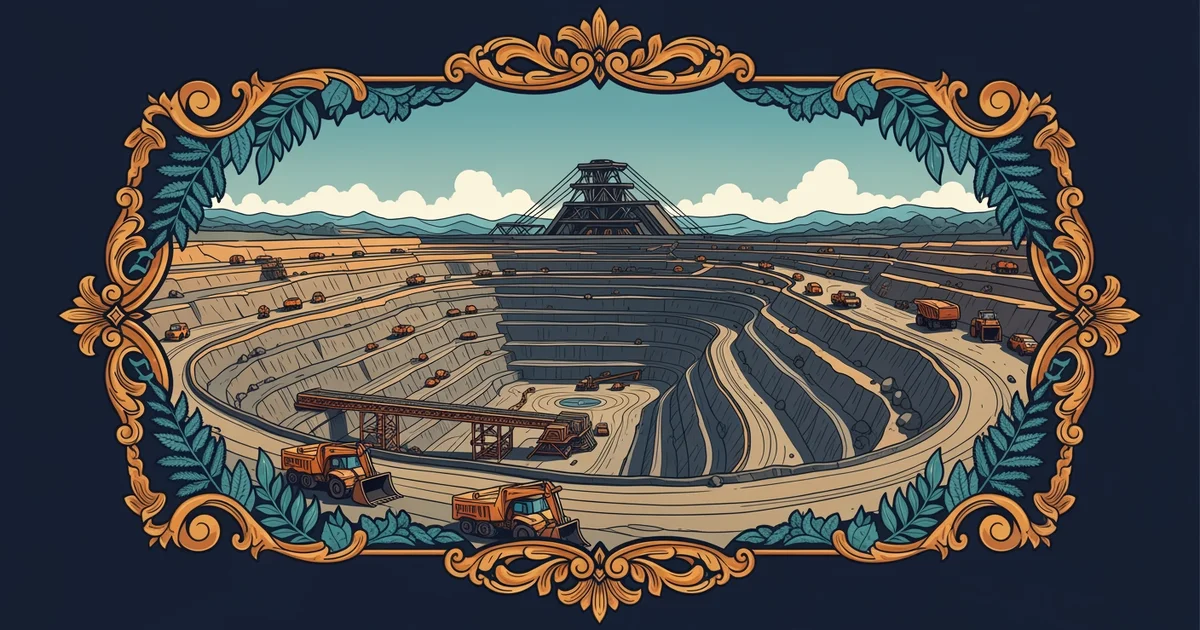
Designing a successful mine starts with a deep understanding of the geology and the specific technology required to access valuable resources. You must first map the ore body to determine the most effective path of least resistance for your extraction tools. Think of this process like planning a complex city layout where utilities, transport, and housing must coexist without causing gridlock or waste. By placing your autonomous haulage systems in areas that minimize travel distance, you reduce energy consumption and lower the carbon footprint of the site. Every decision in the design phase acts as a foundation for the operational success of the entire project.
Key term: Autonomous haulage — the use of self-driving trucks and transport vehicles that operate without human intervention to move materials efficiently within a mining site.
To manage the flow of materials, engineers use specific control sequences to ensure that extraction, sorting, and transport happen in a continuous loop. The following table outlines how different technologies work together to create an integrated mining site.
| Technology | Primary Function | Sustainability Benefit |
|---|---|---|
| Electric Shovels | Breaking ground | Zero direct emissions |
| Smart Sensors | Monitoring ore | Reduced waste material |
| Water Recyclers | Dust management | Lower water consumption |
Balancing Efficiency and Environmental Stewardship
Sustainability is not just a secondary goal, but the central pillar of modern mining design. Engineers often use precision mining to target specific high-value deposits rather than removing large sections of unnecessary earth. This approach mimics a surgeon who performs a delicate operation rather than a general practitioner who treats the whole body with broad medicine. By focusing on smaller, specific zones, you protect the surrounding soil and biodiversity from unnecessary disturbance. This method also saves massive amounts of energy that would otherwise be spent moving tons of useless rock.
Integrating these systems requires a robust digital twin of the mine that updates in real time. This allows you to simulate the impact of every choice before a single piece of equipment moves on the actual site. If the simulation shows that a specific path leads to high erosion or excessive energy use, you can adjust the plan immediately. This digital oversight ensures that the operation remains within strict safety and environmental limits throughout its lifespan. Technology serves as the bridge between human ambition and the necessity of protecting the natural world.
Successful mining projects rely on the careful orchestration of three main components to ensure that the entire operation functions as a cohesive unit:
- Dynamic resource tracking allows the team to know the exact location and quality of materials at all times.
- Automated processing units sort the ore on-site to minimize the transport of waste material to the surface.
- Renewable energy grids provide the consistent power required to run high-capacity machinery without relying on fossil fuels.
These components interact to form a closed-loop system where waste becomes a resource for another part of the process. For example, excess heat from the processing unit can be captured to warm the facility during colder months. This level of integration represents the future of engineering, where the goal is to produce essential materials while maintaining harmony with the environment. By embracing these design principles, you turn the complex challenge of resource extraction into a model of modern industrial responsibility.
True sustainability in mining is achieved when engineers treat the entire extraction site as a single, integrated system that prioritizes efficiency and environmental protection at every stage.
Designing a sustainable mine requires a careful balance between high-tech automation and the preservation of natural landscapes for the future.