
Historical Context of Extraction
Imagine holding a gold ring and wondering how humans first pulled that metal from deep inside the solid earth. Mining is not just a modern industrial process but a long journey that tracks the growth of human knowledge and tool use. Early people found surface materials by chance, but they soon developed complex methods to reach hidden veins of valuable ore. This shift from simple gathering to organized extraction marks the true beginning of our technological history.
The Evolution of Manual Extraction
Ancient civilizations relied on basic physical labor to harvest resources like flint, copper, and salt from the ground. Workers used simple hand tools such as stone hammers and wooden wedges to break apart soft rock faces. This approach required immense patience and a deep understanding of natural patterns found in local landscapes. Because these early miners lacked advanced machinery, they focused only on deposits that were visible or very close to the surface. Extracting materials was a slow process that limited how much metal or stone a society could produce for its own growth.
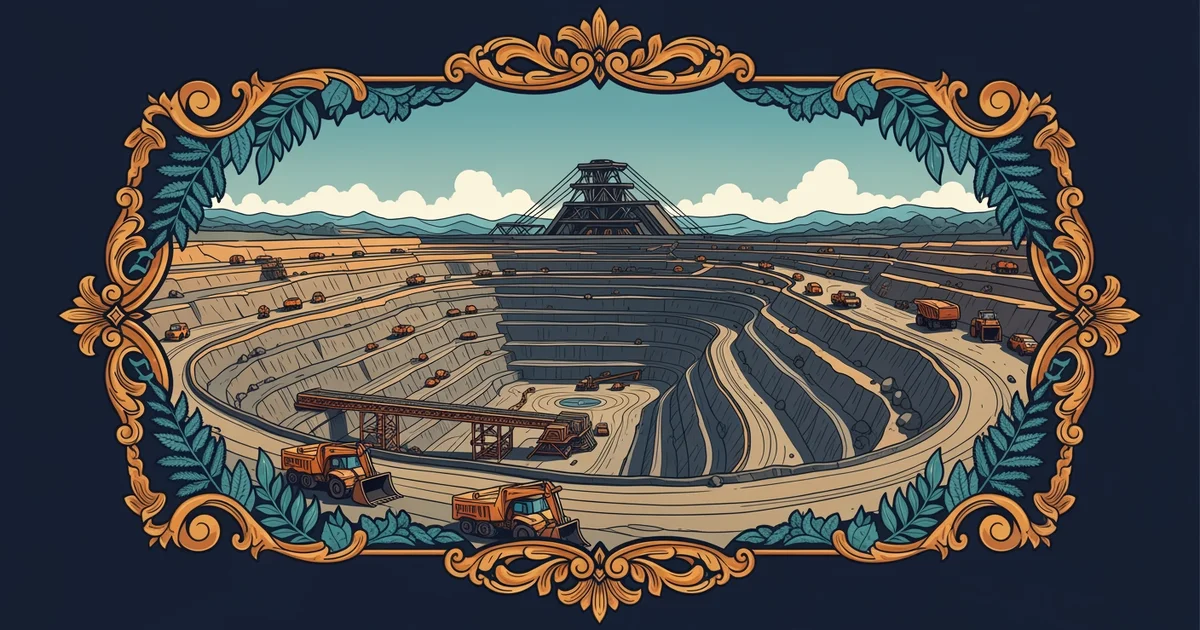
Key term: Surface mining — the process of removing mineral deposits located near the top layer of the earth's crust without deep underground tunnels.
As populations expanded, the demand for stronger metals grew rapidly and forced miners to dig deeper into the earth. They began to use fire-setting, a clever technique where they heated rock with large fires before cooling it quickly with water. This thermal shock caused the stone to crack and shatter, which made it much easier to remove by hand. This process acts like a chef using a hot pan to sear meat, where sudden temperature changes alter the state of the material being worked. By mastering these thermal shifts, ancient engineers overcame the limitations of their simple stone and bronze tools.
Technological Leaps in Industrial Mining
Moving into the industrial era, the invention of steam power fundamentally changed how we approach the challenge of deep extraction. Steam engines allowed miners to pump water out of flooded tunnels, which enabled them to reach depths that were previously impossible to explore. This innovation transformed mining from a small-scale manual task into a massive industrial operation that fueled global economic growth. The ability to move heavy loads of rock and ore quickly meant that mines could produce materials at a scale never seen before in human history.
To understand how these technologies progressed, consider the following major shifts in efficiency:
- Manual excavation relied on human strength and simple hand tools to slowly chip away at soft surface rock deposits.
- Fire-setting introduced thermal energy to crack hard stone, allowing miners to reach deeper veins using basic heat management.
- Steam-powered pumps cleared flooded shafts, which allowed deep-level mining to expand into previously inaccessible underground water tables.
- Modern automation integrates sensors and robotic drills to maximize safety while increasing the speed of extraction in dangerous environments.
These improvements demonstrate a clear trend toward using external energy sources to replace human labor in harsh mining environments. The table below compares how different eras managed the primary challenges of extraction.
| Era | Primary Tool | Main Challenge | Energy Source |
|---|---|---|---|
| Ancient | Stone/Copper | Surface access | Human muscle |
| Medieval | Fire/Wedges | Hard rock | Wood heat |
| Industrial | Steam Pumps | Water drainage | Coal steam |
| Modern | Robotics | Safety/Depth | Electricity |
The data shows that as we moved from manual tools to automated systems, our ability to manage environmental risks improved alongside our production capacity. Every jump in technology required a new way to understand the earth and its hidden geological structures. We moved from simple surface scratching to precise, deep-earth engineering that sustains our modern lifestyle today. Understanding this history helps us see that mining is a constant process of solving physical puzzles to unlock the resources we need for our daily tools.
Human progress relies on our ability to innovate new tools that overcome the physical barriers of extracting raw materials from the earth.
Having traced the history of how we reach resources, we must now learn how to identify exactly where those valuable materials are hiding beneath the ground.