
Future Trends in Mining
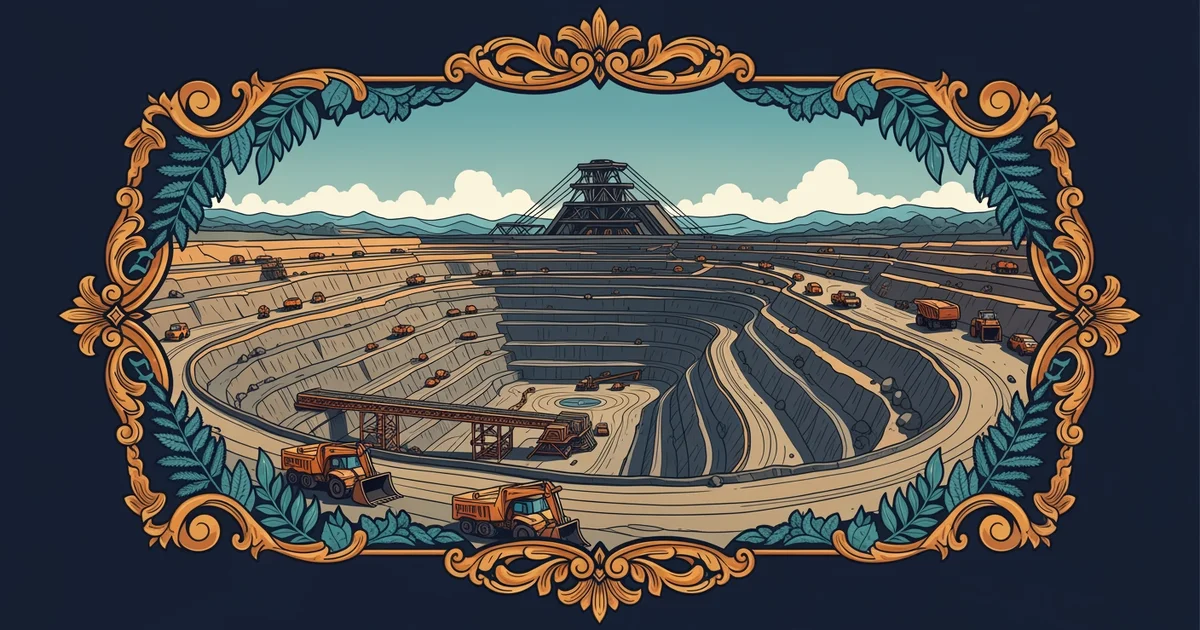
Our planet holds finite mineral wealth that we consume at a rapid, unsustainable pace every single day. If we continue to strip the Earth's crust, we will eventually reach a point where terrestrial mining becomes impossible.
The Expansion into Celestial Resource Extraction
Space mining represents the next logical step in securing the raw materials that fuel our global technological infrastructure. Just as early settlers moved to find new lands, modern engineers now look toward asteroids as massive, floating warehouses of precious metals. These celestial bodies contain vast amounts of iron, nickel, and cobalt which are essential for building advanced robotics and electronics. By shifting our focus away from Earth, we can protect our fragile ecosystems while still gathering the resources required for our growth. This transition functions like moving from a small, local garden to a massive, industrial farm that provides enough food for an entire growing population. Without this shift, our reliance on limited terrestrial deposits could force us to accept lower living standards or slower technological progress in the coming decades.
Key term: Asteroid mining — the process of identifying, capturing, and processing extraterrestrial materials from asteroids to supply industrial needs on Earth or in space.
Extracting these materials requires a high level of precision and autonomy because human presence in deep space remains costly. We must deploy advanced robotic swarms capable of drilling into rock surfaces without direct human intervention from Earth. These machines need to manage power, navigate complex gravity fields, and process raw ore into transportable forms automatically. This level of automation builds directly upon the supply chain logistics and remote sensing techniques we explored in earlier stages of this learning path. By integrating these systems, we create a resilient network that functions even when communication delays make real-time control impossible. The following table highlights the key differences between traditional Earth-based mining and the future model of space-based extraction.
| Feature | Earth-Based Mining | Space-Based Mining |
|---|---|---|
| Gravity | High impact | Microgravity |
| Environment | Atmospheric | Vacuum |
| Logistics | Road and rail | Orbital trajectory |
Challenges and Technological Integration
Transitioning to this new frontier creates significant tension between current mining methods and future robotic requirements. We currently rely on heavy machinery that operates within well-understood geological constraints here on our home planet. Moving these operations into space requires us to rethink how we handle materials that behave differently in low gravity environments. Engineers must solve the problem of dust management and energy storage to ensure that mining platforms remain functional over long periods.
We can summarize the primary obstacles to achieving this future vision through these critical development areas:
- Autonomous navigation systems must manage complex flight paths to reach target asteroids while avoiding debris fields that could damage expensive equipment.
- Advanced thermal management tools are necessary to protect sensitive electronics from the extreme temperature swings found in the vacuum of deep space environments.
- Efficient resource refining processes must be miniaturized so that spacecraft can convert raw ore into usable components without needing massive ground-based facilities.
This synthesis of robotics and space science moves us closer to solving the foundation question of how we sustain our world. By combining the data-driven logistics of our past with the autonomous capabilities of our future, we turn the vacuum of space into an engine for human progress. We must ask ourselves if the cost of developing these space-faring machines is truly lower than the ecological price of continuing to mine our own planet. This remains the central debate for the next century of engineering research and resource management.
Securing our technological future requires shifting from finite, Earth-bound resource extraction toward autonomous, space-based mining systems that leverage celestial abundance.
The next step in our journey is to integrate these diverse concepts into a final, sustainable design for future mining infrastructure.