
Biological Signal Processing
Imagine you are trying to move a heavy box across a floor without using your hands. Your brain sends a command to your muscles, but what if the wires connecting your brain to your arms were damaged or missing? This common problem in medical science requires a way to bridge the gap between human intention and mechanical action. By capturing the tiny electrical sparks that travel through our nerves, engineers can create systems that translate human thoughts into movement. We call this process biological signal processing, and it acts as the translator between your body and the machines you want to control.
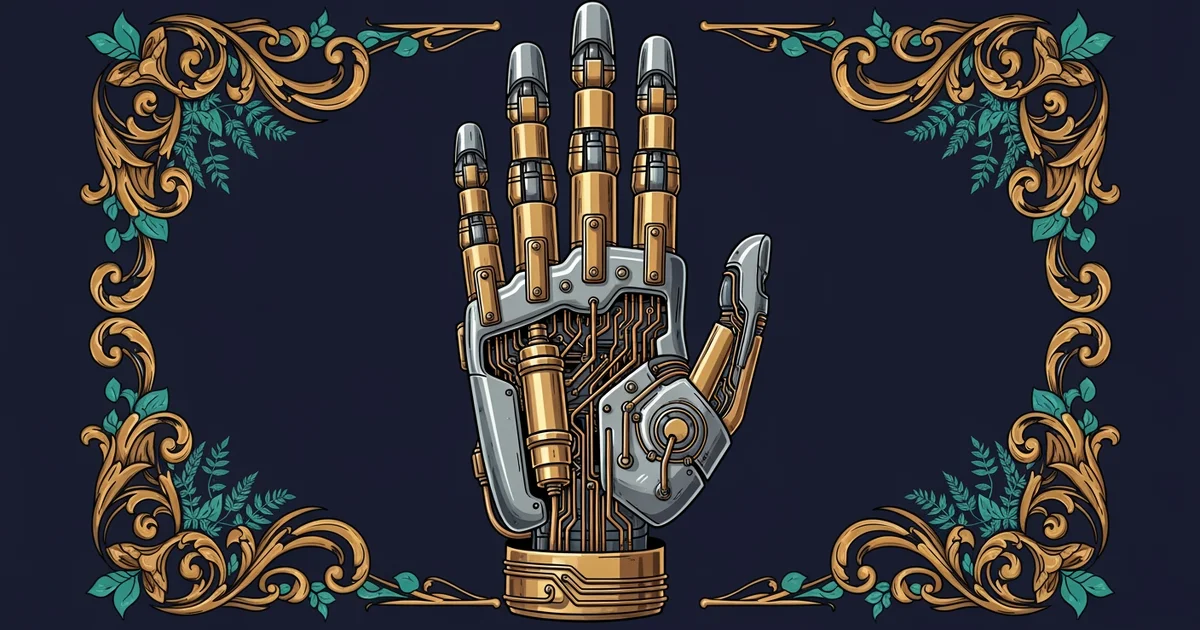
Capturing Biological Electricity
Every time you decide to flex your bicep, your brain sends a tiny electrical pulse down your nerves to your muscle fibers. This pulse is called an electromyogram signal, which represents the electrical activity caused by muscle contractions. Even if a limb is missing, the brain still sends these commands to the remaining muscles in the stump. We can place small sensors on the skin that act like tiny microphones listening for these electrical whispers. These sensors detect the voltage changes, amplify them, and prepare the data for a computer to interpret the intended motion.
Key term: Electromyogram — the electrical recording of muscle activity that serves as the input signal for controlling modern prosthetic devices.
Think of this process like an internet router in your home. The internet service provider sends a data signal into your house through a cable, but your computer cannot read that raw signal directly. Your router acts as the bridge that translates the incoming data into a format your laptop understands. In the same way, the sensors on a person's skin act as the router, taking the raw electrical noise from the body and turning it into clean digital data that a robot can process.
Processing Signals for Mechanical Action
Once the computer receives the electrical data, it must decide what the user actually wants to do with their limb. This phase involves complex software that filters out background noise, such as static from other nearby muscles or skin moisture. The software maps specific patterns of electrical activity to specific mechanical movements, like closing a hand or rotating a wrist. If the pattern matches a stored profile for a fist, the computer sends a command to the motors inside the prosthetic limb.
To ensure the limb moves smoothly, the system uses a control loop that constantly checks if the movement is happening as planned. This loop prevents the limb from jerking or overshooting its target position during daily tasks. The following table outlines how different stages of this signal chain work together to produce a physical result for the user:
| Stage | Component | Function performed | Data type |
|---|---|---|---|
| Input | Sensor | Captures muscle voltage | Analog signal |
| Filter | Processor | Removes unwanted noise | Digital data |
| Logic | Controller | Maps patterns to action | Command set |
| Output | Motor | Moves the mechanical limb | Physical force |
Integrating Human and Machine
Successful integration depends on how well the software adapts to the unique electrical patterns of each individual user. Because every person has different muscle density and nerve pathways, the system must learn to recognize the specific "language" of the user's body. Through repeated practice, the user learns to flex their muscles in ways that the computer recognizes easily. This two-way learning process creates a seamless bond where the machine eventually feels like a natural extension of the person rather than just a separate tool.
This technology provides immense freedom for people who have lost limbs, allowing them to regain control over their environment. By turning biology into code, we can restore the ability to grasp objects or hold items with precision. Engineers continue to refine these sensors to make them smaller, faster, and more reliable for everyday use. As we improve the speed of this signal processing, the delay between thought and action disappears, making the prosthetic feel truly alive.
Biological signal processing allows robotic limbs to interpret human nerve pulses as digital commands to restore natural movement.
Next, we will explore the durable materials required to build these robotic structures that must withstand the forces of daily life.