
Defining Bionics and Prosthetics
Imagine you are holding a heavy grocery bag that suddenly slips from your tired fingers. Your arm muscles react instantly to tighten your grip before the bag hits the floor. This seamless link between your brain and your muscles is the foundation of human movement. When that link breaks, we look for ways to rebuild it using science and engineering. We use artificial tools to replace or assist the body when natural systems fail to function as intended.
The Mechanics of Artificial Support
Simple tools often act as static replacements for missing body parts to provide basic structural support. These passive devices, known as a prosthesis, rely entirely on the wearer to move them through natural body force. Think of a wooden peg leg or a basic hook that helps someone stand or grasp objects. These tools do not contain motors or electronic sensors to assist with complex tasks. They serve as mechanical extensions that allow a person to interact with their environment in a limited way.
Key term: Prosthesis — a physical device designed to replace a missing body part by providing structural support or basic functionality.
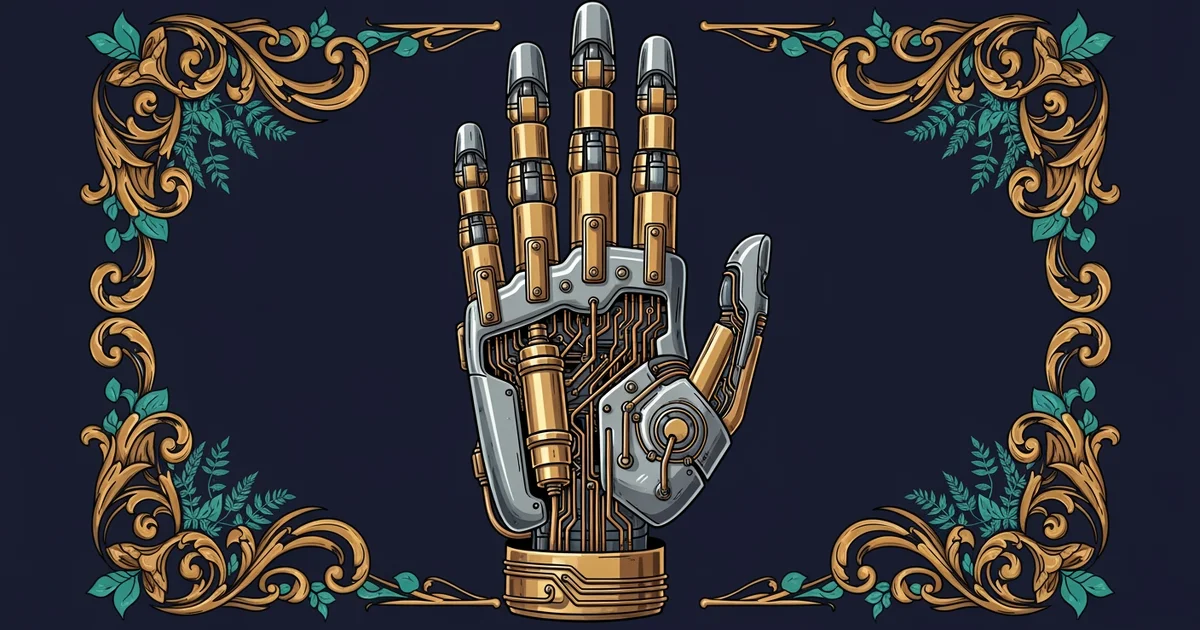
In contrast, modern technology allows us to create systems that actively participate in physical movement tasks. These advanced systems, called a bionics system, use sensors to detect nerve signals from the user. The system then translates those signals into mechanical action using internal motors and batteries. If a passive tool is like a simple hammer, a bionic limb acts more like a smart machine that anticipates your needs. This difference in function defines the gap between basic replacement and true biological restoration.
Comparing Passive and Active Systems
To understand how these technologies differ, we must look at their internal components and energy requirements. Passive systems require no external power because they function as rigid structures for weight-bearing or simple holding. Active systems require a constant flow of electricity to power the sensors, microprocessors, and motors that drive the artificial joints. This distinction changes how a user interacts with the device during their daily life.
We can organize these differences by looking at how each system handles energy and user input:
| Feature | Passive Prosthesis | Active Bionic System |
|---|---|---|
| Power Source | None required | Battery or external power |
| Control Method | Body force only | Nerve signals or sensors |
| Complexity | Low mechanical design | High electronic integration |
| Goal | Structural replacement | Functional movement restoration |
When you use a passive device, you provide the energy for every movement through your remaining muscles. When you use a bionic system, the machine contributes its own power to complete the movement for you. This makes bionic limbs feel more like natural body parts because they respond to your intent rather than just your physical force. The engineering challenge involves making these systems light enough to wear while keeping them powerful enough to perform daily tasks.
Understanding these two categories helps us see how far we have come in restoring human movement. We are moving away from simple static tools toward machines that can eventually mimic the grace of biological limbs. By merging human intent with robotic precision, we can create systems that truly feel like part of the user. This path will teach you how engineers design these systems to change lives through the power of robotics and human biology.
Merging human biology with advanced technology allows us to create systems that restore movement by translating internal intent into mechanical action.
By learning these foundations, you will gain the skills to understand how future engineers build advanced limbs that bridge the gap between flesh and machine.