
Autonomous Harvesting
In 2021, a large California strawberry farm faced a labor shortage that left tons of ripe fruit rotting on the vines. This crisis highlighted the extreme financial risk that growers face when they rely entirely on human labor for time-sensitive tasks. The farm lost nearly forty percent of its potential annual revenue because workers were not available at the peak harvest window. This scenario mirrors the core efficiency challenges discussed in Station 11 regarding precision control, but it shifts the focus toward the final economic output of the entire agricultural cycle.
The Financial Logic of Robotic Harvesting
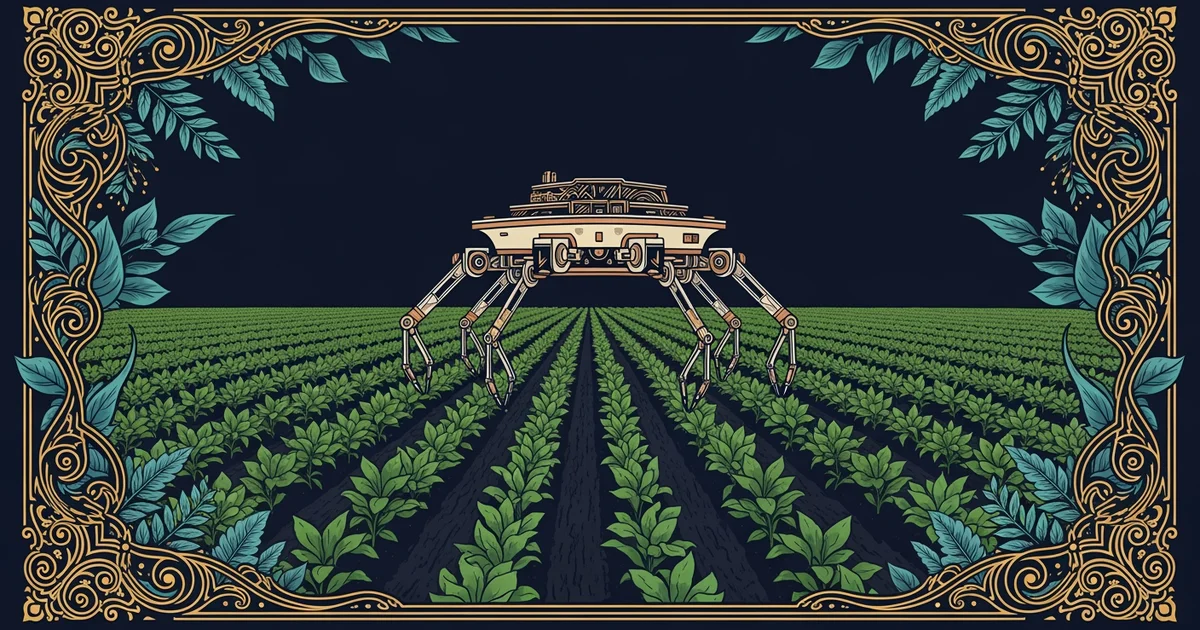
When farmers invest in autonomous harvesting, they are essentially betting that machine speed will outperform human labor costs over several seasons. These robots use advanced vision systems to identify ripe fruit and soft robotic grippers to pluck them without causing damage. The primary economic advantage comes from the machine's ability to work twenty-four hours a day without needing breaks or sleep. While the initial purchase price of these units is very high, the long-term reduction in seasonal labor expenses creates a path toward profitability. Think of this investment like upgrading a manual assembly line to a high-speed automated factory floor to increase total volume.
Key term: Return on Investment (ROI) — the financial gain or loss generated on an investment relative to the amount of money that was initially spent.
To understand if a machine is worth the cost, farm managers must look at specific financial indicators that determine the break-even point for the technology. The following factors influence how quickly a robotic system pays for itself in an orchard or field environment:
- Operational uptime represents the total hours the robot spends picking fruit versus the time spent on maintenance or recharging cycles.
- Harvest accuracy measures the percentage of ripe fruit successfully collected versus the amount of fruit missed or damaged by the mechanical arm.
- Labor displacement costs track the total wages, housing, and transportation savings gained by replacing manual picking crews with automated hardware systems.
Analyzing Operational Efficiency and Costs
Transitioning to these systems requires a deep analysis of how capital expenditure affects the farm's cash flow during the first few years of adoption. A farmer must balance the high cost of specialized sensors and robotic arms against the rising cost of finding seasonal workers. If the robot can pick fruit faster than a human, the farm can capture more value during the narrow window when produce is at its highest market price. The table below compares the typical cost structures for manual versus automated harvesting models to illustrate where the money goes.
| Cost Category | Manual Harvesting | Automated Harvesting |
|---|---|---|
| Initial Setup | Low initial cost | Very high investment |
| Hourly Rate | Wages plus benefits | Electricity and repairs |
| Scalability | Limited by labor | High machine capacity |
| Quality Control | High human error | Consistent algorithmic precision |
Comparing these models shows that while manual labor is cheaper upfront, automation offers superior consistency and scale. The robotic system reduces the risk of crop loss during unexpected labor shortages which often plague large agricultural operations. As hardware prices drop and software becomes more efficient, the total cost of ownership will likely decline for most mid-sized farms. Farmers who adopt these tools early can secure a larger market share by ensuring their produce reaches the grocery store shelves ahead of the competition. This strategic shift allows for more predictable budgeting and reduces the reliance on volatile labor markets that threaten annual profits.
Automated harvesting systems provide long-term financial stability by replacing unpredictable labor costs with consistent, scalable, and high-precision mechanical performance.
But this model faces significant hurdles when the robots encounter irregular terrain or unpredictable weather conditions that require complex human judgment.