
The Rise of Agricultural Robotics
Imagine a massive field of wheat stretching toward the horizon under a hot summer sun. A single farmer stands at the edge, facing the impossible task of checking every single plant for signs of disease or lack of water before the harvest begins. This human-scale approach to food production is becoming a struggle as our global population climbs toward ten billion people. Modern farmers now turn to advanced technology to solve this massive labor gap and ensure food security for everyone.
The Shift Toward Mechanical Assistance
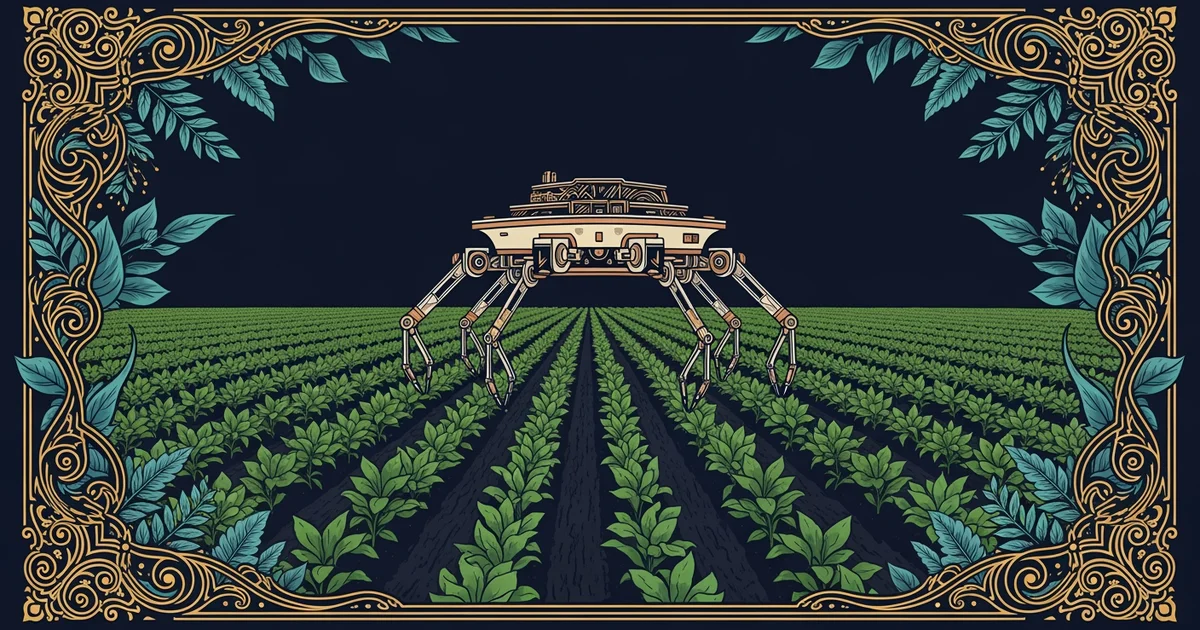
Agricultural machines are changing how we think about food production by removing the need for constant human presence in the fields. These systems use sensors and smart hardware to perform repetitive tasks with high speed and precision that humans simply cannot match over long work days. Think of these robots like a specialized kitchen appliance that never tires; just as a blender processes ingredients faster than a hand whisk, these machines process acres of land faster than a human crew. This shift allows farmers to focus on complex decisions like crop health and market timing instead of manual labor.
Key term: Agricultural Robotics — the use of automated machines and intelligent systems to perform farming tasks like planting, weeding, and harvesting crops.
Robots provide a consistent way to monitor crops by moving through rows without damaging the delicate plants or compacting the soil too much. They collect data on soil moisture and pest levels, which helps farmers apply water or nutrients only where they are needed most. By reducing the waste of resources, these machines make farming more sustainable and cost-effective for small and large operations alike. This efficiency is the primary driver behind the rapid adoption of robotics in modern agriculture today.
Why Automation Is Becoming Essential
Automation is no longer just a luxury for the wealthy; it is becoming a basic requirement for keeping farms profitable in a changing global economy. As fewer people choose to work in rural farming jobs, the cost of labor rises, making it harder for family farms to compete with larger corporate entities. Robots bridge this gap by performing the essential, repetitive jobs that keep a farm running smoothly during the busy growing season. Without this mechanical support, many farms would struggle to keep up with the demand for fresh produce.
To understand the different roles these machines play, consider how they specialize in specific stages of the crop life cycle:
- Autonomous Tractors pull heavy equipment through fields without a driver, following GPS paths to plant seeds with perfect spacing.
- Weeding Robots use computer vision to identify weeds between crops and remove them mechanically without using harmful chemical sprays.
- Harvesting Units use soft robotic grippers to pick delicate fruits like berries or tomatoes without bruising the skin of the produce.
These systems function as a team to create a smarter, more productive environment that supports the needs of a hungry planet. By using this technology, we can grow more food on the same amount of land while protecting the natural environment from overuse. The goal is to create a system where machines take on the heavy lifting so humans can manage the bigger picture of land stewardship. This path will show you how these machines work together to solve the biggest challenges in modern food production.
Smart machines allow farmers to increase food production by performing repetitive tasks with high precision and consistency.
This path explores how farming challenges drive the development of new solutions for a growing world.