
Resource Scarcity Models
Imagine you are running a lemonade stand where the supply of fresh lemons is suddenly cut in half. Even if every thirsty person in the neighborhood wants a drink, your ability to sell lemonade is now strictly limited by those few remaining lemons. This simple reality of life forces every business to confront the limits of their physical world. Understanding these limits is the first step toward managing a successful operation in any region. When resources are scarce, companies must decide how to distribute their limited stock to keep their businesses running efficiently. By modeling these constraints, managers can predict exactly how much output they can produce before they run out of essential materials.
Modelling Resource Constraints
Because resources are limited, businesses often use mathematical models to determine their maximum potential output levels. One common approach involves mapping the relationship between input availability and final product delivery. You can think of this process like a chef who has a fixed amount of flour to bake bread for a village. If the chef knows that each loaf requires exactly five hundred grams of flour, the total number of loaves is simply the total flour divided by the weight per loaf. In formal terms, this is often expressed as , where represents the total quantity produced, is the total resource available, and is the amount of resource required for each unit. This model helps businesses avoid overpromising to customers while ensuring that every available resource is used in the most profitable way possible.
Key term: Resource scarcity — the fundamental economic problem of having seemingly unlimited human wants in a world with limited physical resources.
When companies apply this logic, they must account for the fact that resources are rarely used for just one thing. A business might have to choose between using its limited supply of steel to make car parts or building frames for office furniture. This trade-off requires a clear calculation of where that resource will generate the highest value for the company. To manage this effectively, managers often look at the following factors:
• The total volume of raw materials currently held in storage or transit to ensure accurate planning.
• The specific rate at which each production unit consumes these materials during the standard manufacturing process.
• The expected market demand for each finished product to ensure that resources are not wasted on unwanted goods.
Calculating Supply Chain Limits
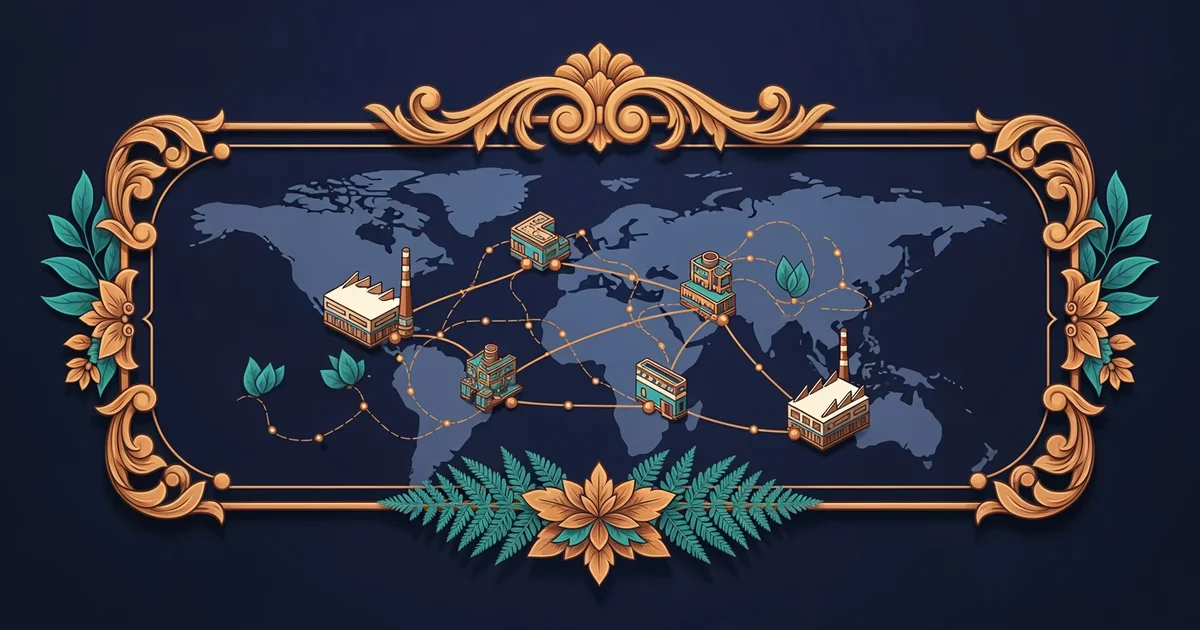
Now that you understand the basic calculation of output, you must consider how supply chain logistics impact these limits. Even if a factory has enough raw materials, the distribution network might be unable to move the finished goods to the customers. This creates a secondary type of scarcity where the product exists but cannot reach the market. Businesses must calculate their distribution capacity alongside their production capacity to avoid massive bottlenecks. If a distribution center can only handle fifty crates per day, producing one hundred crates will result in a surplus that simply sits in a warehouse. This inefficiency can drain a company's cash flow and prevent them from reinvesting in future growth.
| Constraint Type | Primary Impact | Strategy for Resolution |
|---|---|---|
| Material Supply | Limits total production | Diversify suppliers |
| Labor Availability | Limits operation speed | Automate processes |
| Transport Capacity | Limits market reach | Expand logistics hubs |
By balancing these different constraints, firms can create a realistic model of their capabilities. This allows them to stay competitive even when resources are difficult to obtain or transport. Successful businesses do not just focus on having enough materials; they focus on the entire path from raw input to the final customer delivery. Maintaining this balance is what separates growing regions from those that struggle to attract new jobs or stable investment.
Economic success depends on the ability to accurately model and manage the physical limits of production and distribution chains.
The next Station introduces Urbanization Trends, which determines how regional density changes the way these resource constraints function.
This content is educational only and does not constitute financial or investment advice.