
Sedimentary Deposition Dynamics
Imagine you are building a tall tower using many different layers of colored sand. Each time you pour a new bucket, the weight of the new sand pushes down on the layers below it. This simple process of stacking and pressing creates a solid structure over time. Earth behaves exactly like this sand tower when it collects dirt, rocks, and minerals over millions of years. These accumulated materials eventually turn into solid rock through a process we call deposition. Understanding how these layers stack helps us read the history of our planet like a giant book.
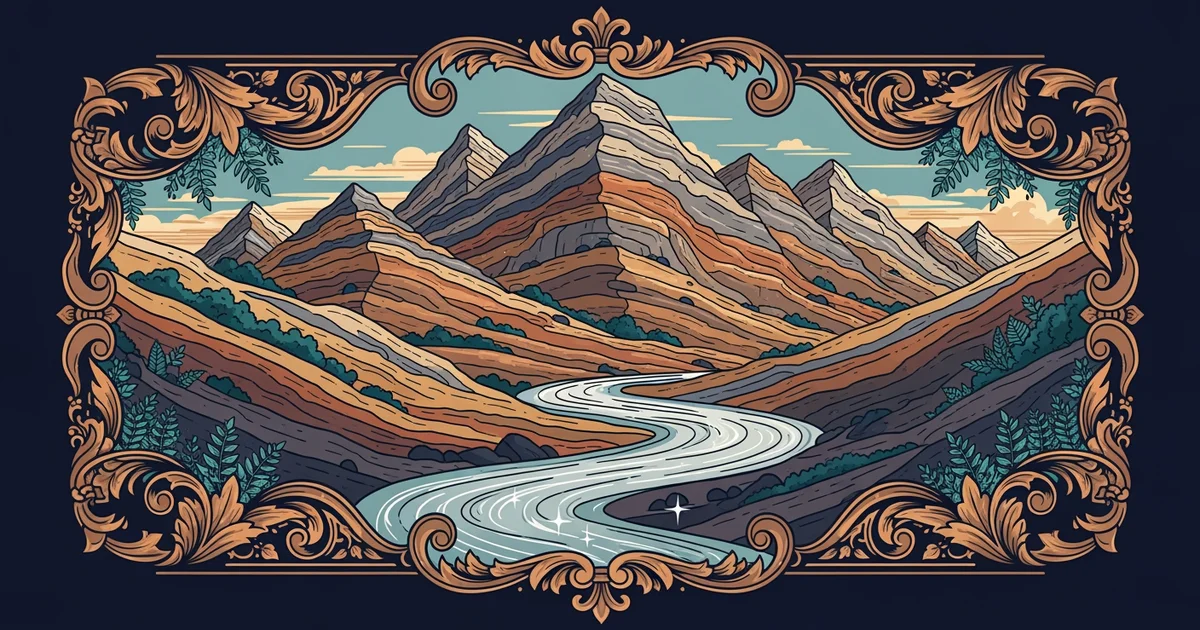
The Mechanics of Sediment Accumulation
When water or wind carries tiny pieces of broken rock, these bits eventually settle in low areas. We call these loose fragments sediment, which acts as the building block for all future rock formations. As more material arrives, the older layers get buried deeper under the weight of the new arrivals. This creates a vertical sequence that geologists call strata, representing a timeline of the environment. Think of this process like a savings account where you deposit small amounts of money every single day. Over many years, the total balance grows larger because the earlier deposits remain at the bottom while new ones pile on top.
Key term: Lithification — the complex physical process where loose sediment turns into solid rock through intense pressure and chemical cementation.
As the weight of overlying layers increases, the particles underneath experience immense pressure that squeezes out all the trapped water. This compression forces the grains to lock together tightly, forming a solid mass that can withstand the elements. Minerals dissolved in groundwater act like a natural glue, filling the tiny gaps between the grains to finish the process. This transformation turns soft silt or loose sand into hard stone that lasts for eons. Without this constant pressure, the materials would remain loose debris that wind or rain could easily wash away.
Interpreting Historical Climate Data
Geologists examine these rock layers to understand what the climate was like long ago. The type of sediment found in a specific layer tells a story about the energy of the environment at that time. For example, large pebbles suggest a high-energy river, while fine clay points to a calm and quiet lake bed. By looking at the composition of these layers, experts can identify periods of drought, flooding, or even shifting ocean levels. This evidence provides a reliable record of how Earth has changed its temperature and geography throughout its long existence.
| Sediment Type | Environment | Energy Level | Climate Indicator |
|---|---|---|---|
| Coarse Gravel | Fast River | High | Heavy Rainfall |
| Fine Silt | Deep Lake | Low | Stable Weather |
| Evaporites | Dry Basin | Very Low | Extreme Drought |
This table demonstrates how specific materials serve as markers for past environmental conditions across different geological eras. Each layer acts as a snapshot of the world before humans existed to record such events. We can observe these patterns in canyons or cliffs where erosion has exposed the deep history of our land. By comparing these markers, we gain a clear picture of how natural wonders like mountains and valleys were shaped by climate shifts. This knowledge helps us predict how future changes might affect the stability of the ground beneath our feet.
The physical layering of sediment provides a permanent record of Earth’s environmental history through the constant pressure of time.
But what does it look like in practice when we apply these chemical principles to the formation of underground thermal springs?