
Global Food Resilience
Imagine a single grocery store shelf suddenly going empty because a major storm blocked the only road to town. When we look at global food systems, we see that our survival depends on a fragile web of connections that stretch across entire continents. Most people assume that food will always be there, but the reality is that our reliance on long supply chains creates hidden risks. If one link in this massive chain breaks, the impact travels quickly to your local dinner plate. We must move toward better systems to ensure that everyone has access to healthy food regardless of global shifts or local crises.
Building Stronger Food Networks
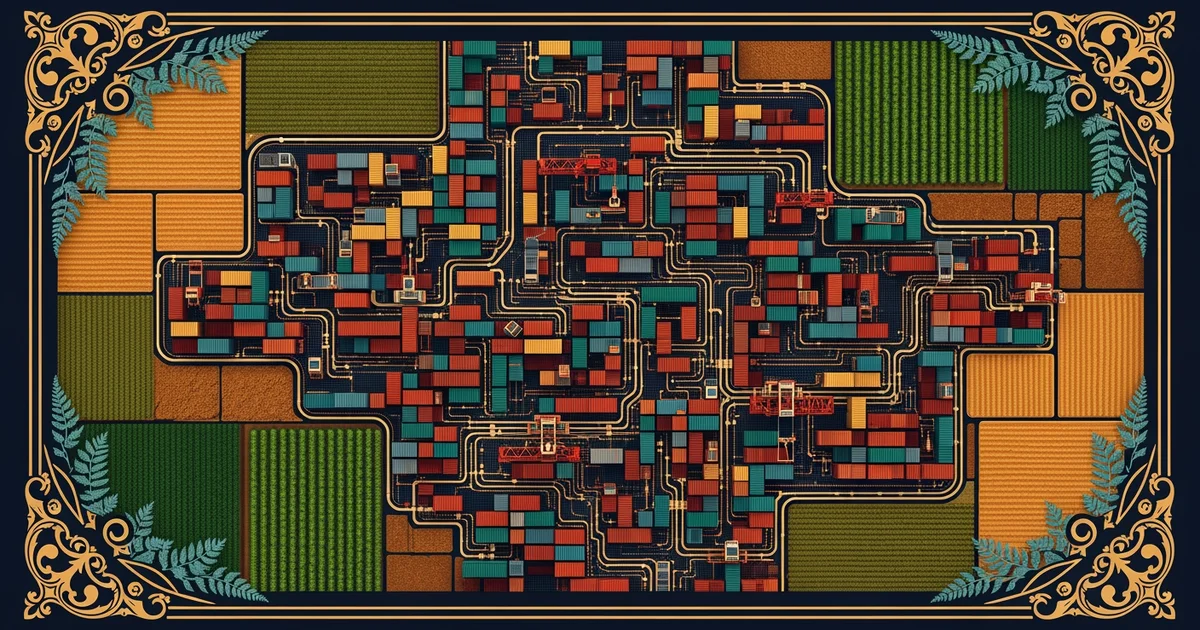
To build true food resilience, we need to rethink how we distribute resources on a global scale. Think of our current food network like a single, thin rope holding a heavy weight; if that rope snaps, everything falls at once. A resilient system acts more like a thick, braided cable made of many smaller strands. If one strand breaks, the others hold the weight and keep the system stable. We achieve this by diversifying our sources and keeping production closer to where people actually live.
Key term: Food resilience — the capacity of a food system to maintain stability and continue providing nutrition despite sudden environmental or economic shocks.
By moving away from a system that relies on a few giant hubs, we can create a network of smaller, local producers. This approach reduces the distance food travels, which lowers our carbon footprint while increasing freshness. Local farms and community gardens act as backup systems that provide food when global shipping routes face delays. When we support these smaller networks, we make our entire food supply much harder to disrupt.
Balancing Global Trade and Local Needs
Global trade remains vital for sharing unique crops that only grow in specific climates, but it must be balanced with local production. We have seen how innovations in vertical farming, which we explored in our previous station, can help cities grow food indoors year-round. These technologies allow us to produce vegetables in dense urban areas where land is expensive or limited. By combining global trade with advanced local growing methods, we create a hybrid system that is both efficient and secure.
| Strategy | Primary Benefit | Risk Mitigation |
|---|---|---|
| Local Farming | Lower transport costs | Reduces supply chain reliance |
| Vertical Growth | Year-round production | Protects against bad weather |
| Global Trade | Access to diversity | Stabilizes regional shortages |
This table shows how different methods work together to protect our food supply. By using a mix of these strategies, we ensure that no single failure can stop the flow of food to our homes. We must remember that resilience is not about stopping trade, but about creating multiple pathways for food to reach the people who need it most.
Strengthening Our Collective Future
When we integrate these ideas, we move closer to a system that can withstand the pressures of a changing climate and a growing human population. We need to focus on three main pillars to keep our food networks strong and reliable for the coming years:
- Diversifying crop varieties ensures that a single pest or disease cannot wipe out our entire food supply, as planting many different types of crops creates a natural shield against widespread agricultural failure.
- Investing in cold storage technology helps reduce the massive amount of food waste that happens during transport, allowing communities to store surplus food for times when supply chains face unexpected pressures.
- Improving data sharing between nations allows farmers to predict weather patterns more accurately, which helps them adjust their planting schedules before a drought or flood causes a major loss of harvest.
These actions build a foundation where communities can thrive even when global conditions become difficult. We have the tools and the knowledge to make our food systems more robust than they are today. By acting now, we protect our health and the health of the planet for everyone.
True food resilience requires a shift from fragile, long-distance supply chains toward a diverse network that balances global trade with strong, local production systems.
Understanding how to build these resilient systems is the final step in mastering the complex web of global food security.