
The Golden Triangle Theory
You reach for a spice jar while the pan sizzles, only to find you must walk across the entire kitchen to grab it. This common frustration is more than a minor annoyance, as it represents a breakdown in the physical flow of your cooking environment. When you design a workspace, you must prioritize the path between your most used appliances to save energy and time. By organizing your kitchen around a central path, you create a more efficient and comfortable cooking experience for your daily tasks.
The Three Pillars of Kitchen Flow
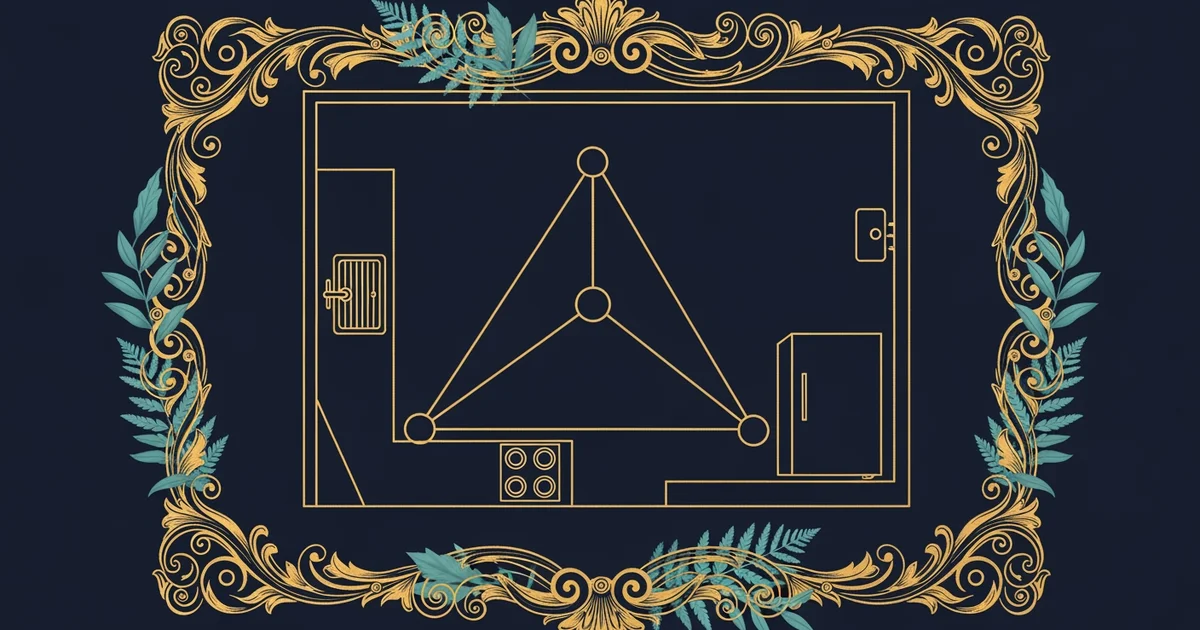
To understand how kitchens function, you must look at the three primary activity zones that define every meal preparation process. These points are the refrigerator for storage, the stove for cooking, and the sink for cleaning tasks. When these three points form a shape, they create the Golden Triangle, which serves as the backbone of modern kitchen design. Think of this triangle like a small business supply chain, where raw goods move from storage to processing and finally to the finished product. If the route between these points is blocked, your productivity drops and your physical fatigue increases significantly.
Key term: Golden Triangle — the imaginary path connecting the refrigerator, the sink, and the stove to create an efficient work zone.
Effective kitchen design relies on the distance between these three points, as too much space creates unnecessary travel while too little space feels cramped. You should aim for a total sum of the three legs between four and eight meters to keep movement natural. If the legs are too short, you will constantly bump into cabinets or other people in the kitchen. If the legs are too long, you will waste precious energy walking back and forth during the cooking process. Maintaining this balance ensures that your kitchen remains a functional tool rather than a source of physical strain.
Optimizing Your Daily Workflow
Beyond the basic layout, you must consider how your movement patterns influence the efficiency of your cooking sessions. The following list details the primary functions of each point in the triangle to help you organize your own space:
- The refrigerator provides the starting point for your workflow by housing all raw ingredients that require cold storage before use.
- The sink acts as the vital processing hub where you wash produce, rinse cooking tools, and manage waste disposal tasks.
- The stove serves as the final heat station where raw ingredients transform into cooked meals through various applied heating methods.
When you arrange these stations, you should avoid placing barriers like kitchen islands or heavy furniture in the direct path between them. A clear walking line allows you to pivot smoothly from the sink to the stove without needing to navigate around obstacles. This physical freedom reduces the number of steps you take, which lowers the physical burden on your body over a long period. By keeping these pathways open, you ensure that your energy remains focused on the cooking process instead of on unnecessary navigation.
| Appliance | Primary Purpose | Movement Frequency | Proximity Goal |
|---|---|---|---|
| Refrigerator | Ingredient Storage | Low to Medium | Near entry point |
| Sink | Cleaning/Prep | Very High | Central location |
| Stove | Cooking/Heat | High | Near prep space |
As you evaluate your current kitchen, look for ways to clear the lines connecting these three essential areas. Even small changes, such as moving a trash bin or reorganizing your cleaning supplies, can make a noticeable difference in your daily workflow. The goal is to minimize the effort required to switch between tasks, allowing you to move with grace and speed. This systematic approach turns a chaotic room into a professional workspace designed for human comfort and culinary success.
Efficient kitchen design minimizes physical effort by creating a clear, balanced path between your primary storage, cleaning, and cooking zones.
Next, we will explore how specific countertop heights impact your posture and long-term joint health.