
European Formal Dining Rules
Imagine you are sitting at a formal European banquet where every utensil placement serves a specific purpose. You notice the guest next to you navigating their meal with effortless grace while you feel uncertain about which fork to select first. Mastering formal dining is much like learning the rules of a complex board game where the board is your table setting. If you understand the underlying logic of the arrangement, you can move through any formal course without hesitation or social anxiety. This skill is not about showing off but about showing respect for the host and the culinary experience itself.
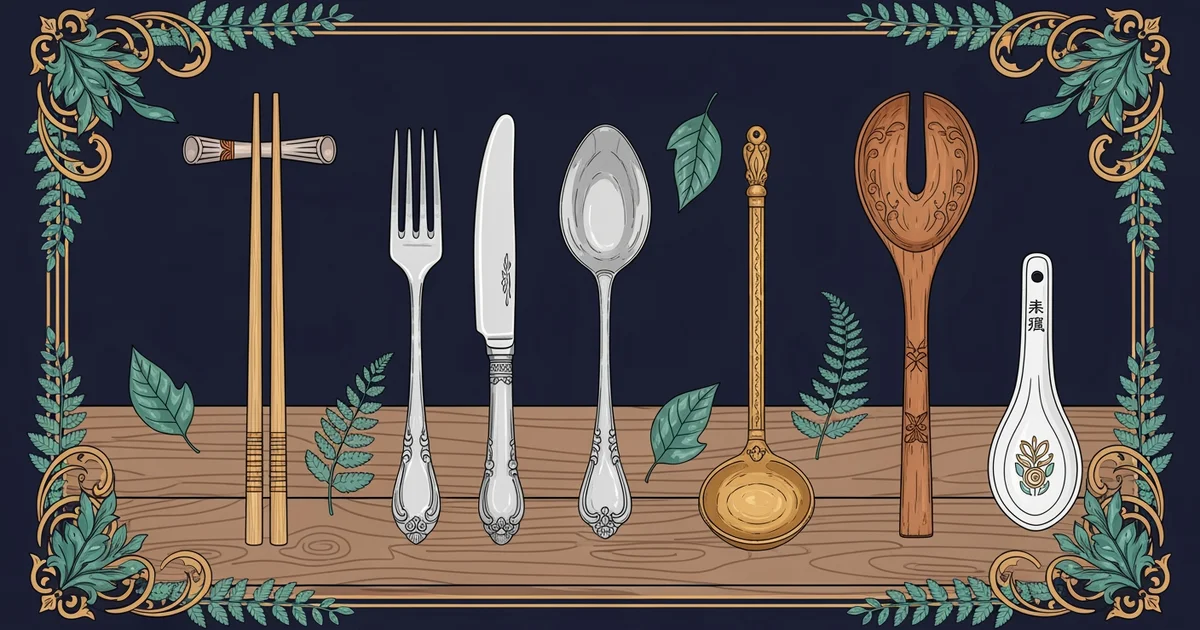
The Mechanics of Continental Style Eating
To adopt the Continental style of dining, you must keep your fork in your left hand and your knife in your right hand throughout the meal. You never switch the utensils between hands once you begin eating your main course. This technique keeps the flow of the meal steady and prevents unnecessary movement across the plate. Think of your hands as the gears of a clock that must move in perfect synchronization to keep the time of the dinner service. When you cut a piece of food, you use your index finger to apply gentle pressure to the handle of the knife. You then use the fork to secure the item firmly while the knife does the work of separating a bite-sized portion.
Key term: Continental style — a formal dining method where the fork remains in the left hand and the knife stays in the right hand during the entire meal.
This method requires you to keep the tines of the fork facing downward while you eat. You bring the food to your mouth using the left hand without rotating the fork upward. This posture forces you to remain upright and focused on your plate throughout the duration of the meal. If you need to rest during the course, you should place your knife and fork in a specific position on the plate. Crossing your utensils in the center of the plate signals to the server that you are pausing but intend to finish your food. This silent language allows the staff to clear or refill items without interrupting your conversation with other guests at the table.
Navigating Formal Table Settings
When you approach a formal table, you should look for the layout of the silverware to guide your progression through the courses. The utensils are typically arranged in the order of use from the outside moving inward toward the center plate. This arrangement acts as a map for your meal, ensuring you never have to guess which tool is appropriate for the next dish. If you encounter a salad course before the main event, you use the outermost fork. Once that dish is finished, the server removes the used silverware, leaving you with the next set of tools for the following course.
| Utensil Position | Purpose | Movement Pattern |
|---|---|---|
| Outermost | First course | Left to right |
| Innermost | Main course | Toward the center |
| Top of plate | Dessert | Horizontal shift |
Following this sequence requires a calm approach to your environment and a keen eye for the items provided. You should avoid rushing through your meal because the pace of the room dictates the flow of the evening. If you finish your meal, you place your knife and fork parallel to each other at the four o'clock position on your plate. This specific placement tells the server that you have completed the course and the plate is ready to be removed. Maintaining this level of consistency demonstrates that you respect the effort put into the formal dining environment. You become a participant in a shared ritual rather than just an observer of the process.
Understanding the logic behind formal table settings allows you to navigate complex social dining situations with confidence and poise.
The next Station introduces Latin American Meal Rhythms, which determines how communal dining traditions shape social interactions.