
Service Blueprinting
A customer walks into a store and finds the exact item they need on the shelf. They pay quickly and leave with a smile, but they have no idea about the massive effort happening behind the scenes to make that moment possible. Designing a great business requires looking past the surface to see the complex machinery that supports every single user interaction. This process of mapping out the invisible work is the core of building a reliable and scalable service model.
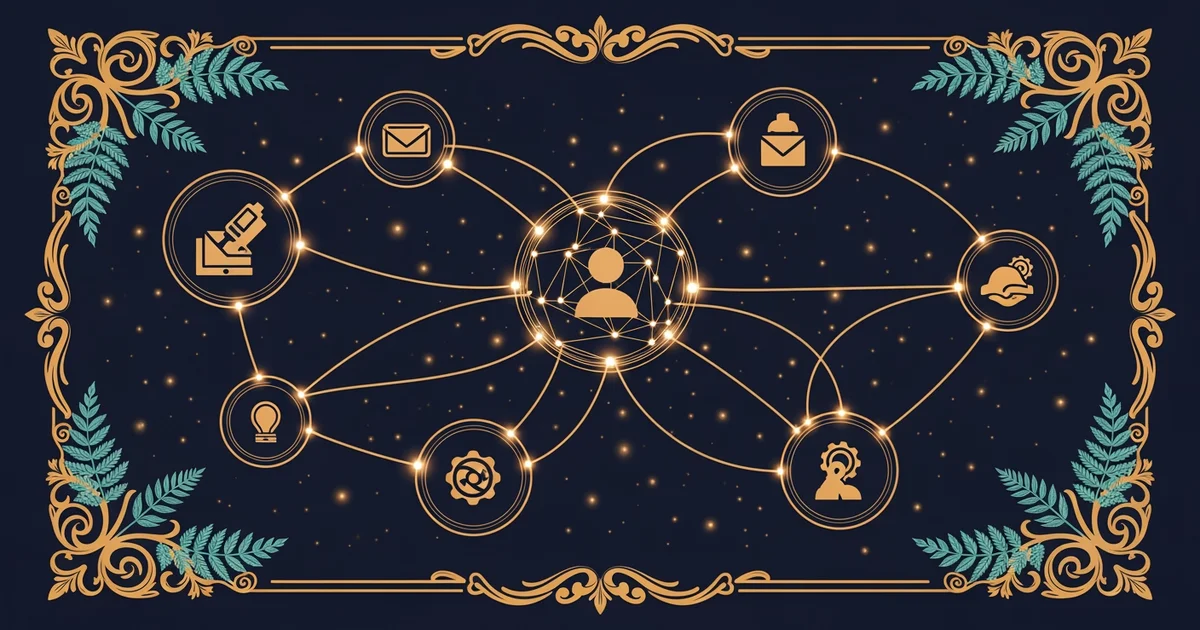
Visualizing the Service Journey
When you design a service, you must account for everything the user sees and everything the business does to support it. A service blueprint acts like an architectural plan for your business operations because it maps out the entire flow of a customer experience. It divides the world into two sides, separating the front stage where the customer interacts with your brand from the back stage where employees perform supporting tasks. Think of it like a theater production, where the audience sees the actors on stage, but the stagehands and lighting crew work in the shadows to make the play happen. Without this clear division, companies often struggle to understand why their service fails even when their staff works very hard.
Key term: Service blueprint — a visual diagram that maps out the relationship between customer actions and the internal business processes that support them.
Mapping these processes helps you spot where things might go wrong before they actually happen. If a customer waits too long at a checkout counter, the problem might not be the cashier, but a slow internal system that the cashier cannot control. By using a blueprint, you can see the connection between that front-stage wait time and the back-stage software lag. This allows you to fix the root cause rather than blaming your employees for a system flaw that they cannot change.
Aligning Internal Support Systems
After you map the customer journey, you need to ensure that your internal support systems are ready to handle the demand. Every step the customer takes must be supported by a specific action from your team or your technology stack. You can organize these connections by looking at how different layers of your business interact during a standard transaction.
| Layer | Responsibility | Example Action |
|---|---|---|
| Customer | User goals | Browsing a website |
| Front Stage | Staff interaction | Answering a live chat |
| Back Stage | Internal support | Updating inventory data |
| Support | Infrastructure | Maintaining the server |
This table shows how a simple request travels from the user through the layers of the company to reach the final result. When you align these layers, you ensure that every customer action triggers the correct response from your team. If your support layer is disconnected from the front stage, the customer feels confused because the business cannot deliver on its promises. You must verify that each stage has the tools and information required to finish its specific part of the process.
To keep your service consistent, you should follow these three steps when building your first blueprint:
- Identify the primary goal the customer wants to achieve during their visit to your platform or store.
- List every touchpoint where the customer interacts with your brand, such as clicking a link or talking to staff.
- Connect every touchpoint to the specific internal task, such as database updates or inventory checks, that enables that interaction.
By following these steps, you create a clear path that links employee effort to positive user outcomes. This clarity prevents wasted energy and ensures that your business stays focused on the most important parts of the experience. When you understand how your internal work influences the user, you can design a service that feels effortless for the customer while remaining efficient for your team.
A service blueprint connects the customer experience to the internal operations required to sustain that experience effectively.
But what does it look like in practice when you try to identify the friction points in this map?
Want this with sources you can check?
Premium Learning Paths for Business & Entrepreneurship are researched against open-access libraries — PubMed, arXiv, government databases, and more — with their distinctive claims cited to real sources and independently checked.
See what Premium includes