
Invertebrate Paleontology
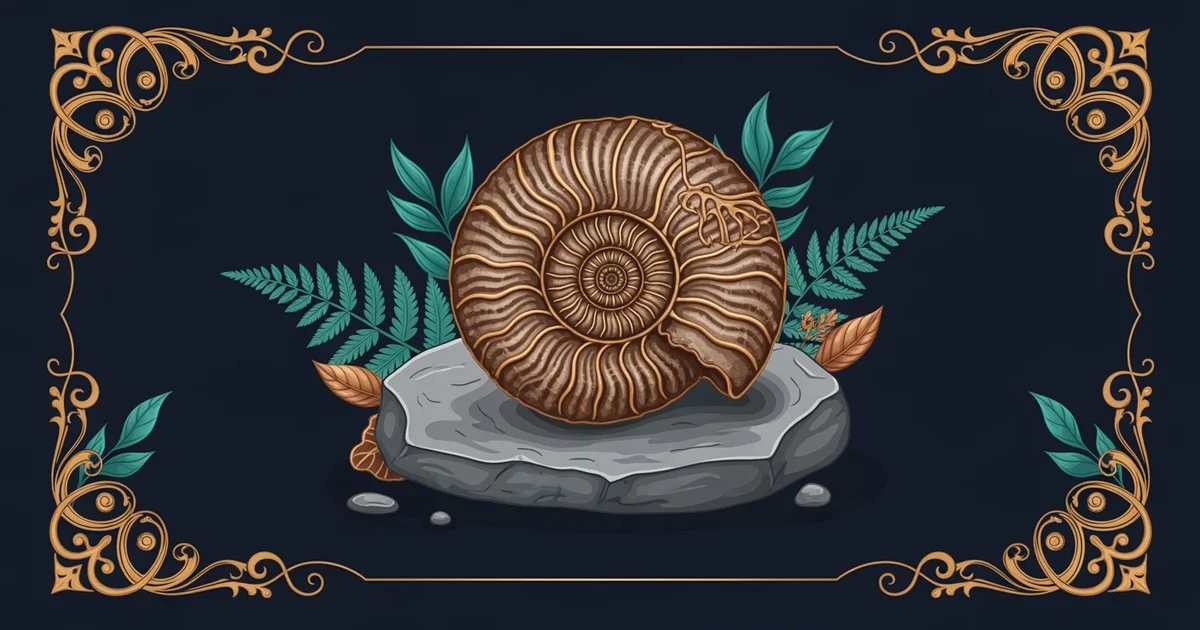
Imagine walking along a rocky beach and finding a stone that looks exactly like a coiled shell. This tiny object holds the key to understanding how life thrived in ancient oceans long before humans existed.
Understanding Fossilized Marine Life
Invertebrate paleontology is the study of ancient animals that lack a backbone or internal skeleton. These creatures make up the vast majority of all life that has ever lived on Earth. Scientists look at their hard parts, such as shells or external skeletons, to reconstruct how they interacted with their environment. Think of these fossils like a discarded receipt from a store that closed millions of years ago. By examining the items on the receipt, you can figure out what the business sold and who shopped there. In the same way, these fossils reveal which organisms dominated the ancient seafloor and how they survived.
Most invertebrate fossils come from marine environments where sediments bury the remains quickly after death. Over long periods, minerals replace the original organic material, turning the body into a durable stone replica. This process preserves fine details like growth rings, ridges, or even tiny pores used for breathing. Because these animals lived in such massive numbers, their fossils are often abundant in sedimentary rocks. They serve as essential markers for geologists who want to date rock layers accurately. By identifying specific species, researchers can determine the age of a formation with great precision.
Classifying Ancient Invertebrate Groups
To organize this vast history, scientists classify these creatures into distinct groups called phyla based on their body plans. This system helps researchers compare ancient forms with modern animals to understand evolutionary connections. The following table highlights common groups found in the fossil record and their primary physical characteristics:
| Phylum | Common Example | Key Feature | Environment |
|---|---|---|---|
| Mollusca | Clams | Calcium carbonate shell | Mostly marine |
| Brachiopoda | Lamp shells | Two unequal valves | Shallow ocean |
| Arthropoda | Trilobites | Jointed exoskeleton | Diverse waters |
| Cnidaria | Corals | Radial body symmetry | Tropical reefs |
These categories provide a clear framework for identifying specimens found in the field. Each group evolved unique methods for gathering food and protecting itself from predators in a changing world. For example, the Arthropoda phylum developed a segmented body and a tough exterior that allowed them to move effectively across the ocean floor. This structural innovation acted like a suit of armor, providing both defense and a framework for muscle attachment. By comparing these traits, paleontologists can map out how different lineages rose to prominence or eventually went extinct.
Key term: Phylum — a high-level biological classification group that gathers animals based on shared fundamental body plans and structural features.
When you examine a fossil, you are looking at a snapshot of a complex biological system that functioned millions of years ago. The preservation of these organisms is not random, as specific conditions are required to turn soft tissue or fragile shells into permanent records. Areas with low oxygen levels or rapid burial are often the best places to find well-preserved specimens. These unique conditions protect the remains from scavengers or physical erosion that would otherwise destroy the evidence. As we continue to study these findings, we gain a clearer picture of the ancient marine ecosystems that once covered our planet.
The classification of ancient marine invertebrates allows scientists to reconstruct the complex history of life by interpreting the structural remains left behind in sedimentary rock layers.
The next Station introduces paleobotany basics, which determines how plant fossils reveal the changing climate of our ancient world.