
Defining Ancient Life
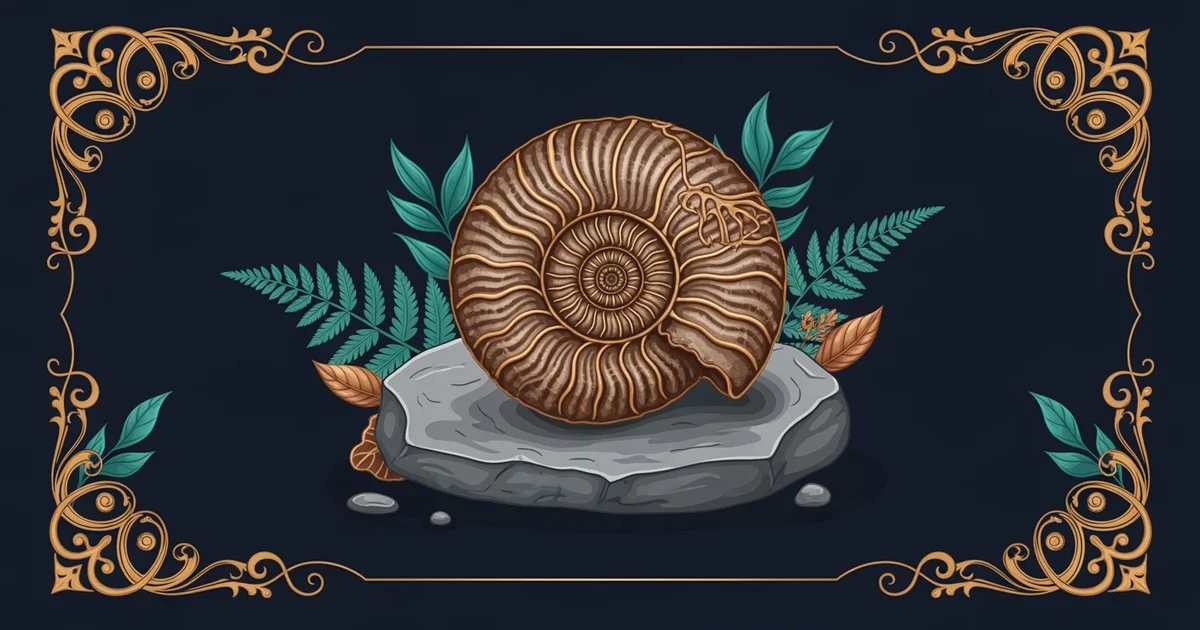
Imagine you are digging in your backyard and discover a heavy, stone-like object shaped exactly like a seashell. You know that you live hundreds of miles from the nearest ocean, yet the object clearly shows the delicate ridges and spiral patterns of a real marine animal. This simple discovery introduces the core mystery of ancient life, where the remnants of organisms from millions of years ago remain trapped in the earth beneath our feet. By studying these objects, we can reconstruct entire ecosystems that vanished long before humans ever walked the planet.
The Nature of Ancient Evidence
When we talk about the study of ancient life, we are primarily discussing paleontology, which is the scientific study of life that existed in past geologic periods. Scientists in this field do not just look at bones, but they examine any evidence of past life, including shells, imprints, and even fossilized tracks. Think of these items like a series of lost receipts from a business that closed down ages ago. Just as a receipt tells you what someone bought and when they visited a store, a fossil tells us which organisms lived in a specific environment and how they interacted with their surroundings. This evidence allows us to piece together a map of life that spans across vast stretches of time.
Key term: Fossil — any preserved remains, impression, or trace of any once-living thing from a past geological age.
It is important to distinguish between these ancient remnants and living organisms because the process of preservation changes the biological material entirely. A living organism is composed of soft tissues, fluids, and active cells that function to maintain life, grow, and reproduce. Once an organism dies, its soft parts usually decay rapidly unless they are buried under specific conditions that prevent decomposition. Over millions of years, minerals from groundwater slowly replace the original organic material, turning the remains into solid stone. This process, known as mineralization, ensures that the structure of the organism survives even though the living tissue is long gone.
Comparing Fossils and Living Systems
To better understand the differences between these two states of existence, we can compare their primary characteristics in the table below:
| Attribute | Living Organism | Fossilized Remnant |
|---|---|---|
| Composition | Soft tissue and cells | Mineralized stone |
| Activity | Metabolic processes | Inert and static |
| Preservation | Temporary and fleeting | Permanent and stable |
| Biological Role | Active environmental participant | Historical evidence marker |
This table highlights why fossils serve as the perfect record for history, as they do not change once they are fully formed. While a living creature is constantly changing to survive, a fossil remains exactly as it was when it was buried. This stability is exactly why paleontologists rely on them to build a timeline of biological development. If organisms did not leave behind these stone records, we would have no way to know what existed before the modern era. We would be like detectives trying to solve a crime without any physical clues or witnesses to explain the past events.
By comparing the structure of these ancient remains to modern animals, scientists can make educated guesses about how the original creatures moved, ate, and survived. This method of comparison acts as a bridge between the world we see today and the world that existed millions of years ago. As you continue through this path, you will learn how these clues reveal the secret history of life on our planet, providing a clear window into the evolution of every species we see around us now.
Fossils function as permanent geological records that allow scientists to reconstruct the biology and behavior of organisms that existed in Earth's distant past.
By learning how these ancient records are formed, we will move forward to explore the vast timelines that organize the history of life on our planet.