
Defining Epigenetic Inheritance
Imagine you are holding a recipe book that contains instructions for baking every single cake ever made. You have the exact same book as your friend, yet your cakes taste different because you chose to add extra sugar or skip the salt. Your DNA is that recipe book, but your life experiences act like sticky notes that change how you follow those instructions. This process of adding or removing notes without changing the original text is the core of how your body reacts to the world around it.
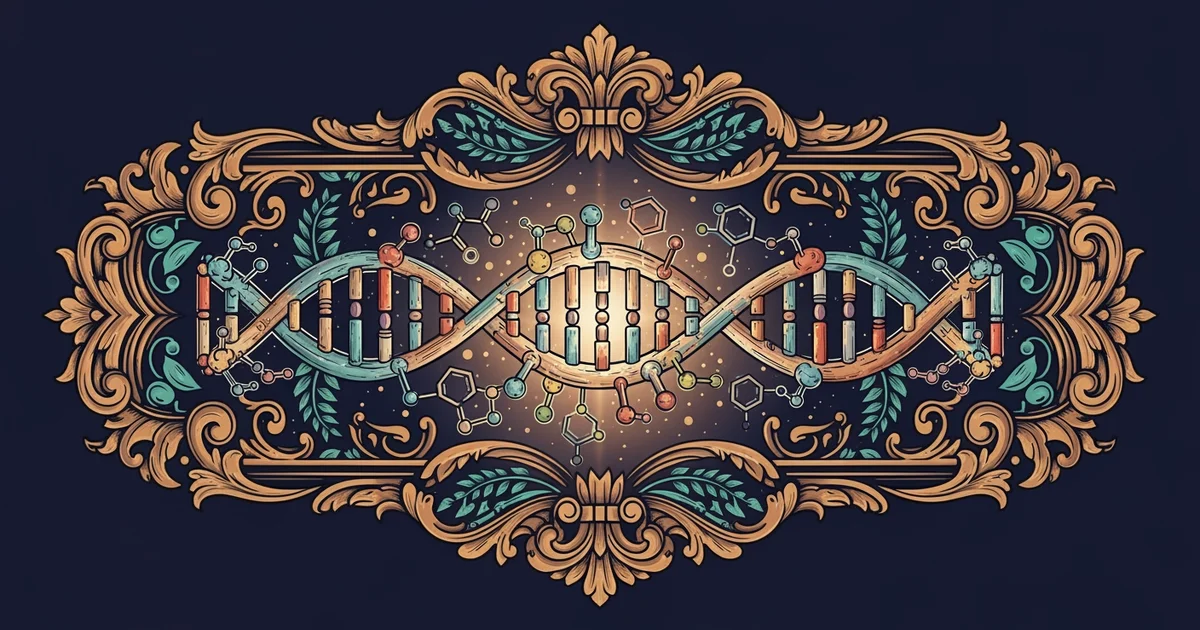
The Difference Between Code and Context
Your genetic code is the permanent sequence of letters passed down from your parents at birth. This sequence remains stable throughout your life, acting as a fixed blueprint for your biological development. However, your cells need to know which parts of that massive blueprint to read at any given moment. This is where epigenetic inheritance comes into play as a secondary system of control. Think of your DNA as the hardware of a powerful computer that stores all your data. The epigenetic markers act like the software programs that decide which files to open and which files to keep locked away from view. While the hardware never changes, the software can be updated based on your environment.
Key term: Epigenetic markers — chemical tags that attach to DNA to tell the cell which genes should be active or silent.
These chemical tags do not alter the actual letters of your genetic code at all. They simply sit on top of the DNA structure to act as switches for your various biological functions. If a gene is switched on, the cell creates the proteins that the gene describes in its instructions. If a gene is switched off, the cell ignores those instructions entirely. This mechanism allows your body to adapt to changes in your environment, such as diet or stress levels, without needing to rewrite your entire genetic foundation.
How Markers Influence Your Biological Legacy
When we talk about inheritance, we usually think about the physical traits passed down through DNA sequences like eye color or height. Epigenetic inheritance suggests that some of these chemical switches might also be passed down to your children. This means that your lifestyle choices could potentially influence the way your children's genes are expressed later in life. Consider the following ways these markers interact with your daily biological systems:
- Dietary impact: Certain nutrients you consume can influence the placement of chemical tags on your DNA, which potentially changes how your cells process energy.
- Stress response: High levels of chronic stress can trigger the body to place markers on genes related to mood, which might affect how your future offspring handle their own stress.
- Environmental exposure: Chemicals or toxins in your surroundings can leave a lasting mark on your genetic expression that stays present even after the exposure ends.
This system ensures that your body remains flexible enough to survive in a constantly changing world. If you live in a cold climate, your body might use these markers to keep certain heat-generating genes active. If you move to a hot climate, those markers might shift to help your body regulate its temperature more efficiently. This adaptability is what makes humans so resilient in diverse environments across the globe. By understanding these mechanisms, you gain a clearer picture of how your daily habits interact with the biological legacy you carry. This path will guide you through the complex ways that your environment, your choices, and your biology work together to shape who you are and who you will become.
Your genetic legacy is not just a fixed set of instructions but a flexible system that responds to your life choices through chemical markers.
Understanding these markers will reveal how your daily experiences connect to the biological traits you pass down to future generations.