
Sensory Reward Systems
Sensory Reward Systems in Feline Training
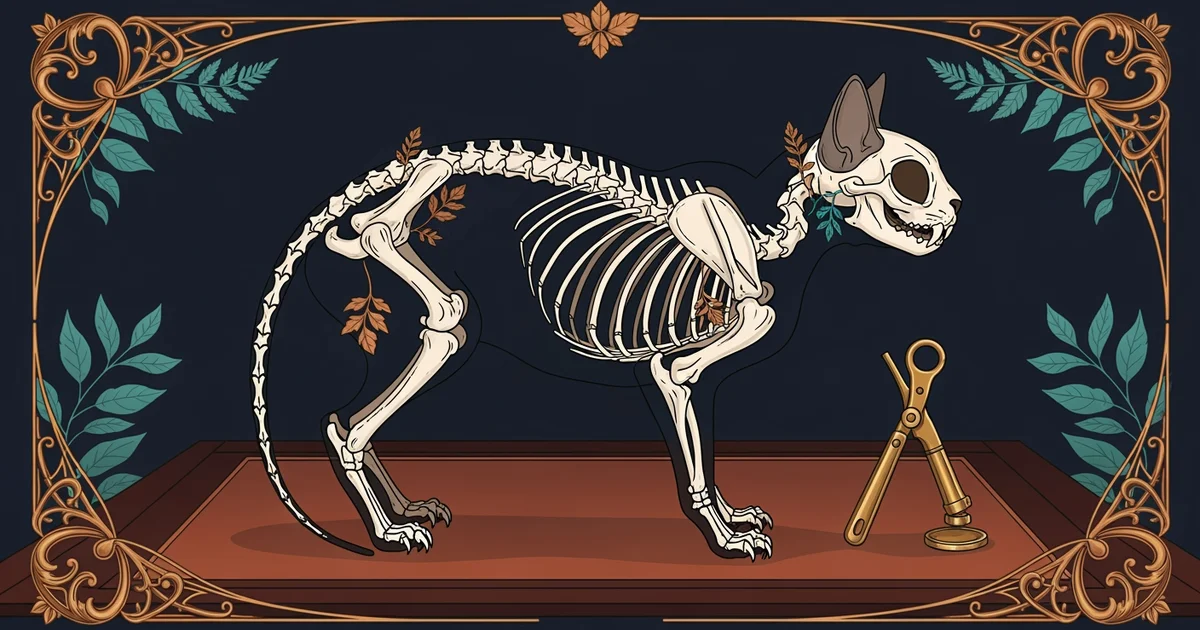
Welcome to Station S06. In our previous modules, we established a foundational understanding of feline evolutionary psychology, mapped the anatomy of feline senses, reviewed the domestic cat ethogram, and explored the mechanics of both operant and classical conditioning. Now, we must merge these distinct biological and psychological concepts to answer a critical training question: How do we effectively motivate a solitary, specialized predator?
To successfully shape behavior using operant conditioning, a trainer must identify what motivates the individual animal. This requires a deep understanding of the cat's unique Sensory Reward System. Unlike domestic dogs, who have undergone thousands of years of selective breeding to enhance their generalized food drive and desire for human approval, cats remain highly specialized hunters with idiosyncratic sensory preferences. A reward is only a reward if the cat's neurological system perceives it as highly valuable. In this station, you will learn how to assess a cat's sensory profile and match it to the appropriate high-value reward.
The Olfactory Profile: Scent as a Primary Reinforcer
As we learned in the anatomy module, cats possess up to 200 million odor sensors in their nasal cavity, alongside the vomeronasal organ (Jacobson's organ) which allows them to essentially 'taste' pheromones and scents in the air. Because their evolutionary survival depended on sniffing out prey and navigating territorial markers, scent is a profound behavioral driver.
For a cat with a dominant olfactory profile, standard dry kibble may be entirely unmotivating. Instead, these cats are driven by complex, pungent aromas. High-value olfactory rewards include herbs that trigger neurological responses, such as nepetalactone (found in catnip) or actinidine (found in valerian root and silvervine). For these cats, the reward for successfully completing a behavior (like sitting on a target mat) might be three seconds of interacting with a silvervine-infused kicker toy. Alternatively, using highly aromatic proteins—such as freeze-dried minnows or strongly scented organ meats—can bridge the gap between olfactory stimulation and gustatory satisfaction.
The Gustatory Profile: The Importance of Texture and Mouthfeel
When evaluating food rewards, novice trainers often focus solely on flavor. However, feline gustatory preferences are inextricably linked to texture and mouthfeel, a direct evolutionary callback to their predatory diet. Cats do not possess sweet taste receptors; their taste buds are optimized for amino acids and fats.
Cats typically fall into distinct textural preference categories based on their predatory instincts. Some cats prefer crunchy textures that mimic the sensation of crushing insect exoskeletons or small bird bones. For these cats, dry, brittle treats are highly reinforcing. Other cats prefer wet, paste-like textures that mimic the moisture content of fresh organ meat. For these cats, lickable meat pastes delivered from a tube are the ultimate high-value reward. Lickable treats are particularly effective during classical conditioning (such as counter-conditioning a fear of nail clippers) because the continuous licking action provides sustained reinforcement and naturally lowers the cat's heart rate.
The Visual and Kinetic Profile: Motion as a Reward
The feline visual system is heavily wired for motion detection. Their retinas contain a high concentration of rod cells, allowing them to track erratic, rapid movements even in low light. To a cat with a high visual and kinetic drive, a stationary piece of food is essentially 'dead prey' and may be entirely ignored.
For these cats, movement is the reward. If a cat ignores treats but chatters at birds through the window or stalks shadows on the wall, they possess a visual/kinetic profile. The optimal reward in operant conditioning for this profile is a brief, controlled play session. For example, after the cat successfully performs a recall (coming when called), the trainer immediately flicks a feather wand toy across the floor. The opportunity to track, pounce, and bite the moving target satisfies their evolutionary predatory sequence. The key to using play as a reward is brevity; the play session should last only a few seconds before the toy is hidden again, maintaining its high value.
The Tactile and Social Profile: Ethological Mapping
While cats are often stereotyped as aloof, the domestic cat ethogram details numerous complex social behaviors, primarily centered around allogrooming (mutual grooming) and bunting (rubbing scent glands against objects or peers). Cats with a strong tactile profile find specific types of physical contact highly reinforcing.
If a cat frequently rubs their cheeks against your equipment, weaves through your legs, or seeks out physical contact over food, they are demonstrating a tactile reward preference. For these cats, the reward for a desired behavior might be three seconds of firm scratching under the chin or along the cheekbones, where their facial pheromone glands are concentrated. It is crucial to map this physical touch to the ethogram; unpredictable or overstimulating touch (like aggressive belly rubbing) can trigger a defensive response, acting as a punisher rather than a reinforcer.
Conducting a Preference Assessment
To accurately match a reward to a cat's sensory profile, trainers conduct a 'Paired-Stimulus Preference Assessment.' This involves systematically presenting the cat with two different types of rewards simultaneously and recording their choice.
Step 1: Gather a variety of rewards representing different sensory profiles (e.g., a crunchy treat, a lickable paste, a silvervine stick, and a small wand toy).
Step 2: Present two options to the cat simultaneously, spaced about a foot apart.
Step 3: Observe and record which item the cat investigates and engages with first.
Step 4: Remove both items, wait a few moments, and present a new pairing.
By repeating this process, you can build a personalized 'Reward Hierarchy' for the individual cat. The item they choose most frequently is their 'A-tier' reward, which should be reserved for learning new, complex, or highly challenging behaviors. Lower-tier rewards can be used for maintaining already learned behaviors.
Conclusion: The Matching Exercise
Understanding sensory profiles prevents trainer frustration. If a cat is not learning, the animal is not stubborn; the trainer has simply failed to identify the correct currency. By observing the cat's natural behaviors—whether they sniff intensely, stalk movement, crave touch, or demand specific textures—you can select the precise sensory reward that will maximize operant conditioning success.
Sources
Author, A. (2018). Feline Behavior and Sensory Ecology. Academic Press.
Author, B. (2020). Operant Conditioning Methodologies in Domestic Felines. Journal of Applied Animal Welfare Science.
Author, C. (2022). The Role of Olfactory Stimulation in Feline Enrichment. Veterinary Behavior Journal.
⚠ Citations are AI-suggested references. Always verify independently.