
Feline Evolutionary Psychology
Feline Evolutionary Psychology
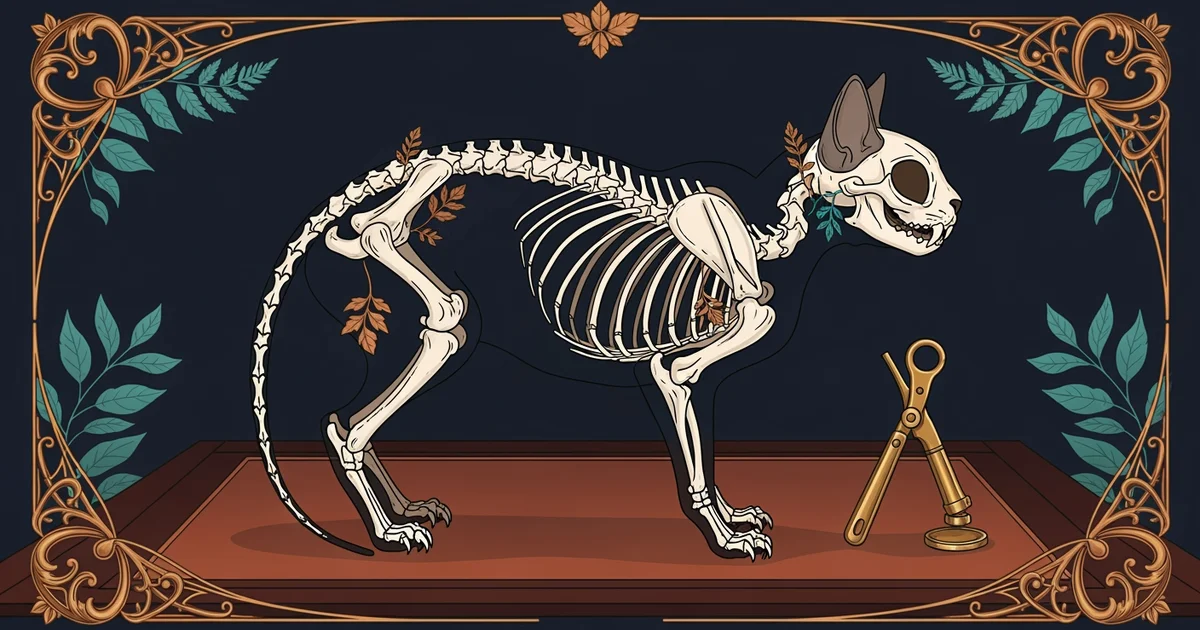
To effectively train any species, one must first understand the evolutionary pressures that shaped its brain. For the domestic cat (Felis catus), these pressures are vastly different from those that shaped the domestic dog (Canis lupus familiaris). While dogs evolved as highly social pack hunters, cats evolved as solitary, territorial predators. Understanding this fundamental biological distinction is the absolute cornerstone of feline behavioral modification.
The Ancestral Blueprint
The domestic cat is a direct descendant of the African wildcat (Felis silvestris lybica). Genetic studies indicate that the divergence between the wildcat and the domestic cat occurred roughly 10,000 years ago in the Fertile Crescent. However, unlike dogs, horses, or cattle, which were actively domesticated by humans for specific tasks like herding, pulling, or guarding, cats largely domesticated themselves.
As early human civilizations developed agriculture, they began storing surplus grain. These grain stores attracted rodents, which in turn attracted the African wildcat. Humans tolerated the cats because they provided free pest control, while the cats tolerated humans because human settlements provided an abundance of prey. This symbiotic relationship—often referred to as "self-domestication"—means that humans rarely selectively bred cats for behavioral traits like obedience or sociability until very recently in history. Consequently, the modern domestic cat retains an evolutionary psychology nearly identical to its wild ancestors.
The Solitary Predator Paradigm
The most critical aspect of feline psychology is their status as solitary hunters. In a pack animal like a wolf or a dog, survival depends on group cohesion. Dogs possess an innate psychological drive to appease higher-ranking members of their social hierarchy, cooperate in tasks, and seek social approval. This makes them highly susceptible to training methods based on praise or social pressure.
Cats, conversely, hunt alone. In the wild, a solitary predator cannot rely on a pack to bring down large prey or to protect it while it sleeps. A solitary hunter must rely entirely on its own wits, agility, and risk assessment. If a solitary predator is injured, it cannot hunt, which means it will starve. Therefore, cats have evolved to be highly risk-averse and intensely focused on personal survival.
When we apply this to training, it explains why a cat will not perform a trick simply to "please" you. From the cat's biological perspective, expending energy on an action that does not yield a direct, tangible benefit (like food or safety) is an evolutionary mistake. To train a cat, you must answer the question their biology is constantly asking: "What is in this for me?"
Obligate Carnivores and the Prey Drive
Cats are obligate carnivores, meaning their bodies require nutrients found only in animal flesh, such as taurine. Because their diet is entirely meat-based, their daily routine in the wild revolves almost entirely around the "hunting sequence": staring, stalking, chasing, pouncing, killing, and eating.
This sequence is hardwired into their neurology. The prey drive is one of the most powerful motivational tools available to a cat trainer. While a dog might work for a pat on the head, a cat is most motivated when training mimics the hunting sequence. Using a feather wand to lure a cat onto a platform, or rewarding a desired behavior with a high-protein treat, taps directly into their predatory instincts. By aligning your training goals with their biological drives, you transform learning from a chore into an intrinsically rewarding simulation of a successful hunt.
Territoriality and Safety
Because solitary predators do not have a pack to defend them, they rely on controlling a specific territory to ensure their safety and access to resources. A cat's sense of security is deeply tied to its physical environment. They leave scent marks via scratching (depositing pheromones from their paw pads) and facial rubbing to map out safe zones.
In a training context, this means a cat cannot learn if it feels its territory is insecure. If a cat is placed in a new, unfamiliar room, its brain will prioritize mapping the environment and identifying escape routes over learning a new behavior. Effective training requires establishing a "secure base"—a quiet, familiar environment where the cat feels completely in control of its surroundings.
The Ineffectiveness of Punishment
Perhaps the most crucial takeaway from feline evolutionary psychology is their response to punishment. In social animals, mild punishment or scolding can act as social feedback, signaling a breach of pack rules. Dogs often respond to scolding with appeasement behaviors (tucking the tail, averting gaze) to restore social harmony.
Cats do not have a biological framework for "social appeasement" in the context of discipline. Because they are small predators, they are also prey for larger animals (like coyotes or eagles). If a human yells at, sprays water at, or physically reprimands a cat, the cat's brain does not interpret this as a lesson in household rules. Instead, it interprets the human as a sudden, unpredictable predator.
The cat's evolutionary response to a predator is either "fight" or "flight." Punishment will cause the cat to flee the area, hide, or become defensively aggressive. Furthermore, through classical conditioning, the cat will begin to associate the human—not the unwanted behavior—with danger. This destroys trust and makes future training nearly impossible. Therefore, feline training must rely exclusively on positive reinforcement, rewarding the behaviors we want while managing the environment to prevent the behaviors we do not want.
Conclusion
The myth that cats are "untrainable" stems from humans attempting to train them as if they were dogs. By recognizing the domestic cat as a self-domesticated, solitary, territorial predator, we can design training protocols that respect their biology. When we utilize their prey drive, respect their need for territorial security, and rely on positive reinforcement, we unlock the profound learning capabilities of the feline mind.