
Domestic Cat Ethogram
Station S03: Domestic Cat Ethogram
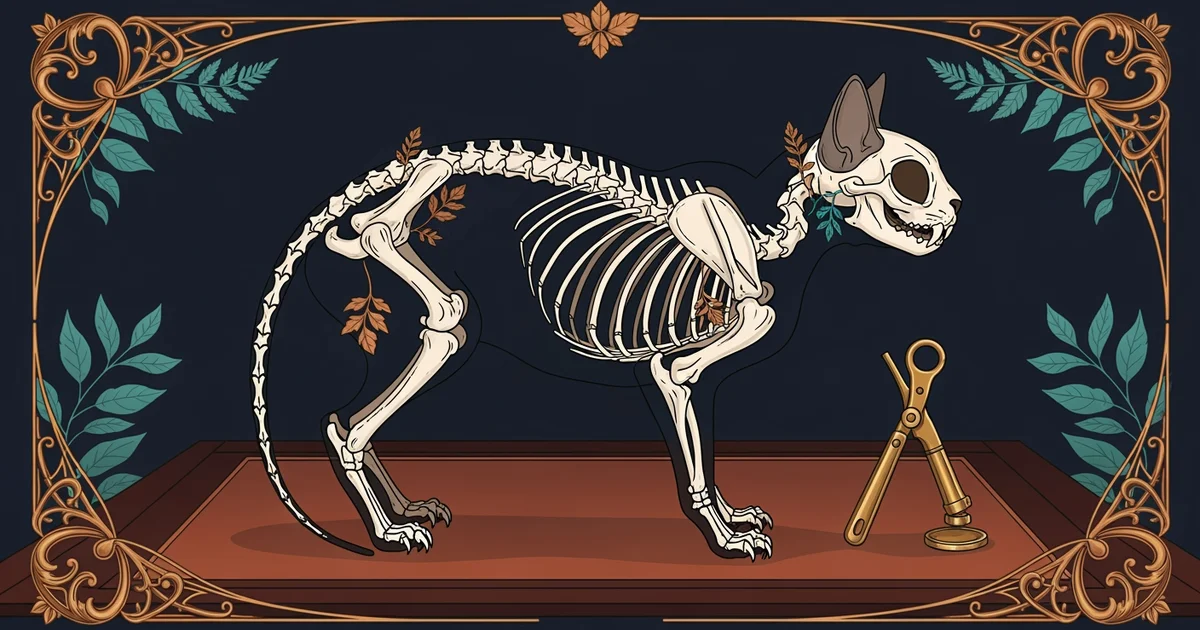
Welcome to Station S03. In our previous station, "Feline Evolutionary Psychology," we explored how the domestic cat's history as a solitary hunter and a mesopredator—meaning they are simultaneously predator and prey—shaped their cognitive landscape. We learned why cats think the way they do. Now, we must learn how to objectively observe what they do. To train a cat effectively, you cannot rely on vague impressions of their mood. You must become a scientist of their movement. This requires the foundational tool of animal behavior research: the ethogram.
What is an Ethogram?
An ethogram is a comprehensive, objective inventory of the natural behaviors exhibited by a specific species. Think of it as a dictionary of actions. In biological sciences and ethology (the study of animal behavior), an ethogram provides a standardized language so that researchers across the globe can observe an animal and agree on exactly what is happening. When conducting a video analysis of feline behavior, your ethogram serves as your coding key.
The Trap of Anthropomorphism
Before we categorize behaviors, we must address the greatest hurdle in behavioral observation: anthropomorphism. Anthropomorphism is the attribution of human emotions, motivations, or characteristics to non-human entities.
If you watch a video of a cat knocking a glass off a table and record, "The cat is being spiteful," you have failed as an ethologist. "Spite" is a complex human social construct. An objective ethogram entry would read: "The cat extends its forepaw and applies lateral pressure to the object until it falls." By stripping away human emotional bias, we can analyze the actual function of the behavior. Was the cat seeking attention? Exploring physics? Practicing a hunting sequence? Objective observation is the first, non-negotiable step to accurate training.
Categorizing the Feline Ethogram
For our video analysis framework, we will divide the domestic cat ethogram into four primary categories: Maintenance, Social/Affiliative, Agonistic, and Predatory/Play.
1. Maintenance Behaviors
These are actions related to the basic biological upkeep of the animal.
- Autogrooming: The rhythmic scraping of the barbed tongue across the fur. Cats spend up to 50% of their waking hours grooming. This not only cleans the coat but regulates body temperature and distributes natural oils.
- Resting Postures: Notice the difference between a "loaf" (tucked paws, indicating relaxation but physical readiness) and lateral recumbency (lying flat on the side, exposing the vulnerable abdomen, indicating deep environmental trust).
2. Social and Affiliative Behaviors
Building on their evolutionary psychology, cats are selectively social. They do not have the complex appeasement behaviors of pack animals like dogs, but they do have specific affiliative (bonding) actions.
- Bunting: The act of rubbing the facial scent glands (located on the cheeks, chin, and forehead) against an object or a person. This deposits pheromones and marks the target as safe and familiar.
- Allogrooming: Grooming another cat. This usually occurs between bonded pairs and is often focused on the head and neck—areas a cat cannot easily reach themselves.
- Slow Blinking: A deliberate, slow closure and opening of the eyes. Because a direct, unblinking stare is a predatory threat in the feline world, a slow blink communicates non-threat and trust.
3. Agonistic Behaviors
Agonistic behaviors encompass both aggressive and defensive actions related to conflict. Because cats are mesopredators, their conflict behaviors are highly evolved to prevent physical injury, which would be fatal in the wild.
- Piloerection: The involuntary bristling of hairs, particularly along the spine and tail. This makes the cat appear physically larger to a potential threat.
- Lateral Threat: Standing sideways to the opponent with an arched back and piloerection. This maximizes the feline's visual profile.
- Defensive Posturing: Crouching low to the ground, pulling the limbs tight to the body, and depressing the pinnae (ears) flat against the skull to protect them from bites.
4. Predatory and Play Behaviors
In felines, play and predation are inextricably linked. Play is essentially the predatory sequence decoupled from the need for a fatal conclusion.
- The Predatory Sequence: Eye-stalk, approach, pounce, grasp, and bite. When analyzing a video of a cat hunting a toy, you will see this exact sequence.
- Rearrangement in Play: Unlike actual hunting, where the sequence must be followed linearly to secure a meal, play allows the cat to rearrange the steps. A cat might pounce, then stalk, then grasp, exhibiting exaggerated, bouncy movements that are inefficient for real hunting but perfect for motor-skill practice.
Conducting Your Video Analysis
When you watch training videos, you will use a technique called "continuous recording." In continuous recording, you log every single behavior as it occurs in real-time. Pause the video frequently. Watch the position of the tail, the dilation of the pupils, and the angle of the ears. Write down the objective physical movements before attempting to deduce the underlying motivation.
Application to Cat Training
Why must a trainer master the ethogram? Because you cannot modify a behavior you cannot accurately define. If a cat exhibits a lateral threat and hisses when you approach with a brush, recognizing these agonistic behaviors allows you to stop immediately, preventing a bite and a breakdown in trust. By identifying the exact threshold where affiliative behavior turns into agonistic behavior, you can use positive reinforcement to slowly desensitize the cat. This builds a training plan rooted in biological reality rather than human frustration.
The domestic cat ethogram is your ultimate translation guide. By observing cats as they truly are—fascinating, instinct-driven predators—you pave the way for ethical, effective, and scientifically sound training.
Sources
- Stanton, L. A. (2015). The Ethogram of the Domestic Cat. Animal Behavior Press.
- Turner, D. C., & Bateson, P. (2014). The Domestic Cat: The Biology of its Behaviour. Cambridge University Press.
- Crowell-Davis, S. L. (2004). Social behavior of the domestic cat. Veterinary Clinics of North America.
⚠ Citations are AI-suggested references. Always verify independently.