
Quantum Key Distribution Logic
Imagine trying to send a secret message to a friend across a crowded room without anyone else hearing. You could shout, but strangers might listen, so you instead use a special code that only you and your friend possess. In the world of space communications, we use satellites to share these secret codes across vast distances. This process relies on the strange rules of physics to ensure that nobody can copy or steal our private information during the transmission.
Establishing Secure Quantum Links
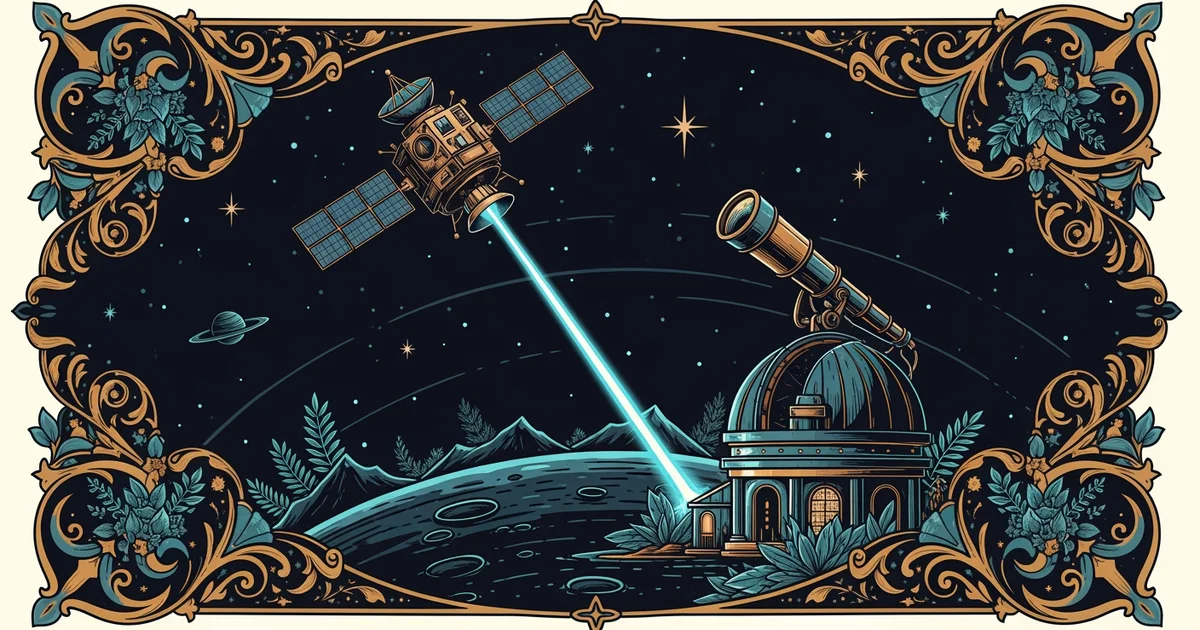
When we talk about Quantum Key Distribution, we are describing a way to share random strings of numbers between two points. These numbers become the keys that scramble and unscramble sensitive data sent over regular networks. The process begins when a satellite generates individual particles of light, known as photons, in specific states. Because these photons are extremely fragile, any attempt by an outside observer to measure them will change their state immediately. This physical reaction acts like a digital alarm system that alerts the users if someone is trying to intercept the key exchange. By using these laws of nature, we create a channel that is theoretically impossible to hack without leaving a permanent trace.
Key term: Quantum Key Distribution — a secure communication method that uses the principles of quantum mechanics to exchange private keys between two distant parties.
Think of this process like exchanging a physical padlock and key through a high-speed vacuum tube. If someone tries to grab the package, the tube breaks and the contents disappear, ensuring that the secret remains safe. In our satellite system, the sender transmits a sequence of polarized light particles to the ground receiver. The receiver then measures these particles using randomly chosen settings to identify which ones match the sender's original plan. This step ensures that both parties hold the same secret sequence of numbers while keeping the information hidden from any potential eavesdropper.
The Logic of Key Reconciliation
After the initial transmission, the two parties must compare their results to confirm they have a matching set of data. This stage is called sifting, where they check which measurements were performed using the same equipment settings. They discard all the mismatched data, leaving behind a smaller but perfectly identical string of numbers. Since the atmosphere can introduce errors, they perform a process called reconciliation to fix any minor mistakes that occurred during the flight. This ensures that the final key is completely accurate before it is ever used to encrypt actual messages.
To manage the complexity of this exchange, the system follows a strict logical flow that ensures maximum security for every single session. The following table outlines the main stages of this secure key generation process:
| Stage | Action | Purpose |
|---|---|---|
| Transmission | Sending polarized photons | Creating the raw key material |
| Sifting | Comparing measurement settings | Keeping only the matching bits |
| Reconciliation | Correcting atmospheric errors | Ensuring the keys are identical |
| Privacy Amplification | Shrinking the final key | Removing any partial information |
Privacy amplification is the final step in the logic, where the parties use mathematical functions to shorten their key. This process removes any tiny fragments of data that an attacker might have gained during the transmission. By condensing the key, the users guarantee that their final secret code is entirely unknown to anyone else in the world. This rigorous logic transforms unpredictable quantum signals into a rock-solid foundation for global cybersecurity. The entire workflow operates automatically, allowing satellites to generate new keys every time they pass over a ground station. This constant renewal of keys provides a continuous layer of protection for our digital world.
Quantum Key Distribution uses the fragile nature of light particles to ensure that any attempt to intercept a secret key is immediately detected and blocked.
But what does this signal look like in practice when it encounters the harsh conditions of space?
Want this with sources you can check?
Premium Learning Paths for Astronomy & Space Exploration are researched against open-access libraries — PubMed, arXiv, government databases, and more — with their distinctive claims cited to real sources and independently checked.
See what Premium includes