
The Need for Secure Data
Digital secrets remain fragile because malicious actors constantly hunt for weaknesses in our shared global network. Imagine leaving your house keys under a flimsy mat while expecting your expensive belongings to stay safe from intruders. Current digital systems rely on mathematical puzzles that work well for now, but they suffer from hidden flaws that clever hackers exploit daily. We must find better ways to protect the data that powers our modern lives, or we risk losing the trust required for digital commerce and private communication.
The Fragility of Digital Locks
Most modern data protection relies on complex math problems that computers find difficult to solve quickly. These systems work by using large prime numbers to scramble information into unreadable code that only authorized users can unlock. If a person tries to guess the key without the proper tools, they would need millions of years to succeed. However, this security depends entirely on the assumption that computers will always remain slow at solving these specific types of mathematical challenges.
Key term: Encryption — the process of converting information into a secret code to prevent unauthorized access by people who lack the correct key.
As technology advances, the speed of processors increases, which makes these old locks look more like paper gates. We are reaching a point where standard methods might fail against new, faster machines capable of breaking these codes in seconds. This shift creates a massive tension in global security because our financial, medical, and personal records all sit behind these aging digital walls. We need a new approach that does not rely on the simple speed of current hardware to keep our data private.
Vulnerabilities in Global Networks
Our current reliance on fiber optic cables and ground stations creates physical points of failure that enemies can easily tap into. When data travels across long distances through wires, it leaves a faint signal that skilled observers can monitor without the sender ever knowing. This reality means that our most sensitive information is constantly at risk of interception, even if the encryption itself remains strong for the moment.
| Feature | Current Fiber Systems | Quantum Space Systems |
|---|---|---|
| Signal Path | Physical wires | Free space vacuum |
| Security | Mathematical logic | Physical laws |
| Vulnerability | Can be tapped silently | Detected by interference |
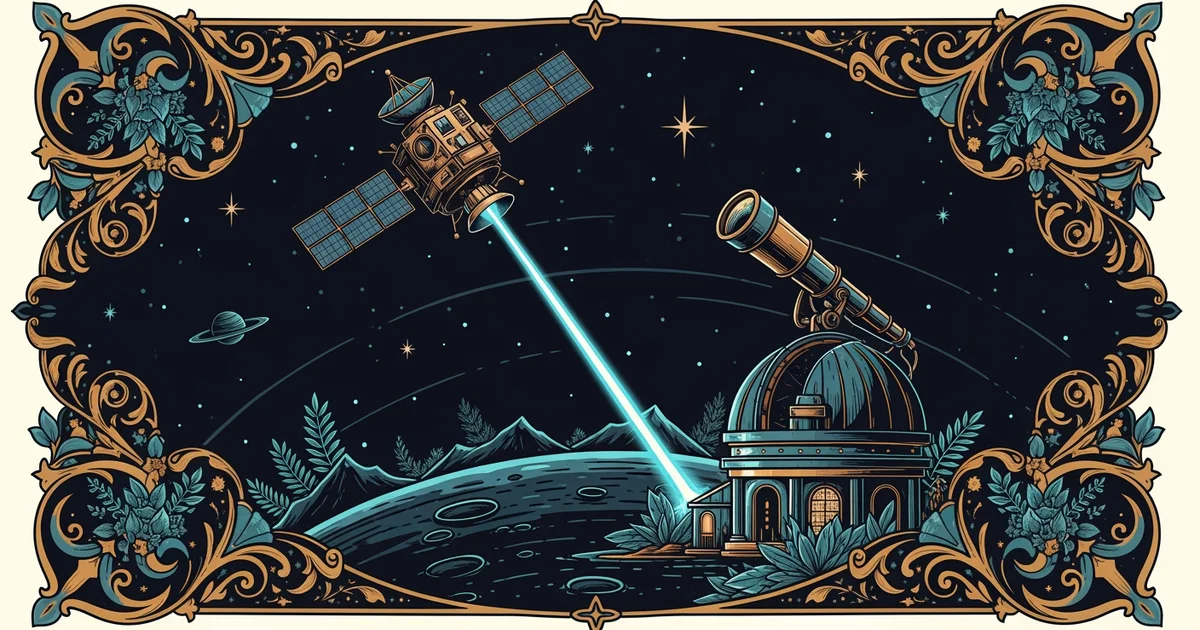
To address these structural problems, we must look toward methods that rely on the laws of physics rather than the limits of math. Using space satellites allows us to transmit data through the vacuum of space, which removes the need for physical wires that are vulnerable to tapping. This method creates a environment where any attempt to listen in on the signal physically changes the message itself, alerting the users to the intrusion immediately.
Consider the following risks that modern digital systems face every single day:
- Mathematical obsolescence occurs when computers become powerful enough to solve the complex puzzles that currently protect our most sensitive private information.
- Physical interception happens when bad actors attach hardware to fiber optic cables to copy data streams without the knowledge of the original sender.
- Centralized storage risks exist because large servers act as single points of failure where a single breach exposes millions of private user accounts.
By moving our communication channels into orbit, we change the game from a battle of computing power to a battle of fundamental physics. This shift ensures that our data stays secure even when future computers become infinitely faster than today's machines. We are building a future where the laws of the universe act as the ultimate guard for our digital conversations.
True security in the digital age requires moving beyond simple mathematical puzzles to systems protected by the immutable laws of physics.
Next, we will explore how space satellites act as a relay station to maintain these secure connections across the globe.