
The Necessity of Space Expansion
Imagine your family lives in a house that slowly runs out of space, resources, and room to grow. Eventually, the walls feel like they are closing in, and you must find a new place to build. Humanity currently faces a similar dilemma on a planetary scale as our needs grow beyond what Earth can provide. We look to the stars not because we want to leave, but because we must ensure our future survival. Expanding into space is the logical next step for a civilization that refuses to stop growing or evolving.
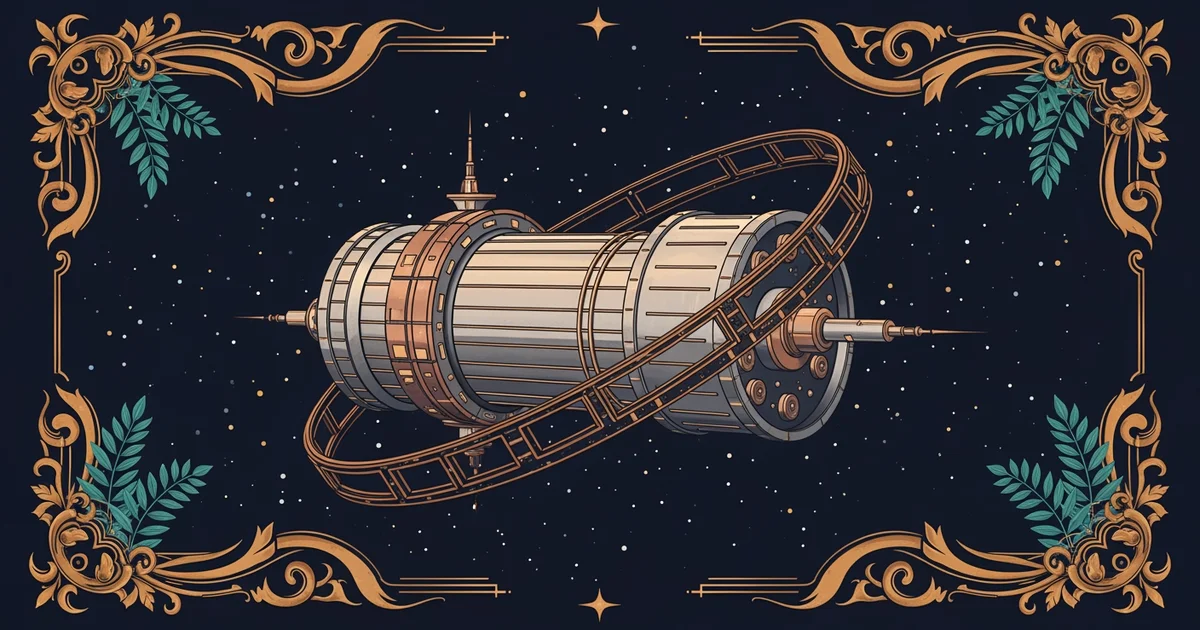
The Drivers of Extraterrestrial Expansion
Building cities in space serves as an insurance policy for the long-term survival of our entire species. Earth is a beautiful home, but it is also a single point of failure for everything we have built. Natural events or human activities could threaten our environment, making it vital to establish self-sustaining outposts elsewhere. By spreading across the solar system, we ensure that a single disaster cannot end the story of human progress. This process mirrors the way early settlers moved to new lands to secure resources and build better lives for their children.
Key term: Planetary redundancy — the strategy of maintaining human civilization on multiple worlds to prevent extinction from a single catastrophic event.
Economic growth also acts as a powerful engine for our move toward the stars. Space contains nearly infinite amounts of raw materials, such as rare metals and water, which are becoming scarce on our home planet. Companies and nations see the potential to harvest these resources to fuel industries that are currently limited by Earth's gravity. Think of this like moving from a small apartment to a large estate where you can finally grow your own food and build your own tools. The transition allows us to bypass the limits of a finite supply chain and unlock new ways to create value.
The Challenges and Future Potential
To construct these permanent cities, we must master the art of living in environments that are hostile to human biology. We need to create closed-loop systems where every drop of water and every breath of air is recycled with perfect efficiency. This requires us to rethink how we design cities, moving away from simple structures toward complex, integrated habitats. We can compare this shift to moving from a campfire in the woods to a modern home with central heating and plumbing. The goal is to build spaces that protect us from the vacuum while providing the comforts of home.
| Resource Need | Earth Context | Space Solution |
|---|---|---|
| Energy | Limited fossil fuels | Solar harvesting |
| Water | Natural cycles | Closed-loop recycling |
| Materials | Mining terrestrial ores | Asteroid mining |
We must also consider the following primary reasons for our push into the final frontier:
- Scientific discovery drives our progress by forcing us to solve problems that we have never encountered, such as how to grow plants in low gravity or how to shield people from high radiation levels in deep space.
- Technological innovation follows naturally because the tools we create to survive in space often lead to massive improvements in the quality of life for people living back on Earth.
- Cultural expansion represents the human desire to explore, learn, and expand our understanding of the universe, ensuring that we never lose our sense of wonder or our drive to reach further.
These goals represent the foundation of our path toward becoming a multi-planetary species. By solving these puzzles today, we prepare ourselves to thrive in the vast, untapped potential of the solar system. This path will give you a clear map of the technologies and strategies required to build and sustain permanent human settlements among the stars.
Humanity seeks to expand into space to ensure long-term survival while unlocking the vast, untapped resources of the solar system.
This path will show you how we manage the harsh dangers of the orbital environment to build sustainable cities.